
Private Label
Kids After Sun Spray
AKTO develops and manufactures a kids after-sun spray to order on its liquid-formulation line, with cooling and soothing actives.
- ISO 22716 GMP
In brief
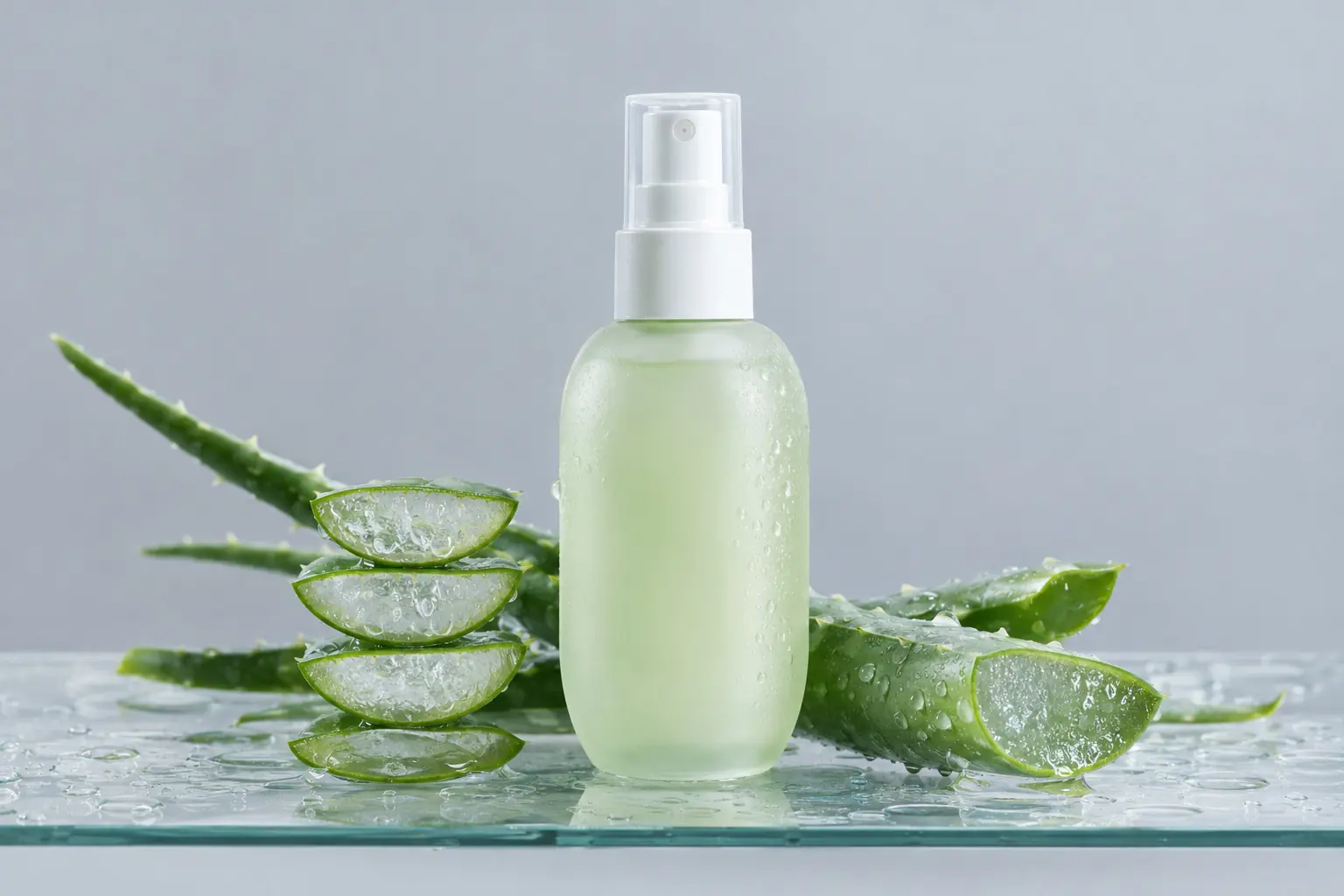
A kids after-sun spray is a soothing cosmetic for skin that has already been in the sun, carrying no SPF claim. AKTO develops and manufactures this spray to order on its liquid-formulation line, in a 250 ml bottle, with actives such as menthol and D-panthenol and 'soothing' or 'cooling' claims substantiated under Regulation (EU) No 655/2013.
01
Not a sunscreen, but the step after it
Company AKTO LLC (AKTO) develops and manufactures a kids after-sun spray to order on its liquid cosmetic production line. This is a distinct category from a sunscreen cream or trigger spray: the product carries no UV filters and no SPF claim, and it works after a child has already been in the sun, soothing and cooling the skin. Article 20 of Regulation (EC) No 1223/2009 bars labelling from implying properties a product does not have, so an after-sun spray without measured UV-filter content cannot hint at sun-protective efficacy. A brand wanting to combine both functions in one product usually gets a recommendation from AKTO to split the line into a separate sunscreen and a separate soothing product instead, since each set of requirements is easier to substantiate on its own.
02
Substantiating 'soothing' and 'cooling'
Regulation (EU) No 655/2013 lays down common criteria for justifying claims such as 'soothing' or 'cooling', typical of an after-sun product:
- compliance with the law;
- truthfulness;
- evidential support;
- honesty;
- fairness;
- informed decision-making.
AKTO documents these criteria for every label claim before the artwork is signed off, so the brand does not run into a regulator's objection after packaging is already printed. For a 'soothing' claim, referencing the properties of the actives themselves is usually enough, while a 'cooling' claim is best backed up with the subjective sensation reported during use as well.
03
Allergens, actives and good manufacturing practice
As a leave-on cosmetic, an after-sun spray declares an Annex III allergen once its concentration exceeds 0.001% by weight, the same threshold as a sunscreen cream despite carrying no SPF claim. AKTO's typical soothing-lotion formula uses actives such as menthol and D-panthenol. Article 8 of the Regulation requires manufacture in line with good manufacturing practice, with compliance presumed under ISO 22716. AKTO works to its own technical specification, TU U 20.4-43961492-001:2020, backed by sanitary-epidemiological expert opinion No. 12.2-18-2/2361 dated 15.02.2021, with manufacturing registered under KVED 20.42.
04
What AKTO manufactures
AKTO produces the liquid formula at plants in Kyiv, Ukraine and Warsaw, Poland, packaged in a 250 ml trigger-spray bottle. Certification covers ISO 9001:2015, ISO 22000:2018 (HACCP; combined certificate No. 44600111204), ISO 22716 (GMP); minimum order quantity starts from 50 kg.
05
How to start a project
- The brand sets the target actives and drafts the label claims.
- AKTO checks the claims against Regulation No 655/2013 and drafts allergen labelling.
- A sample in the 250 ml bottle is signed off.
- Production starts on the liquid-formulation line.
See also: Kids Sun Care, Sun Trigger Spray, Kids Sunscreen Cream and Kids & Baby Care.
Frequently Asked Questions
Does AKTO manufacture a kids after-sun spray?
Does an after-sun spray protect against the sun?
What actives are typical for this kind of spray?
What is AKTO's minimum order quantity for a kids after-sun spray?
Expert review
Reviewed by
 Anastasiia Bespalova
Paediatric orthopaedic and trauma surgeon
ORCID Illia Mariutsa
Researcher, organic chemistry
Google Scholar
Standards we work to
 ISO 22716 (GMP)
 ISO 22000 (HACCP)
 Regulation (EC) No 1223/2009
 Directive 2002/46/EC
 Halal
Why AKTO
- Soothing actives such as menthol and D-panthenol
- Claims substantiated under Regulation (EU) No 655/2013
- 250 ml trigger bottle, the same format as the sun spray line
- Manufacturing to ISO 22716 (GMP) in Kyiv (Ukraine) and Warsaw (Poland)