
Private Label
Kids Sun Care
Sun-protection creams and lotions for children's skin, developed under EU cosmetics safety and sunscreen-efficacy rules, in airless-pump and pump-bottle packaging.
- ISO 24444
In brief
Kids sun care covers SPF creams and lotions formulated for children's skin, regulated in the EU as leave-on cosmetics under Regulation (EC) No 1223/2009, with efficacy and labelling guided by Commission Recommendation 2006/647/EC and SPF measured under ISO 24444:2019. AKTO's packaging range supports airless-pump dispensers from 100 ml and pump-bottles up to 250-1000 ml, though AKTO does not currently publish examples of children's-specific sun care.
Explore this section
01
What kids sun-care products are
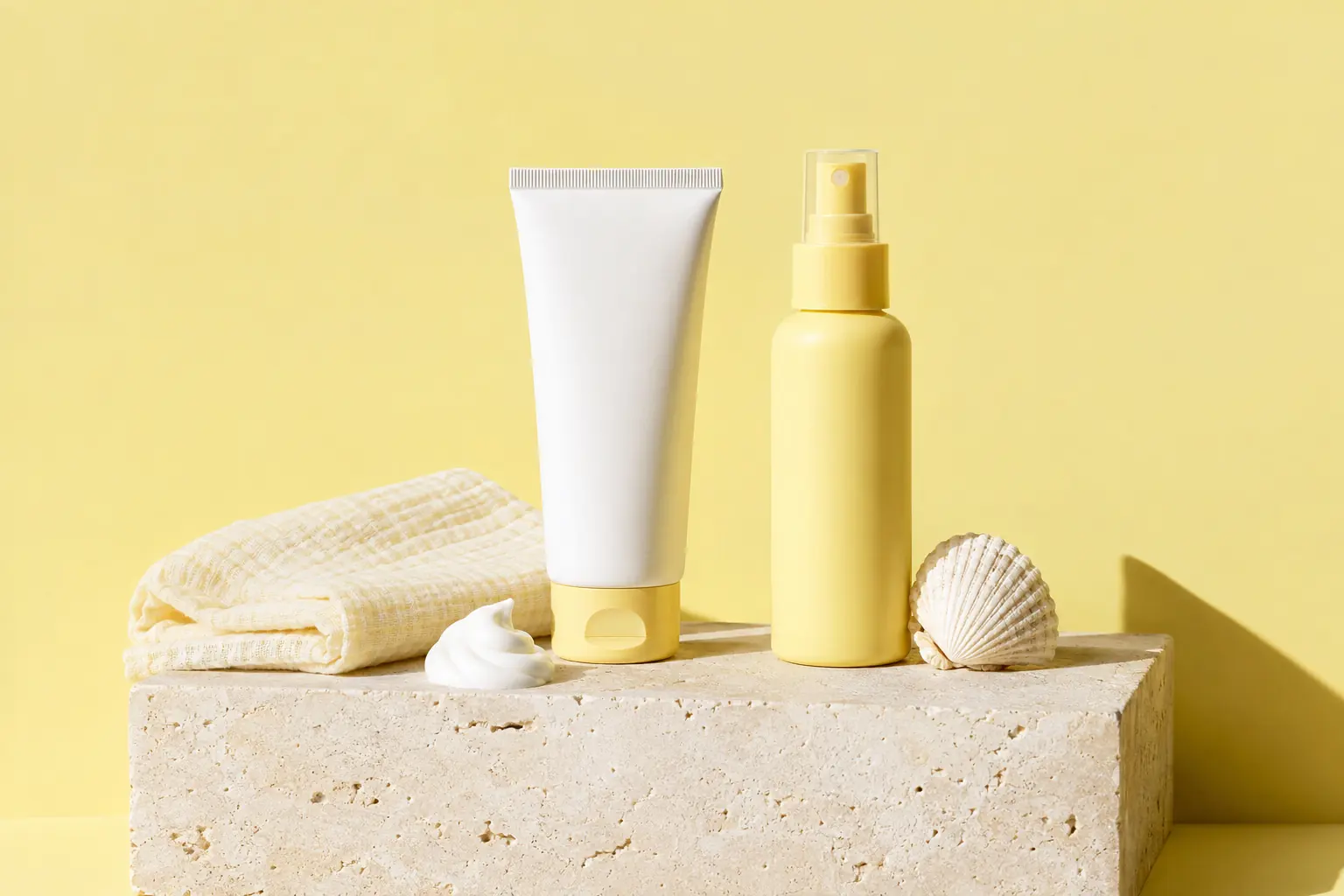
Kids sun care covers SPF creams and lotions formulated for children's skin: leave-on emulsions designed to sit stably on the skin and deliver a labelled level of UV protection, typically with a gentler sensory profile and fragrance load than adult sunscreens. Brands often pair it with baby or children's skin care within the same range, since both are leave-on emulsions produced on the same equipment.
02
Composition, efficacy and packaging requirements
As a leave-on cosmetic, a children's sun-care product must be manufactured under good manufacturing practice presumed by compliance with ISO 22716, and must declare an Annex III fragrance allergen once its concentration exceeds 0.001% by weight, under Regulation (EC) No 1223/2009. Commission Recommendation 2006/647/EC sets minimum efficacy standards and standardised labelling categories — low, medium, high and very high — for sunscreen products' UVA/UVB protection claims, and identifies claims that should not be made about sunscreen efficacy; the sun protection factor itself is determined using the in vivo method specified in ISO 24444:2019.
03
Regulatory position in Ukraine
AKTO's own technical specification, TU U 20.4-43961492-001:2020 “Cosmetic Means” (code 20.42.15), covers sun-protection formulations as a cosmetic product, and its registered KVED code 20.42 (“manufacture of perfumes and toilet preparations”) is the classification under which AKTO's sun-protection cosmetics are produced, backed by a positive state sanitary-epidemiological expert opinion (No. 12.2-18-2/2361, approved 15.02.2021).
04
What AKTO does for this category
AKTO's standard packaging range includes airless pump dispensers from 100 ml and pump-bottles up to 250-1000 ml, formats used for emulsion-based products such as sun-protection creams. The minimum batch for cosmetics is 50 kg, produced at AKTO's two plants, in Kyiv (Ukraine) and Warsaw (Poland). AKTO does not currently publish examples of children's sun-care products it has manufactured. The category would be developed and produced to order within this packaging range and AKTO's cosmetics specification, applying the efficacy and labelling rules above to the target market. A brand should expect this to run as a full qualification project, including efficacy testing, rather than a quick repackaging of an existing formula.
05
How to start a kids-sun-care project with AKTO
AKTO checks the target SPF and labelling category against Commission Recommendation 2006/647/EC, arranges ISO 24444:2019 testing for the finished formulation, and proposes an airless-pump or pump-bottle format for the batch. See also: Kids & Baby Care, Kids Oral Care, Baby Care - Bathing & Cleansing and Baby Skin Care.
Frequently Asked Questions
What efficacy categories exist for sunscreen products?
How is a sunscreen's SPF measured?
What allergen threshold applies to a leave-on sun cream?
Has AKTO manufactured a children's sun-care product?
Expert review
Reviewed by
 Anastasiia Bespalova
Paediatric orthopaedic and trauma surgeon
ORCID Illia Mariutsa
Researcher, organic chemistry
Google Scholar
Standards we work to
 ISO 22716 (GMP)
 ISO 22000 (HACCP)
 Regulation (EC) No 1223/2009
 Directive 2002/46/EC
 Halal
Why AKTO
- Airless-pump packaging from 100 ml for SPF emulsions
- Pump-bottle range up to 250-1000 ml for larger formats
- KVED 20.42 registration is the legal basis for sun-care cosmetics
- Own technical specification TU U 20.4-43961492-001:2020, SES-cleared (No. 12.2-18-2/2361)