
Private Label
Kids Sunscreen Cream
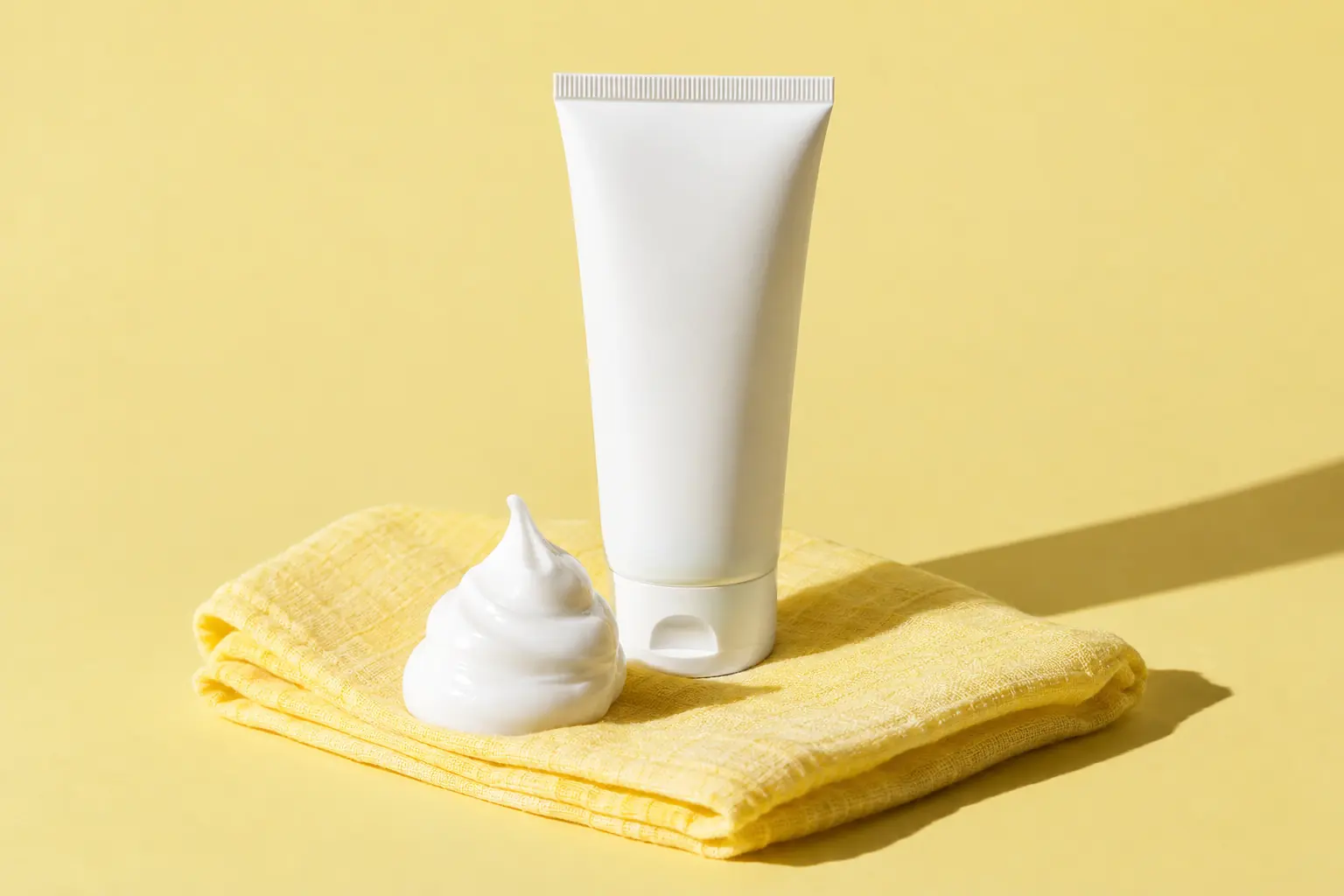
AKTO develops and manufactures a kids sunscreen emulsion to order on its cream-emulsion line, formulated with Annex VI UV filters.
- ISO 22716 GMP
In brief
A kids sunscreen cream is an emulsion built on UV filters selected from Annex VI of Regulation (EC) No 1223/2009 and labelled under one of the EU's SPF efficacy categories. AKTO develops and manufactures this cream to order on its cream-emulsion line, packaged in pump bottles and airless dispensers, meeting nano-labelling and the efficacy criteria of Recommendation 2006/647/EC.
01
SPF categories for a kids formula
Company AKTO LLC (AKTO) develops and manufactures a kids sunscreen emulsion to order on its cream-emulsion line. Commission Recommendation 2006/647/EC sets numeric SPF ranges for four labelled efficacy categories:
| Category | SPF |
|---|---|
| Low | 6 or 10 |
| Medium | 15, 20 or 25 |
| High | 30 or 50 |
| Very high | 50+ |
The brand picks a target category at the brief stage, and AKTO formulates and tests to confirm the labelled level. For a kids line, brands most often settle on the high or very high category, since a child's skin is more sensitive to sun exposure than an adult's, and parents tend to use a higher SPF number on the pack as the simpler cue when choosing on the shelf.
02
UV filters and nano labelling
Annex VI of Regulation (EC) No 1223/2009 sets a closed list of UV filters permitted in a cosmetic sunscreen, each with its own maximum concentration; a filter outside that list cannot be added. Where titanium dioxide or zinc oxide is used in nanomaterial form, Article 19(1)(g) of the Regulation requires the ingredient list to state the substance name followed by the word 'nano' in brackets, a point that matters for a kids sunscreen where mineral filters are common, since parents and paediatricians often favour a mineral formula over a chemical filter for younger children specifically.
03
Manufacturing practice and environmental control
Article 8 of Regulation (EC) No 1223/2009 requires manufacture in line with good manufacturing practice, with compliance presumed under ISO 22716, the standard AKTO's lines run to. AKTO's production premises are monitored for humidity (20-60%) and temperature (16-25°C) twice per shift, parameters that directly affect the stability of an emulsion such as this sunscreen cream - separation or a change in texture during storage stands out immediately in a product applied to a child's face every day through the summer. In Ukraine, cosmetics fall under AKTO's own technical specification, TU U 20.4-43961492-001:2020, backed by sanitary-epidemiological expert opinion No. 12.2-18-2/2361 dated 15.02.2021, with manufacturing registered under KVED 20.42.
04
What AKTO manufactures
AKTO produces the cream emulsion at plants in Kyiv, Ukraine and Warsaw, Poland, packaged in airless dispensers from 100 ml and pump bottles from 250 to 1000 ml. Certification covers ISO 9001:2015, ISO 22000:2018 (HACCP; combined certificate No. 44600111204), ISO 22716 (GMP); minimum order quantity starts from 50 kg.
05
How to start a project
- The brand sets a target SPF category and packaging format.
- AKTO selects UV filters from Annex VI and drafts labelling, including nano declaration where relevant.
- A sample is signed off and efficacy testing is run.
- Production starts on the cream-emulsion line.
See also: Kids Sun Care, Kids Sun Stick, Sun Trigger Spray and Kids & Baby Care.
Frequently Asked Questions
Does AKTO manufacture a kids sunscreen cream?
What SPF categories exist for a kids sunscreen?
Which UV filters can be used in an EU cosmetic sunscreen?
What is AKTO's minimum order quantity for a kids sunscreen cream?
Expert review
Reviewed by
 Anastasiia Bespalova
Paediatric orthopaedic and trauma surgeon
ORCID Illia Mariutsa
Researcher, organic chemistry
Google Scholar
Standards we work to
 ISO 22716 (GMP)
 ISO 22000 (HACCP)
 Regulation (EC) No 1223/2009
 Directive 2002/46/EC
 Halal
Why AKTO
- UV filters selected from the closed Annex VI list
- Production humidity (20-60%) and temperature (16-25°C) monitored twice per shift
- Packaging in airless dispensers from 100 ml and pump bottles 250-1000 ml
- Own technical specification TU U 20.4-43961492-001:2020