
Quality Assurance
Incoming Quality Control
Incoming Quality Control (IQC) ensures all raw materials and packaging meet strict GMP standards before manufacturing begins.
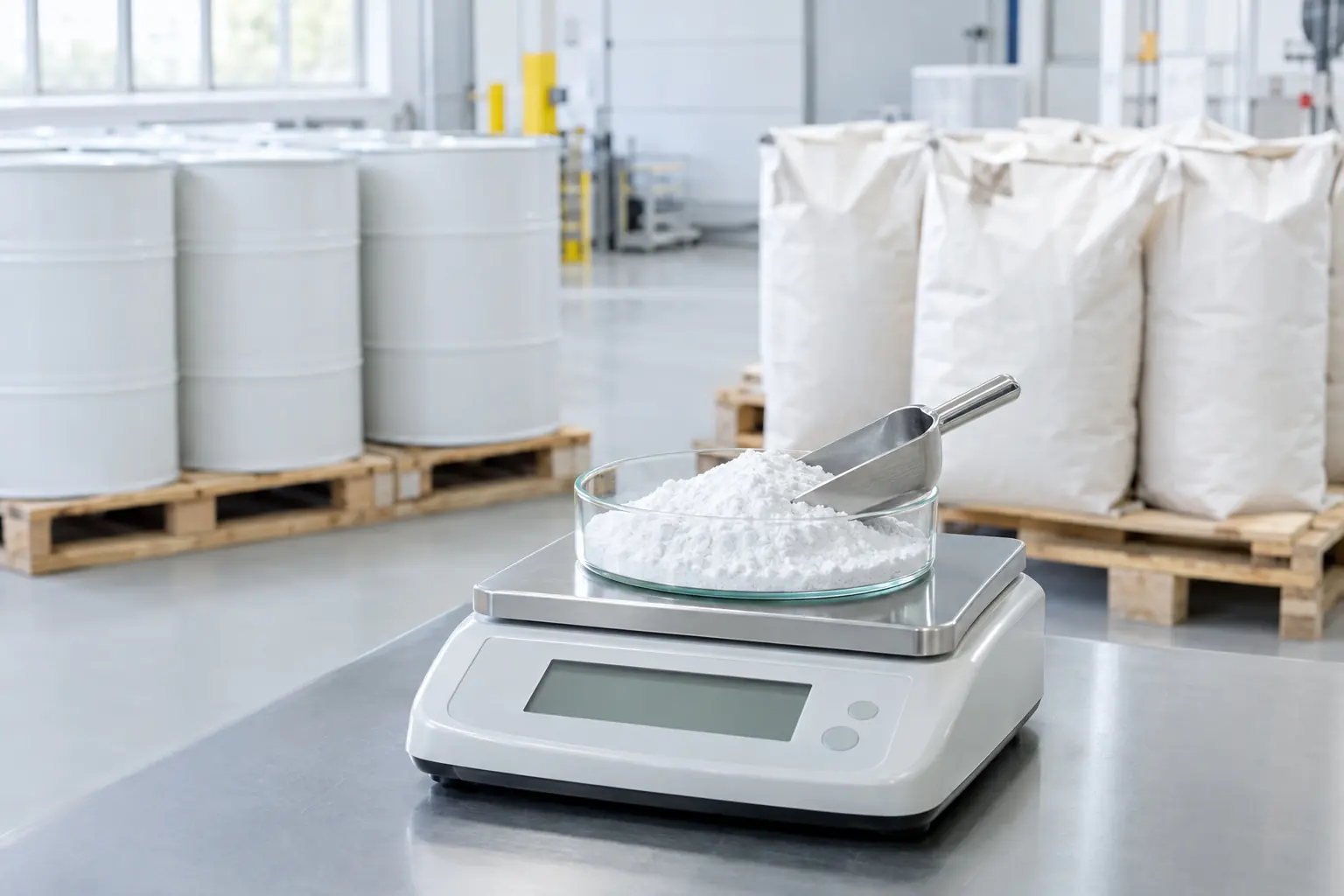
Incoming Quality Control (IQC) is the mandatory first step in GMP-compliant manufacturing, involving the rigorous inspection and testing of all incoming raw materials and packaging components. At AKTO, IQC verifies identity, purity, and safety against approved specifications to prevent defects, ensuring that only validated inputs are used in formulation and production.
01
Preventing Defects at the Source
In the complex ecosystem of private label manufacturing, the quality of the final product is directly dependent on the integrity of its inputs. Incoming Quality Control (IQC) serves as the critical firewall, ensuring that every raw material, active ingredient, and packaging component meets strict physicochemical and safety specifications before entering our warehouse.
At AKTO, we do not simply rely on supplier Certificates of Analysis (CoA). Our internal laboratory verifies the identity and purity of incoming goods, mitigating risks associated with supply chain variability and ensuring that your new formula design is built on a foundation of verified quality. This proactive approach prevents costly production delays and ensures compliance with ISO 22716 (GMP) and ISO 22000 (HACCP) standards.
02
Comprehensive Raw Material Inspection
Our IQC protocol involves a multi-tiered assessment strategy tailored to the specific category of the material—whether it is a functional surfactant, a bioactive extract, or a primary packaging vessel. We employ rigorous sampling methods to ensure statistical significance and representativeness.
- Organoleptic Evaluation: Immediate verification of appearance, color, and odor against approved standards to detect gross deviations or transport damage.
- Physicochemical Analysis: Testing for pH, viscosity, density, and refractive index to confirm the material's identity and consistency with the product formula design.
- Identity Verification: utilizing IR spectroscopy and other analytical methods to prevent raw material adulteration or substitution.
03
Microbiological & Safety Screening
Microbial contamination in raw materials poses a severe threat to product safety. Under the guidance of our scientific team, we conduct targeted microbiological screening for high-risk materials, particularly aqueous extracts and natural derivatives used in formulation. This ensures that bioburden levels are within acceptable limits before materials are released for use in R&D related activities or mass production.
04
Packaging Component Validation
Packaging plays a dual role in aesthetics and preservation. Our incoming control extends to primary and secondary packaging, verifying dimensions, functionality (e.g., pump actuation force), and compatibility. This ensures that the interaction between the bulk product and the container remains stable throughout the product's shelf life.
See also: In-Process Quality Control
See also: Stability & Compatibility Testing
05
Scope of Testing
Raw Materials
Identity, purity, and physicochemical parameters.
Microbiology
Bioburden screening for high-risk inputs.
Packaging
Dimensional and functional compatibility.
06
Need Technical Specs?
Common Questions
What is included in incoming quality control for cosmetics?
Why is verifying raw materials important for formulation?
Does AKTO perform testing on client-supplied packaging?
How do I ensure my materials meet your QC standards?
Expert review
Scientific Oversight
 Svitlana Mysiura
Senior Medical Communications Specialist, Medical Laboratory DILA
ORCID
Compliance Standards
 ISO 22716:2007 (GMP)
 ISO 22000:2018 (HACCP)
 HALAL (Saudi Halal Center / recognized Halal CBs)
 GCC Standardization Organization (GSO) — Gulf Standards
 Saudi Arabia Conformity Assessment — SASO / SALEEM / SABER
 Regulation (EC) No 1223/2009 — EU Cosmetics Regulation
- ISO 22716 (GMP) & ISO 22000 (HACCP) Compliant
- Full Traceability System
- Internal Lab Verification