
Private Label
Quick Spray Wax
AKTO develops quick spray wax to order for detailing brands - a solvent-wax formula in a 250 ml trigger-spray bottle, checked against CLP flammability criteria.
- CLP
In brief
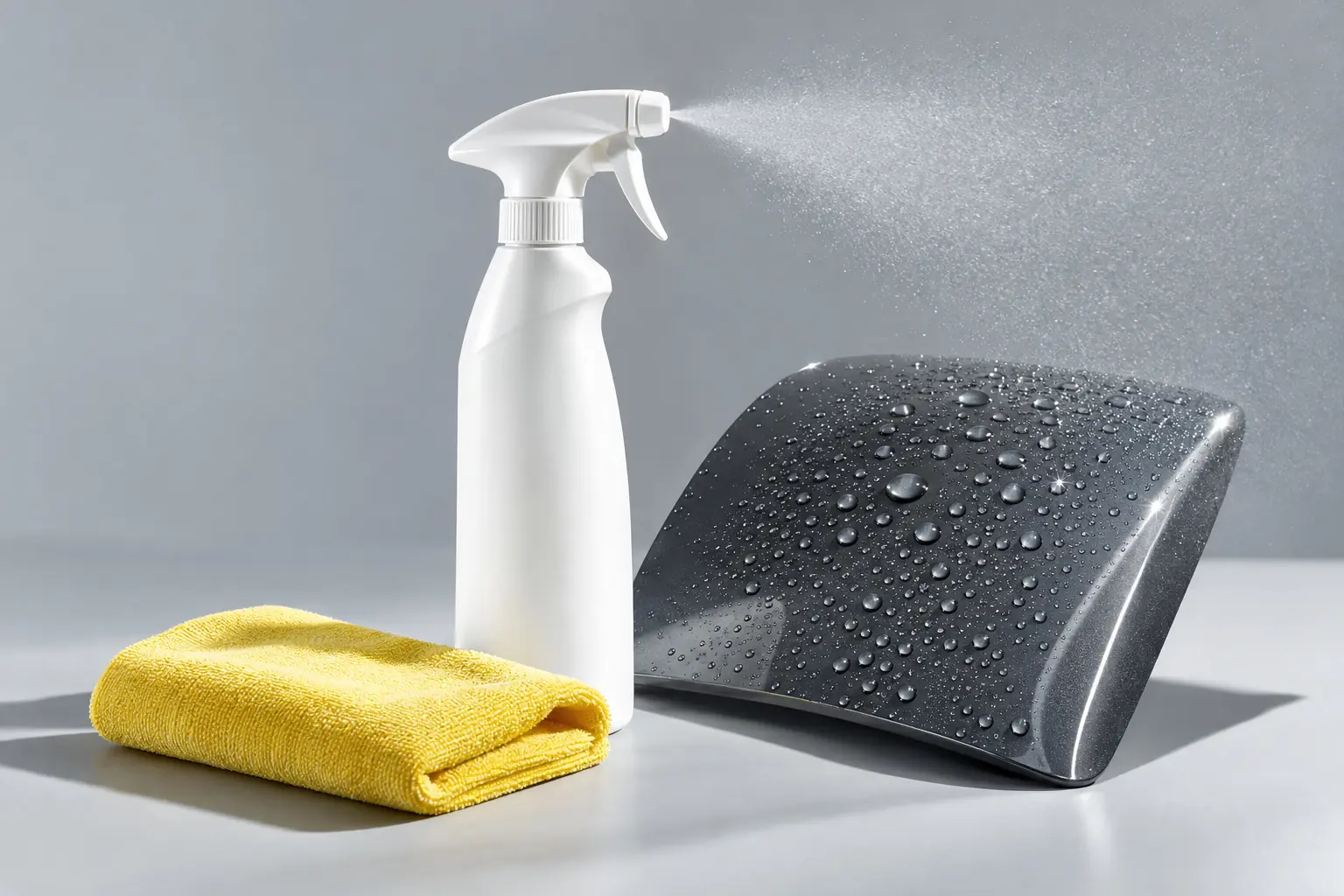
AKTO develops quick spray wax to order, filling a solvent-wax formula into a 250 ml trigger-spray bottle for a brand's between-washes top-up line. Because the carrier is typically alcohol- or hydrocarbon-based, AKTO checks it against CLP's flammable-liquid criteria before the batch is scheduled, and issues a REACH safety data sheet where that classification applies.
01
A top-up, not a full wax job
Quick spray wax goes on a clean, dry panel between full details, laying down a thin protective film in the time it takes to wipe a cloth across the paint - no buffing pass, no curing wait. A brand usually sells it as the easy add-on next to a shampoo or a polish, something a customer grabs to keep the beading and gloss up until the next full wax. Company AKTO LLC (AKTO) builds this kind of formula to order rather than holding a stock version: the solvent-wax carrier, the bottle and the finish are set by the brand's brief.
02
How AKTO puts the formula together
- Pick the wax carrier - a silicone or polymer wax suspended in an alcohol or hydrocarbon solvent, chosen for how fast it flashes off the panel.
- Check the carrier against CLP hazard criteria, since an alcohol- or hydrocarbon-based spray commonly lands in the flammable-liquid class.
- Match the fill volume to a 250 ml trigger-spray bottle and confirm the safety paperwork before the batch is scheduled.
03
Bottle and batch size
AKTO fills quick spray wax as a liquid formulation into a 250 ml trigger-spray bottle - sized for a hand application rather than a machine buff. A production run for this liquid format starts at 50 kg, small enough for a brand testing the category alongside an existing wax or polish line.
04
Why the flammable-liquid label matters
No EU regulation is written specifically for a spray wax, so the flammability classification under Regulation (EC) No 1272/2008 (CLP) is what actually drives the paperwork: once the alcohol- or hydrocarbon-carried wax is classed as a flammable liquid, the bottle needs the matching hazard pictogram and precautionary wording, and Article 31 of Regulation (EC) No 1907/2006 (REACH) puts a 16-section safety data sheet in the supplier's hands automatically. AKTO checks this classification before a formula goes into production, not after the first batch ships.
05
Certification and plants behind the batch
Filling happens at AKTO's Kyiv (Ukraine) site, with Warsaw, Poland running as a second plant; the combined ISO 9001:2015 + ISO 22000:2018 (HACCP) certificate (No. 44600111204) and ISO 22716 (GMP) all sit behind this liquid line.
06
What's in the batch file
Every quick spray wax run leaves AKTO's Kyiv (Ukraine) plant with a documentation trail behind it: the CLP hazard classification record for the solvent-wax carrier, the REACH safety data sheet where flammability applies, and a retained sample tied to the fill date. A brand can request this file alongside the shipment, which matters when a retailer or a market-surveillance authority asks for the paperwork behind a specific batch of trigger-spray bottles. The same file also records the water-beading and gloss target the brand signed off on, so a repeat order matches the first run rather than drifting between batches.
07
See also
See also: Automotive Care, Car Polish and Ceramic Detailer.
Frequently Asked Questions
Does a quick spray wax need a flammable-liquid warning?
What bottle does AKTO use for a quick spray wax?
What's the smallest order AKTO will run?
How does AKTO validate the formula before filling starts?
 Kateryna Khromykh
 Oleksandra Vovk
Standards we work to
 ISO 22716 (GMP)
 ISO 22000 (HACCP)
 Regulation (EC) No 1223/2009
 Directive 2002/46/EC
 Halal
Why AKTO
- 250 ml trigger-spray bottle sized for hand application, not machine buffing
- CLP flammability check built into formula development, not bolted on after
- Kyiv (Ukraine) line filling alongside a second plant in Warsaw, Poland
- Combined ISO 9001/22000 certificate No. 44600111204, ISO 22716 GMP