
Private Label
Paw Balm
AKTO develops and manufactures pet paw balm to a brand's brief on its emulsion and cream production line, packed into jars.
- ISO 22716 GMP
In brief
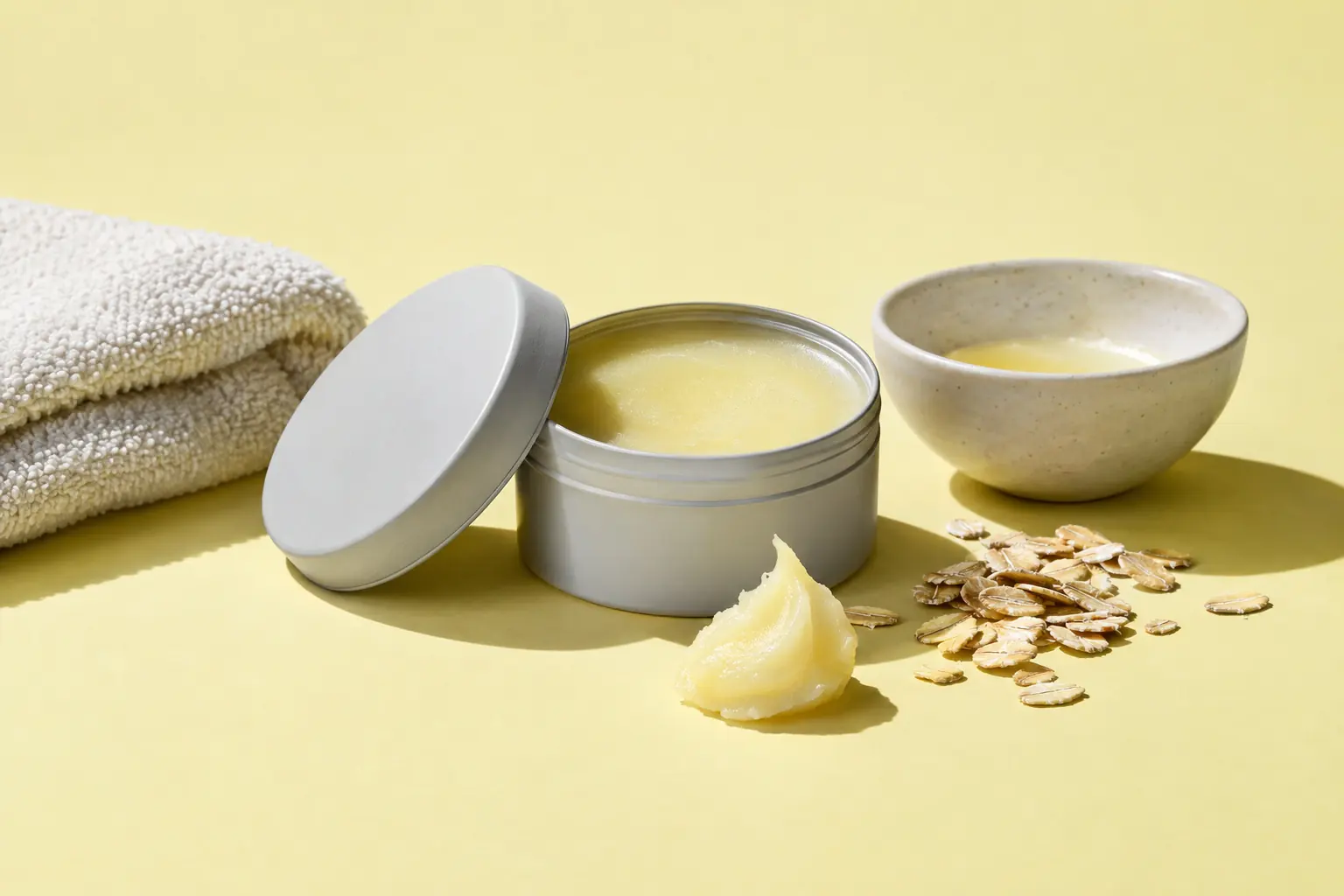
Paw balm is a protective, cream-based product applied to an animal's paw pads to moisturise skin and form a barrier against cold, snow, salt or road de-icers. AKTO develops and manufactures paw balm to order for a brand on its emulsion and cream line, using the same vacuum reactor-homogeniser equipment as its barrier-type creams for human skin, packed into 50-250 g jars, with a minimum order from 50 kg.
01
What paw balm is
Paw balm is a cream-based product applied to an animal's paw pads to moisturise skin and form a barrier against cold, snow, salt or road de-icing chemicals. The category interests pet-care brands and veterinary lines rounding out a coat-care range with a paw-skin product under their own label.
02
Format, packaging and production conditions
For pet gels, ointments and conditioners, AKTO uses its emulsion and cream format - the format suited to a cream-based, occlusive paw balm. Packaging is available in jars from 50 to 250 g, a size matching a typical paw-balm pack. Emulsion and cream production runs on vacuum reactor-homogenisers, and the production premises are held at 20-60% humidity and 16-25°C, checked twice per shift. That environmental control matters for an occlusive cream formula in particular: it keeps viscosity and emulsion structure stable through mixing and filling.
03
Regulatory status
There is no dedicated EU cosmetics-style regulation for animal-care products: by default, Regulation (EU) 2023/988 on general product safety applies. AKTO's own cosmetics technical specification, TU U 20.4-43961492-001:2020, does not cover animal-care products; the legal basis for a paw balm in Ukraine is KVED 20.59 'manufacture of other chemical products'. That means labelling and registration documents for a paw balm are prepared separately from AKTO's human-cosmetics line, under the general requirements for non-food chemical products.
04
AKTO's comparable production experience
AKTO's portfolio already includes barrier-type creams for human skin built on emulsions with urea, allantoin and panthenol - technologically comparable production experience to a paw balm, though those are products for people rather than animals. AKTO's team draws on this barrier-cream formulation experience when developing a paw-balm formula to a brand's brief, selecting active ingredients and texture separately to suit an animal's skin.
05
Commercial terms
The minimum order for a paw balm as an emulsion/cream-format product is from 50 kg. A formula developed for a partner brand is covered by AKTO's non-disclosure agreement, which runs for a 3-year term, and stays that brand's trade secret.
06
How to get started
A project starts with a brand brief: desired active ingredients (moisturising or barrier-forming), jar size and target market. AKTO's team adapts its barrier-cream formulation experience to a paw-specific formula, prepares samples and documentation, and moves to batch production in Kyiv (Ukraine) or Warsaw (Poland) once the sample is approved.
07
See also
Frequently Asked Questions
What equipment does AKTO use to manufacture paw balm?
What packaging does paw balm come in?
Which regulation applies to paw balm in the EU?
Does AKTO have experience with comparable cream formulas?
 Kateryna Khromykh
 Oleksandra Vovk
Standards we work to
 ISO 22716 (GMP)
 ISO 22000 (HACCP)
 Regulation (EC) No 1223/2009
 Directive 2002/46/EC
 Halal
Why AKTO
- Emulsion and cream line on vacuum reactor-homogenisers
- Jars from 50 to 250 g matched to the balm format
- Humidity held at 20-60% and temperature at 16-25°C, checked twice per shift
- 3-year non-disclosure agreement protects the brand's formula