
Private Label
Tar & Glue Remover (Tar Foam)
AKTO develops and manufactures a solvent-based tar-and-glue remover to order, formulated without dichloromethane (DCM) and filled into trigger-spray or pump bottles.
- CLP · REACH
In brief
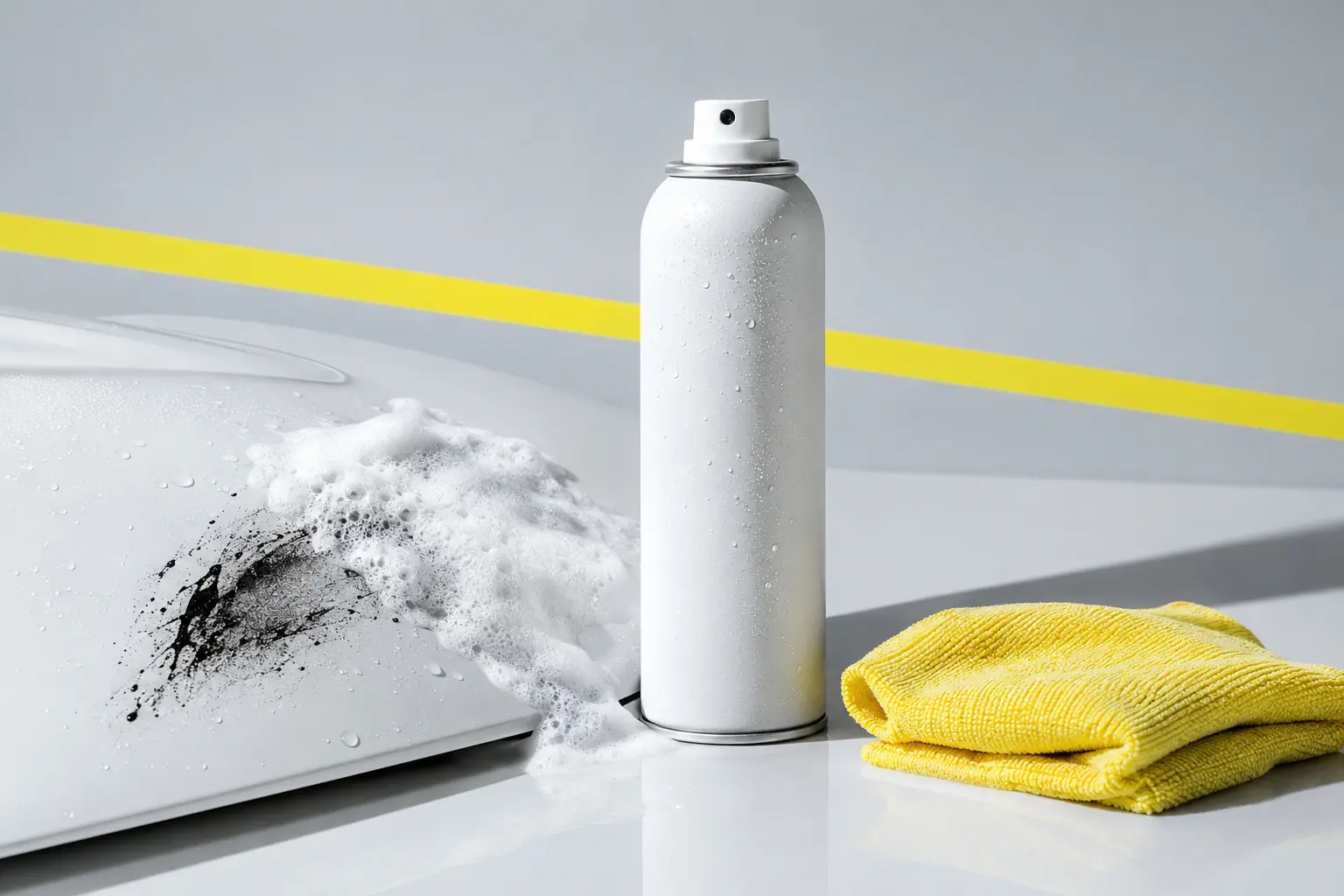
AKTO develops and manufactures tar-and-glue remover to order on its liquid-formulation line, filled into a 250 ml trigger-spray or a pump bottle up to 1000 ml. The solvent system is checked against CLP hazard classification and formulated without dichloromethane (DCM, CAS 75-09-2) — the solvent REACH Annex XVII has banned above 0.1% by weight in paint strippers since 6 December 2010.
01
What a tar-and-glue remover is and who it is for
A tar-and-glue remover, usually applied as a foam or spray, dissolves road tar, adhesive residue and stubborn insect tar bonded to paintwork or glass that a shampoo alone will not lift. Detailing brands and car-wash chains add it to a range alongside a shampoo and a wheel cleaner. Company AKTO LLC (AKTO) develops and manufactures a tar-and-glue remover to order on its liquid-formulation line, matching the solvent system and bottle format to the brief rather than supplying it from stock.
02
Formula, form and packaging requirements
AKTO fills the product as a liquid formulation, in the same trigger-spray and pump formats used across its automotive-care line; a foam or spray remover needs a solvent carrier strong enough to loosen tar and adhesive without damaging paint or trim.
- Liquid formulation
- 250 ml trigger-spray bottle
- Pump bottle up to 1000 ml
03
EU and Ukrainian regulatory requirements
Regulation (EU) 2023/988 on general product safety, applicable since 13 December 2024, sets the baseline safety duty, since no EU regulation targets tar-and-glue remover specifically. A solvent-based remover classified as flammable or as a skin/eye irritant under Regulation (EC) No 1272/2008 (CLP) must carry the matching hazard pictograms, and under Article 31 of Regulation (EC) No 1907/2006 (REACH) the supplier must issue a 16-section safety data sheet. REACH Annex XVII entry 59 bans dichloromethane (DCM, CAS 75-09-2) above 0.1% by weight, in force since 6 December 2010, but the restriction is limited to paint strippers and does not directly cover tar, glue or adhesive removers; AKTO nonetheless avoids DCM in this solvent system for the same reasons formulators historically dropped it from paint- and adhesive-stripping formulas. Where the foam also carries cleaning surfactants, it falls within Regulation (EC) No 648/2004 on detergents: the surfactants must meet ultimate-biodegradability criteria, and under Annex VII Section A the listed constituent classes — such as surfactants, aliphatic/aromatic/halogenated hydrocarbons or phosphates — added above 0.2% by weight must be declared in weight bands, with perfumes, preservatives and similar constituents listed irrespective of concentration. In the UK, the General Product Safety Regulations 2005 apply the equivalent safety-net regime. In Ukraine, the product is manufactured under AKTO's KVED code 20.59 'manufacture of other chemical products', with code 20.41 covering any surfactant or detergent component.
04
What AKTO offers
Liquid filling runs at AKTO's Kyiv, Ukraine plant, with a stated monthly capacity of up to 150 tonnes and up to 500,000 filled bottles; a second production site operates in Warsaw, Poland. Minimum order for a liquid format like tar-and-glue remover starts from 50 kg. Production is certified to ISO 9001:2015 + ISO 22000:2018 (HACCP; combined certificate No. 44600111204) and ISO 22716 (GMP).
05
Getting started
A brand brief states the target stain type (tar, adhesive, insect residue) and the surface it is used on. AKTO's team checks the solvent system against CLP classification and keeps it free of dichloromethane, consistent with the REACH Annex XVII restriction on paint strippers, prepares the safety data sheet, and matches the bottle format to the order volume before filling starts at the Kyiv (Ukraine) facility.
06
See also
See also: Automotive Care, Wheel Cleaner and Bug Remover.
Frequently Asked Questions
Does AKTO manufacture tar-and-glue remover?
What restricts the solvent used in this product?
What packaging can AKTO use for tar-and-glue remover?
What is the legal basis for this product in Ukraine?
 Kateryna Khromykh
 Oleksandra Vovk
Standards we work to
 ISO 22716 (GMP)
 ISO 22000 (HACCP)
 Regulation (EC) No 1223/2009
 Directive 2002/46/EC
 Halal
Why AKTO
- KVED code 20.59 covers general chemical manufacturing, including solvent-based removers
- Solvent system formulated without dichloromethane (DCM), the solvent REACH Annex XVII restricts in paint strippers
- Kyiv (Ukraine) plant capacity up to 150 tonnes or 500,000 bottles per month
- Quality system: ISO 9001:2015 + ISO 22000:2018 (HACCP; certificate No. 44600111204), ISO 22716 (GMP)