
ISO 14001:2015
ISO 14001 (Environmental Management)
ISO 14001 defines an environmental management system; AKTO is not certified to it but sources sustainable packaging materials.
- Sustainable packaging
In brief
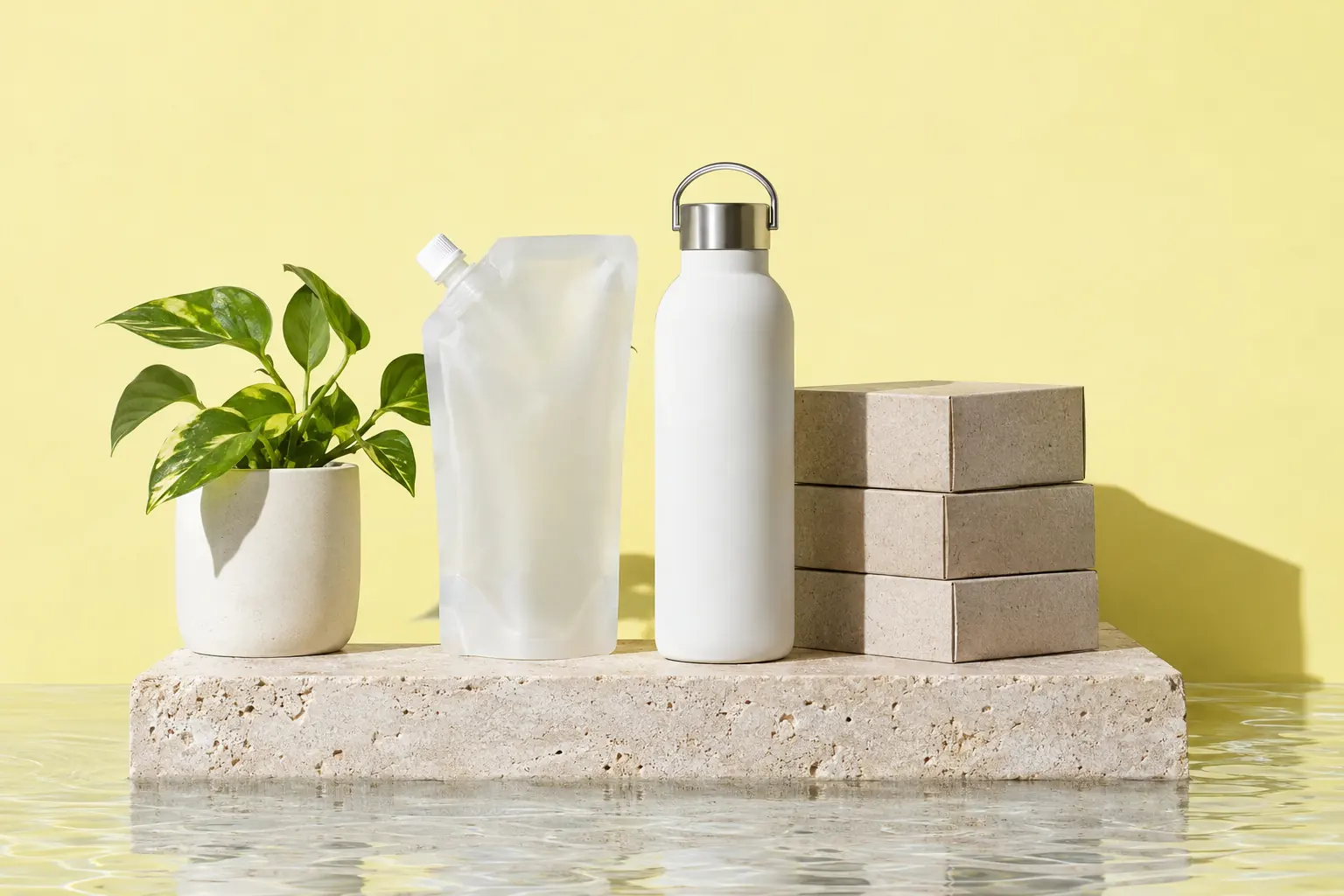
ISO 14001:2015 sets environmental-management-system requirements under the Annex SL structure, replacing the 2004 edition. AKTO does not currently hold ISO 14001 certification, but sources sustainable packaging materials - PCR plastics, glass, biodegradable options - aligned with Regulation (EU) 2025/40 on packaging and Ukraine's Law No. 1264-XII on environmental protection.
01
What ISO 14001 is
ISO 14001:2015 specifies requirements for establishing, implementing, maintaining and continually improving an environmental management system, applicable to any organization regardless of size, type or nature, covering the environmental aspects of its activities, products and services that it can control or influence from a life-cycle perspective.
02
Structure and how it differs from the earlier edition
ISO 14001:2015 follows the Annex SL high-level structure shared with ISO 9001:2015, placing a stronger emphasis on leadership commitment and risk-based thinking than the 2004 edition it replaced. For a brand asking a manufacturing partner about environmental management, that means a system with clear leadership accountability for environmental objectives, not just a set of procedures. The life cycle the standard covers spans raw materials, production, packaging, transport and disposal - so an organization assesses impact beyond its own factory gate, not only inside it.
03
Regulatory context in Ukraine and the EU
Ukraine's Law 'On Environmental Protection' (No. 1264-XII, 25 June 1991) determines the legal, economic and social principles for organising environmental protection for current and future generations; enterprises are subject to ecological requirements at the siting, design, construction, reconstruction, commissioning and operation stages, with liability provisions for breaches of environmental-safety norms. At EU level, Regulation (EU) 2025/40 on packaging and packaging waste applies from 12 August 2026 to all packaging placed on the EU market; its design-for-recycling requirement applies from 1 January 2030 (or 24 months after the relevant delegated acts, whichever is later) and its plastic recycled-content targets from 1 January 2030 (or 3 years after the implementing act), as part of the bloc's circular-economy policy.
04
AKTO's environmental practice
AKTO does not currently hold ISO 14001 certification - this page describes the standard and how it may be relevant to a brand, not an AKTO certificate. On the packaging side, AKTO already sources sustainable materials - PCR (post-consumer recycled) plastics, glass and biodegradable options - which sits in the same direction as ISO 14001 and Regulation (EU) 2025/40. A brand that needs formal confirmation of a manufacturing partner's environmental management should confirm this separately before signing a contract. AKTO's production runs across two sites - Kyiv (Ukraine) and Warsaw (Poland) - manufacturing cosmetics from 50 kg and dietary supplements from 10 kg or 20,000 capsules, and environmental questions most often come up when choosing packaging for these volumes.
05
Getting started
If a market or retailer requires confirmation of a manufacturer's environmental practices, a brand can ask AKTO to describe its approach to packaging materials and compliance with Regulation (EU) 2025/40 before starting a project. See also: Management Systems & GMP, Occupational Health & Safety, Quality & Compliance and Packaging & Labeling.
Frequently Asked Questions
Is AKTO certified to ISO 14001?
How does ISO 14001:2015 differ from the 2004 edition?
What law governs environmental protection for enterprises in Ukraine?
What sustainable packaging materials does AKTO use?
 Andrii Koptielov
 Svitlana Mysiura
Standards we work to
 ISO 22716 (GMP)
 ISO 22000 (HACCP)
 Regulation (EC) No 1223/2009
 Directive 2002/46/EC
 Halal
Why AKTO
- Transparent: AKTO does not claim ISO 14001 certification
- Sustainable packaging materials - PCR plastics, glass, biodegradables
- Alignment with Regulation (EU) 2025/40 on packaging
- Environmental-requirements consultation before project start