
Private Label
Anti-Aging Face Mask
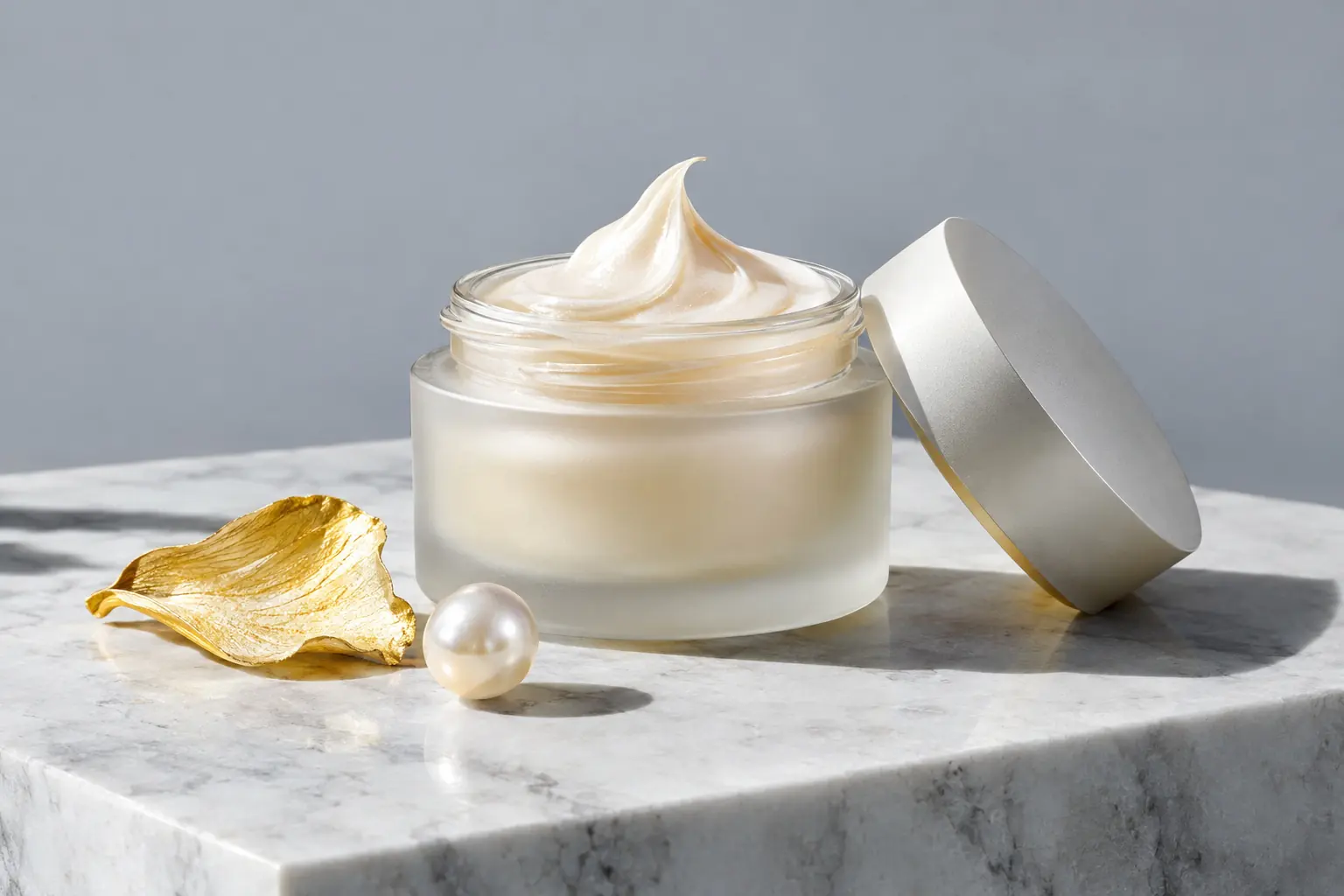
AKTO manufactures a cream-mask with niacinamide and arginine for anti-aging care, in a 100 ml airless pump, from a 50 kg batch.
- ISO 22716 GMP
In brief
An anti-aging face mask targets skin texture and firmness and is often built around niacinamide. AKTO already manufactures a cream-mask with niacinamide and arginine, alongside D-Panthenol, calendula extract and black cumin oil, in a 100 ml airless pump, under Regulation (EC) No 1223/2009, from a 50 kg batch.
01
What an anti-aging face mask is
An anti-aging mask is usually aimed at the appearance of fine lines, skin texture and firmness, and a brand often positions it as a flagship product thanks to its visibly noticeable effect. AKTO already manufactures a cream-mask containing niacinamide and arginine, actives relevant to an anti-aging positioning, alongside D-Panthenol, calendula extract and black cumin oil, even though the formula is currently labelled as an anti-inflammatory expert-care product rather than a dedicated anti-aging one.
02
Active ingredients and combining with retinoids
Niacinamide, a vitamin B3 derivative used in cosmetic formulations including AKTO's cream-mask, supports the skin barrier and skin texture, often under an anti-aging positioning. Commission Regulation (EU) 2024/996 restricts Retinol, Retinyl Acetate and Retinyl Palmitate (Vitamin A) to a maximum of 0.05% Retinol Equivalent in body lotion and 0.3% RE in other leave-on and rinse-off products, with the mandatory label "Contains Vitamin A. Consider your daily intake before use" - a limit relevant if a brand requests a retinoid-based anti-aging mask alongside AKTO's existing niacinamide and arginine. Annex I Part A Section 8 and Part B Section 3 of the same Regulation require the possible interactions of substances in a formulation to be assessed separately, relevant to an anti-aging mask combining several actives, such as niacinamide with a retinoid or an AHA.
03
Label claims and Ukraine regulatory requirements
A claim such as "reduces the appearance of fine lines and wrinkles" must be supported by evidence, such as instrumental or clinical measurement, one of the six common criteria of Commission Regulation (EU) No 655/2013. AKTO's own claims guidance requires quantitative effect claims and wording such as "hypoallergenic" or "dermatologically tested" to be backed by studies, and Natural or Organic claims to be made only under ISO 16128 or COSMOS/ECOCERT certification. In Ukraine, AKTO-manufactured cosmetics are registered under its own technical specification TU U 20.4-43961492-001:2020, backed by a 2021 state sanitary-epidemiological expert conclusion.
04
What AKTO offers
The minimum batch is 50 kg of finished formulation, made at AKTO's facilities in Kyiv (Ukraine) and Warsaw (Poland). Production is certified to ISO 9001:2015 and ISO 22000:2018 (HACCP; combined certificate No. 44600111204) and to ISO 22716 (GMP). AKTO agrees the set of actives for an anti-aging positioning individually with the brand, building on the already-proven niacinamide-and-arginine formula.
05
Getting started
A brand sets the desired emphasis - texture, firmness or the appearance of wrinkles - and whether additional actives are needed beyond the base formula; AKTO adapts the cream-mask formula to these parameters, checks the interaction of substances, and prepares the product's technical dossier for the chosen market. This lets a brand launch an anti-aging product built on an already-proven formula rather than starting from scratch. See also: Soothing Face Mask, Face, Teen Skin Care and Masks (Face).
Frequently Asked Questions
Does AKTO manufacture anti-aging face masks?
What EU limits apply to retinol in a face mask?
Can an anti-aging mask be labelled "natural"?
What is AKTO's minimum batch for an anti-aging mask?
Expert review
Reviewed by
 Illia Mariutsa
Researcher, organic chemistry
Google Scholar Anastasiia Bespalova
Paediatric orthopaedic and trauma surgeon
ORCID
Standards we work to
 ISO 22716 (GMP)
 ISO 22000 (HACCP)
 Regulation (EC) No 1223/2009
 Directive 2002/46/EC
 Halal
Why AKTO
- Cream-mask with niacinamide and arginine already in production
- Multi-active combinations checked for interactions under Regulation (EC) No 1223/2009
- Any retinoid addition follows the limits in Regulation (EU) 2024/996
- Registered under TU U 20.4-43961492-001:2020 and a 2021 expert conclusion
- MOQ from 50 kg, facilities in Kyiv (Ukraine) and Warsaw (Poland)