
Private Label
Cream Targeted Post-Acne
AKTO develops and manufactures a post-acne cream to order for a brand, targeting marks and uneven tone left by breakouts, without hydroquinone.
- ISO 22716 GMP
In brief
Company AKTO LLC (AKTO) develops and manufactures a post-acne cream to order for a brand, targeting marks and uneven tone left after breakouts. Hydroquinone has no authorised concentration for a leave-on face cream, so the formula relies on alternative actives within the limits of Regulation (EC) No 1223/2009. The minimum batch is 50 kg, registered in Ukraine under AKTO's own technical specification.
01
What a post-acne cream is
Unlike a spot treatment for an active breakout, a post-acne cream addresses what is left behind afterwards - marks, uneven tone and redness - and is applied over a longer period across a larger area of the face. Targeted face care in this category covers products with a narrow, clearly stated purpose, as opposed to a general-purpose daily moisturizer. A brand typically adds this product as a separate SKU once customers have moved past the active-breakout stage and are looking for something to address what is left on the skin afterwards.
02
Composition and packaging requirements
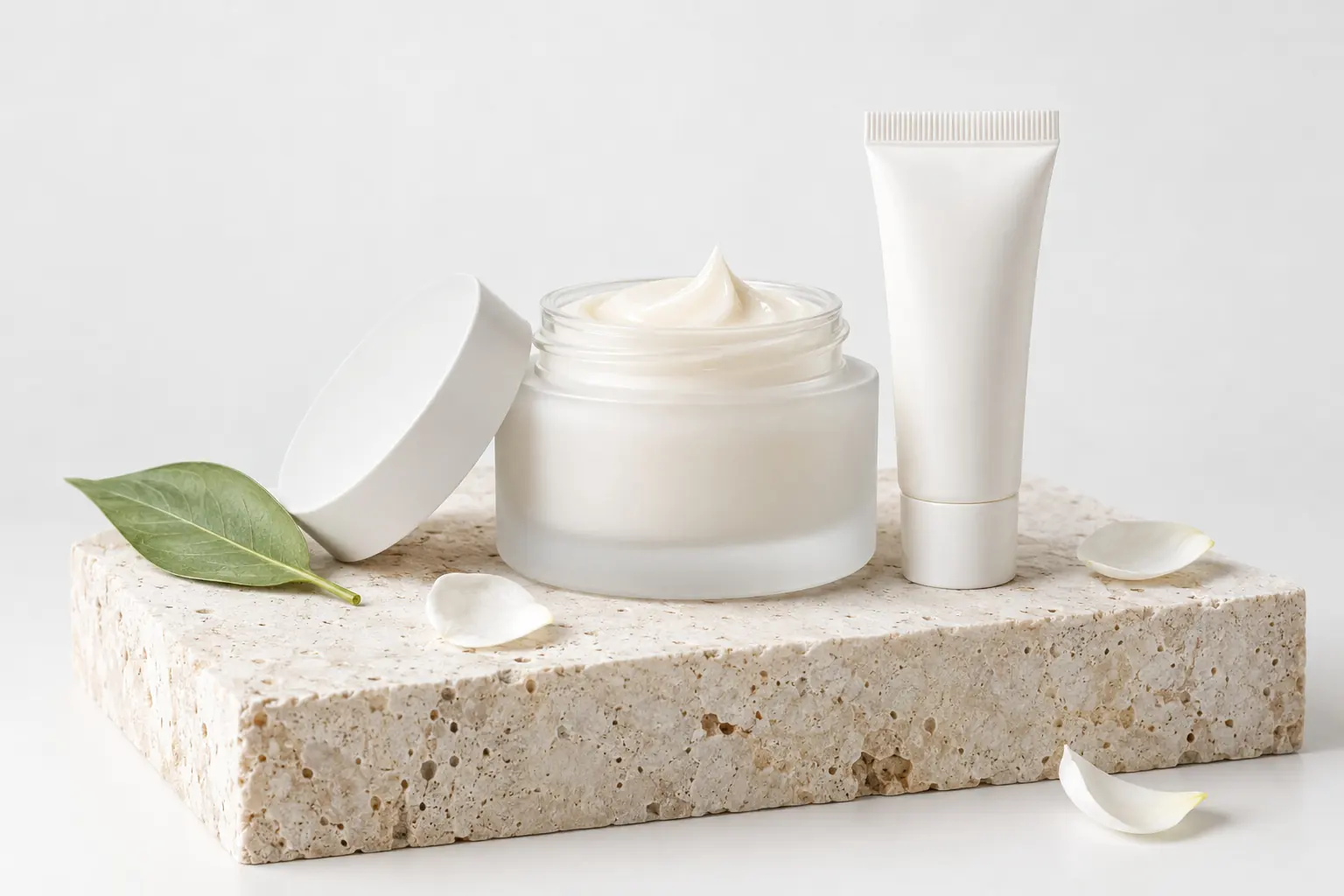
Annex III of Regulation (EC) No 1223/2009 permits hydroquinone only at 0.02% (after mixing for use) in artificial nail systems for professional use; it has no authorised concentration for a leave-on face cream, which rules out hydroquinone as a skin-lightening active for the EU market. Regulation (EU) 2024/996 caps Retinol, Retinyl Acetate and Retinyl Palmitate (Vitamin A) - actives sometimes used for post-acne texture and mark-fading - at 0.3% Retinol Equivalent in leave-on products (0.05% RE for body lotion), with a mandatory label warning. Packaging is PBL tubes of 25-50 mm diameter or jars of 50-250 g.
03
EU and Ukraine regulatory requirements
Annex I Part A Section 10 of Regulation (EC) No 1223/2009 allows the safety report to rely on other relevant information, such as existing human-volunteer studies or duly substantiated risk-assessment findings - applicable when substantiating a mark-fading or tone-evening claim. In Ukraine, a product manufactured by AKTO is registered under its own technical specification TU U 20.4-43961492-001:2020, backed by sanitary-epidemiological expert opinion No. 12.2-18-2/2361 dated 15.02.2021.
04
What AKTO offers
AKTO's higher-tier service packages include a technical file with expert sign-off, toxicological indicators and container-compatibility testing, applicable to a targeted post-acne formula. Production premises are monitored for humidity (20-60%) and temperature (16-25 degrees C) twice per shift. Alongside full recipe development, GTIN-13 barcode registration and label-compliance checking are available as standalone services when launching a new post-acne SKU. The minimum batch is 50 kg of finished formulation at AKTO's facilities in Kyiv (Ukraine) and Warsaw (Poland), certified to ISO 9001:2015 and ISO 22000:2018 (HACCP; combined certificate No. 44600111204), ISO 22716 (GMP).
05
Getting started
A brand defines the target effect - fading marks, evening tone - and AKTO selects an alternative to hydroquinone within the regulatory limits, gathers volunteer studies or other relevant data to substantiate the claim, and prepares the technical file with expert sign-off before a batch from 50 kg starts. See also: Targeted Face Care, Spot Treatment for Breakouts and Neck & Décolleté Cream.
Frequently Asked Questions
Does AKTO manufacture a post-acne cream?
Why is hydroquinone not used in an EU-market post-acne cream?
How is a mark-fading claim substantiated?
What document registers a post-acne cream in Ukraine?
Expert review
Reviewed by
 Illia Mariutsa
Researcher, organic chemistry
Google Scholar Anastasiia Bespalova
Paediatric orthopaedic and trauma surgeon
ORCID
Standards we work to
 ISO 22716 (GMP)
 ISO 22000 (HACCP)
 Regulation (EC) No 1223/2009
 Directive 2002/46/EC
 Halal
Why AKTO
- Post-acne formula development without hydroquinone, to order
- Technical file with expert sign-off and toxicological indicators
- Container-compatibility testing
- Humidity (20-60%) and temperature (16-25 degrees C) monitoring twice per shift
- MOQ from 50 kg, PBL tubes 25-50 mm