
Private Label
Fabric Softener
AKTO develops and manufactures liquid fabric softener on its textile and laundry-care lines, in a 200-1,000 ml pump bottle, aligned with EU fragrance-allergen labelling rules.
- ISO 22716 GMP
In brief
Company AKTO LLC (AKTO) develops and manufactures fabric softener to order on its textile and laundry-care lines, packaged in a 200-1,000 ml pump bottle. The formula is built to meet EU Regulation (EC) No 648/2004's fragrance-allergen disclosure rule and Ukraine's Technical Regulation on Detergents; the minimum batch is 50 kg at AKTO's plants in Kyiv (Ukraine) and Warsaw (Poland).
01
What fabric softener is and why a brand carries it
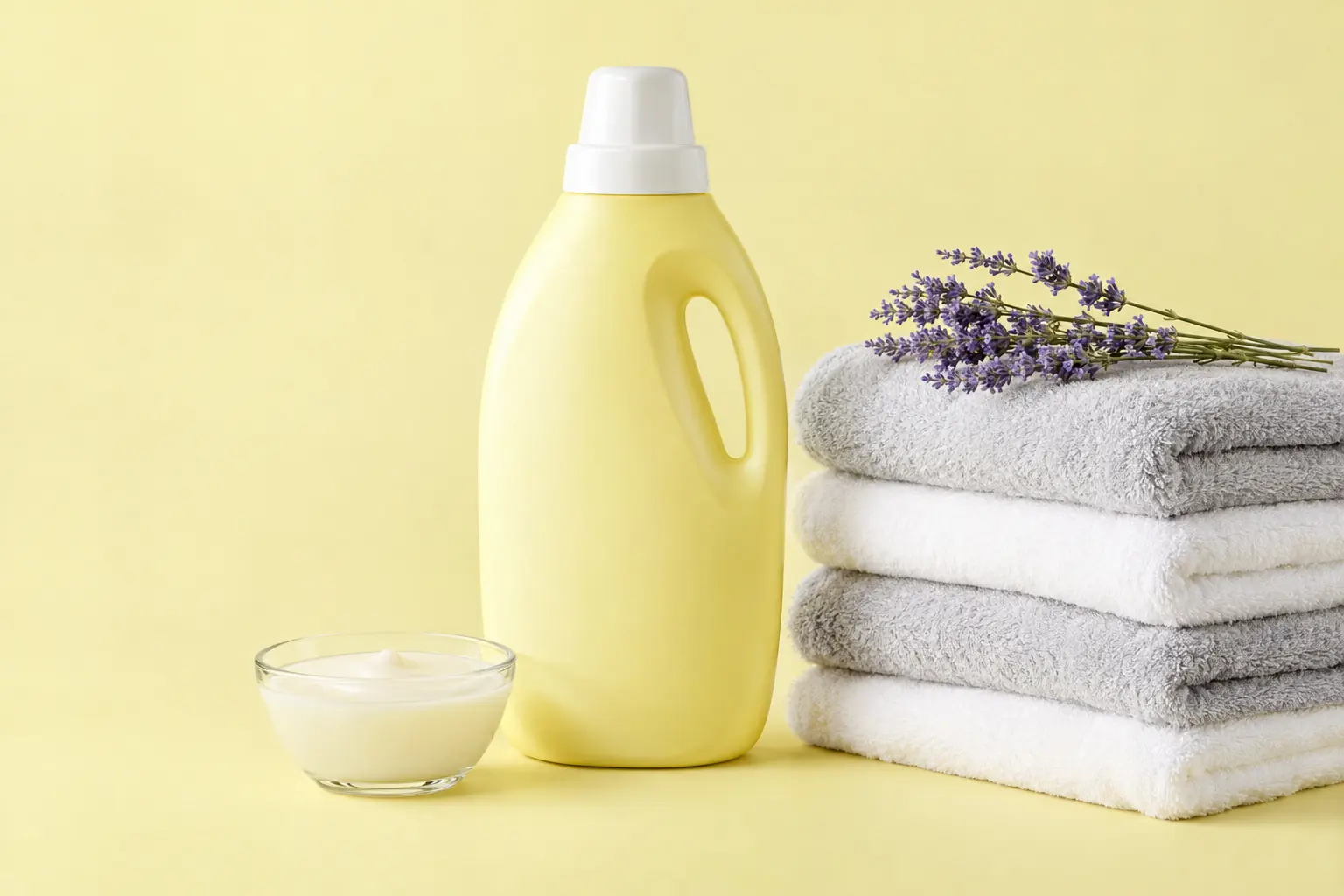
Fabric softener is a liquid added at the rinse stage of a laundry cycle: it deposits on fibres, leaves fabric feeling softer, makes ironing easier and adds a light scent after drying. Unlike a laundry detergent, it does not remove soil - its role is purely a finishing step, which is why laundry and household-care brands typically launch it as a separate product alongside a base detergent rather than folding it into one. For a retail brand, a softener is a repeat-purchase product: the scent itself becomes part of what a shopper recognises and reorders.
02
Formula, format and packaging
AKTO develops and manufactures fabric softener to order as a liquid formulation on its own textile and laundry-care lines. The finished product is dispensed from a pump bottle of 200 to 1,000 ml, a format that lets a household dose it by hand at every rinse without a measuring cup. The cationic-surfactant concentration, viscosity and fragrance level are matched individually during formula development, once the brand sets the target softness and scent profile.
03
EU and Ukraine regulatory requirements
Regulation (EC) No 648/2004 Article 2(1) names a 'laundry fabric-softener' as its own detergent sub-category, which brings the product within the Regulation's scope. Annex VII Section A, as substituted by Regulation (EC) No 907/2006, requires any fragrance allergen from Annex III added above 0.01% by weight to be listed on the label. In Ukraine, the Technical Regulation on Detergents (CMU Resolution No. 717/2008, as amended) excludes a preparation containing 0.2% or less soap and/or surfactants (para 5); a liquid softener built on cationic surfactants (esterquats) typically exceeds that level and stays within the Regulation's scope.
04
What AKTO offers
AKTO manufactures fabric softener at two sites, in Kyiv (Ukraine) and Warsaw (Poland), with a standard lead time from 4 weeks once 100% prepayment is made before a run begins. A brand can choose either sourcing mode: client-supplied (tolling) raw materials, or materials sourced by AKTO. The Warsaw (Poland) facility's monthly capacity for liquid forms runs up to 50 tonnes and up to 200,000 filled bottles, alongside the larger-scale lines in Kyiv (Ukraine). Manufacturing is certified to ISO 9001:2015 and ISO 22000:2018 (HACCP, combined certificate No. 44600111204), plus ISO 22716 (GMP).
05
Getting started
A brand sets the target softness, scent profile and bottle size within the 200-1,000 ml range, and chooses a raw-material sourcing mode; AKTO develops the formula, checks it against the allergen-labelling threshold, and runs a batch from 50 kg at the chosen site. See also: Textile & Laundry Care, Laundry Rinse Aid and Home Care & Cleaning.
Frequently Asked Questions
What surfactant system does AKTO's fabric softener use?
What packaging does fabric softener come in?
Does EU Regulation 648/2004 apply to fabric softener?
What is AKTO's minimum batch for fabric softener?
 Kateryna Khromykh
 Oleksandra Vovk
Standards we work to
 ISO 22716 (GMP)
 ISO 22000 (HACCP)
 Regulation (EC) No 1223/2009
 Directive 2002/46/EC
 Halal
Why AKTO
- Liquid softener formula to order on AKTO's own textile-care lines
- 200-1,000 ml pump bottle, tolling or AKTO-sourced raw materials
- Meets the EU 648/2004 fragrance-allergen labelling threshold
- Minimum batch from 50 kg, plants in Kyiv (Ukraine) and Warsaw (Poland)
- Certified to ISO 9001, ISO 22000 (HACCP), ISO 22716 (GMP)