
Private Label
Face Peeling Gel
AKTO develops and manufactures a face peeling gel to a brand's order - a fourth texture for its exfoliation line.
- ISO 22716 GMP
In brief
Company AKTO LLC (AKTO) develops and manufactures a face peeling gel to a brand's order, building on its already-proven acid line - serum, lotion and emulsion - and its own aqueous-gel production on Aloe Vera and calendula extracts in 300-500 ml pump bottles. The gel texture gives a brand a fourth format choice alongside the three already established.
01
Gel as a fourth peeling texture
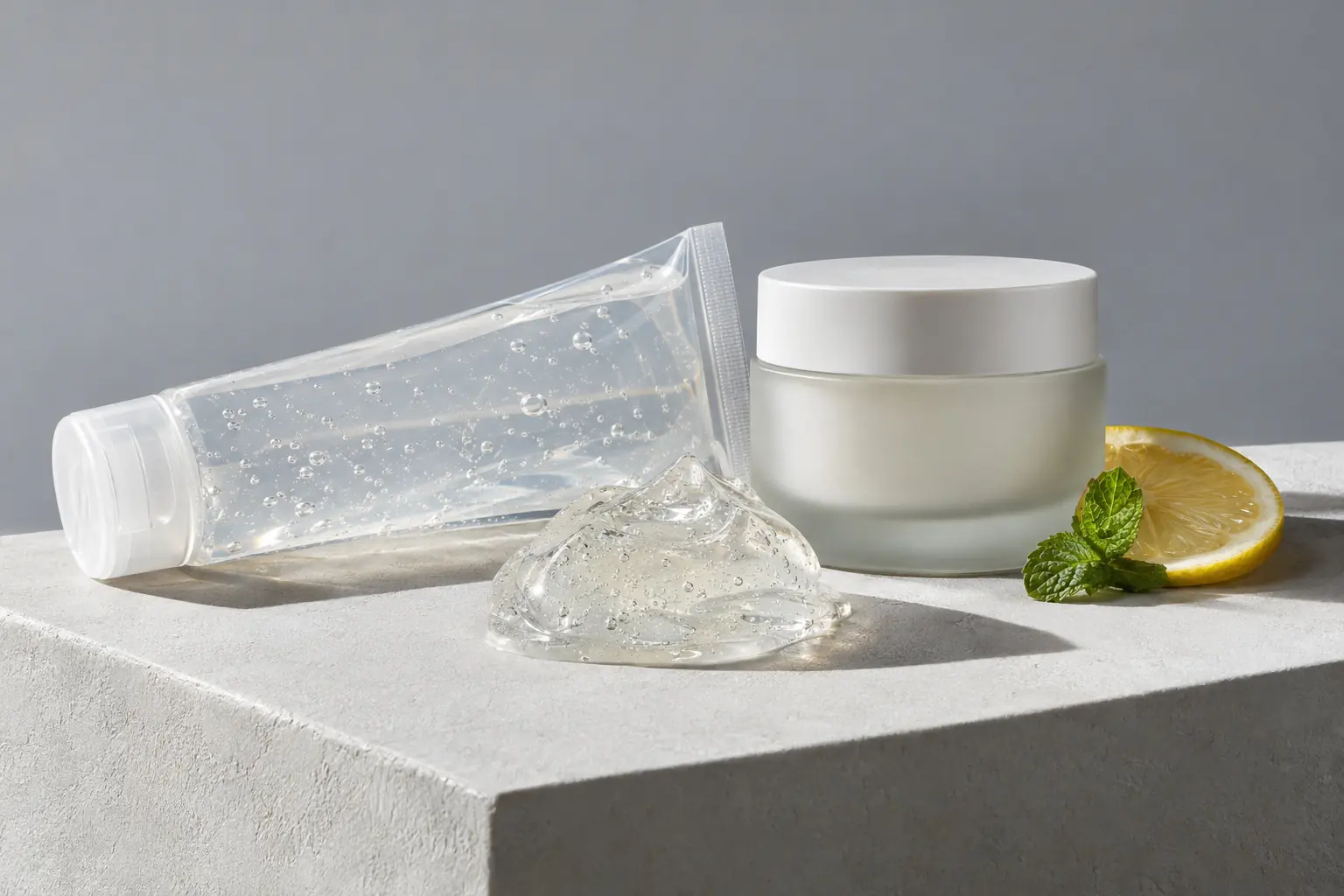
AKTO already manufactures three textures for a facial acid peel - serum, emulsion and scrub - and develops a gel texture to order as a fourth choice within the same exfoliation line. A gel consistency cools the skin on application and rinses off easily, making it a comfortable option for a warm climate or the summer season. For the customer, it feels lighter and fresher on application than a thicker emulsion or a dense scrub.
02
What the gel formulation builds on
AKTO produces aqueous gels - a hand gel and an intensively moisturizing gel built on Aloe Vera and calendula extracts - in dark pump bottles of 300-500 ml, a proven production capability for aqueous gel textures. A peeling gel combines this gel base with the already-proven AHA/BHA/PHA acid line that AKTO applies in its serums, lotions and emulsions. Combining these two areas of expertise - gel textures and acid actives - forms the basis for a new peeling-gel formula.
03
EU and Ukraine regulatory requirements
Annex V entry 29 of Regulation (EC) No 1223/2009 authorises Phenoxyethanol as a preservative for the gel's aqueous base at up to 1.0%. Article 15 of Regulation (EC) No 1223/2009 prohibits the use in cosmetic products of substances classified as CMR under CLP: categories 1A and 1B save for rare exceptions under the conditions of Article 15(2), category 2 unless the SCCS has found them safe; the specific prohibited substances are listed in Annex II. This is a constraint on the actives and preservatives available. The ingredient list on the label follows Article 19(1)(g), in descending order of weight as added. The Annex III entry 98 restriction on salicylic acid applies across the whole exfoliation line, regardless of which acid and concentration a specific gel formula uses. AKTO factors this limit into the choice of acid for the gel base at an early stage.
04
What AKTO offers
The dossier testing package for actives-driven formulas includes physicochemical analysis and stability/compatibility testing, mandatory regardless of whether the peel's final texture is a gel, lotion or serum. The minimum batch is 50 kg of finished formulation, produced at AKTO's plants in Kyiv (Ukraine) and Warsaw (Poland), certified to ISO 22716 (GMP), which governs production, storage and shipment of these formats regardless of final texture.
05
Getting started
The brand defines the desired acid, concentration and the feel of the gel on application; AKTO develops a new formula drawing on its gel and acid expertise, runs physicochemical and stability testing, and prepares the technical documentation. A gel like this pairs well with a brand's line as a cooler, summer-friendly alternative to a serum or lotion. See also: Exfoliation / Peels (Face), Face Peeling Serum, Face Peeling Lotion and Targeted Face Care.
Frequently Asked Questions
How many acid-peel textures does AKTO already produce?
What production experience does AKTO base the peeling gel on?
What preservative is used in the gel's aqueous base?
Does the salicylic acid restriction apply to a gel texture too?
Expert review
Reviewed by
 Illia Mariutsa
Researcher, organic chemistry
Google Scholar Anastasiia Bespalova
Paediatric orthopaedic and trauma surgeon
ORCID
Standards we work to
 ISO 22716 (GMP)
 ISO 22000 (HACCP)
 Regulation (EC) No 1223/2009
 Directive 2002/46/EC
 Halal
Why AKTO
- A fourth texture alongside serum, emulsion and scrub
- Proven aqueous-gel production on Aloe Vera and calendula
- 300-500 ml pump bottle for gel textures
- Physicochemical analysis and stability testing
- MOQ from 50 kg, ISO 22716 (GMP)