
Private Label
Face Restorative Cream
AKTO develops a restorative face cream on its own peptides Palmitoyl Tripeptide-1 and Palmitoyl Tetrapeptide-7, to a brand's order.
- ISO 22716 GMP
In brief
AKTO develops a restorative face cream on its formula with the peptides Palmitoyl Tripeptide-1 and Palmitoyl Tetrapeptide-7, niacinamide and a ceramide complex, to a brand's order. The minimum batch is 50 kg, packed into tubes and jars of 50-250 g. Production follows Regulation (EC) No 1223/2009, ISO 22716 and Ukraine's Resolution No. 65.
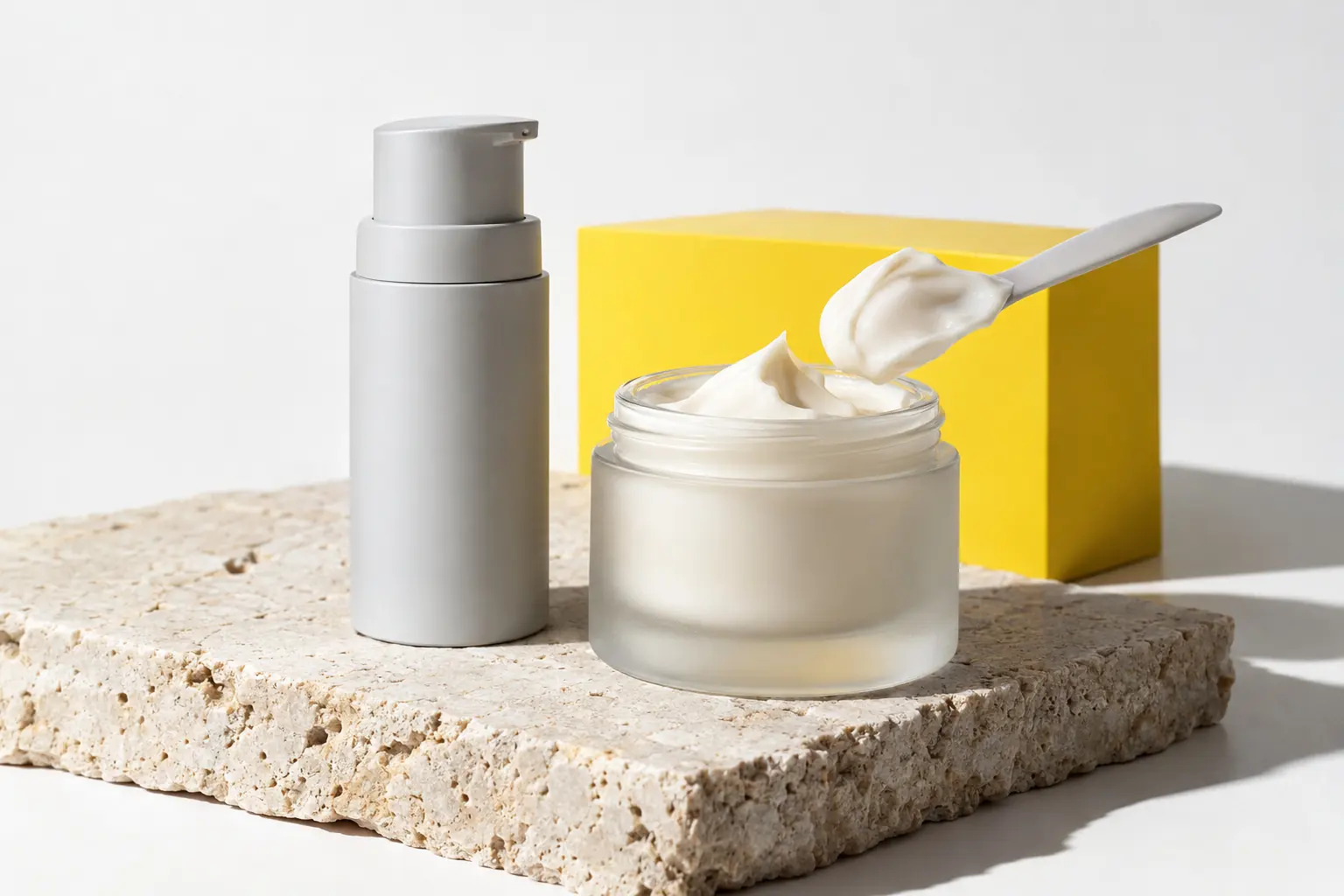
01
What a restorative face cream is and who orders it
A restorative cream is built to support the skin barrier and a sense of firmness after stress factors — wind, sun, age-related change, cosmetic procedures. Brands order this SKU for an anti-ageing or intensive-repair line, separate from a standard moisturizer. A shopper for this product usually pays for active concentration and a documented rationale for the effect, not just for a pleasant texture. It's the product for a shopper specifically looking for a restorative or anti-ageing position on the label, rather than general hydration. In many ranges this cream becomes the flagship SKU, carrying most of the marketing budget and the strongest efficacy claims.
02
Formulation, actives and packaging requirements
AKTO's day face-cream formula includes the peptides Palmitoyl Tripeptide-1 and Palmitoyl Tetrapeptide-7 — actives traditionally linked to a restorative or anti-ageing effect — alongside niacinamide and a ceramide complex. AKTO builds a restorative cream on those peptides to a brand's order. Cosmetic formulas, restorative creams included, are filled into tubes and jars of 50 to 250 g, from a minimum batch of 50 kg of finished formulation.
03
EU and Ukraine regulatory requirements
A restorative or anti-ageing claim, such as 'repairs the skin barrier' or 'restores firmness', must meet the common criteria of Regulation (EU) No 655/2013 — truthfulness, evidential support and honesty — and must stop short of a physiological or medicinal effect that would place the product outside the cosmetics definition. The general requirements still apply: Article 8 (GMP presumption via ISO 22716), Article 10 (a Cosmetic Product Safety Report) and the 0.001% Annex III allergen threshold for leave-on products. In Ukraine, the product falls under Resolution No. 65 and AKTO's own technical specification, TU U 20.4-43961492-001:2020.
04
What AKTO offers
AKTO's higher-tier service package for a face-care formula includes a technical file with an expert's sign-off under Resolution No. 65, toxicological indicators, preservative-challenge testing and container-compatibility testing — a fitting set for a peptide-based product where formula stability matters. AKTO builds a restorative cream on Palmitoyl Tripeptide-1 and Palmitoyl Tetrapeptide-7, from a 50 kg batch, at its plants in Kyiv (Ukraine) and Warsaw (Poland). Both sites are certified to ISO 9001:2015, ISO 22000:2018 (HACCP; certificate No. 44600111204) and ISO 22716 (GMP).
05
Getting started
A brand states the desired restorative effect and claim wording free of physiological implications in a technical brief; AKTO builds the formula on its peptide complex, checks stability and prepares documentation for the target market. See also: Face Creams / Moisturizers, Face Nourishing Cream and Face Barrier Cream.
Frequently Asked Questions
Does AKTO manufacture a restorative face cream?
What actives give the formula its restorative effect?
Can the label claim 'repairs the skin barrier'?
What extended testing package does AKTO offer for this cream?
Expert review
Reviewed by
 Illia Mariutsa
Researcher, organic chemistry
Google Scholar Anastasiia Bespalova
Paediatric orthopaedic and trauma surgeon
ORCID
Standards we work to
 ISO 22716 (GMP)
 ISO 22000 (HACCP)
 Regulation (EC) No 1223/2009
 Directive 2002/46/EC
 Halal
Why AKTO
- Formula built on Palmitoyl Tripeptide-1 and Tetrapeptide-7
- Extended testing package with sign-off under Resolution No. 65
- MOQ from 50 kg, plants in Kyiv (Ukraine) and Warsaw (Poland)
- ISO 9001:2015, ISO 22000:2018 (HACCP) and ISO 22716 (GMP)