
Private Label
Face Toner
A leave-on liquid step after cleansing; AKTO already manufactures face toner and supports its market entry into Ukraine with the required documentation.
- Resolution No. 65
In brief
Face toner is a leave-on liquid applied after cleansing and left on the skin, so its formula follows stricter allergen-labelling rules than a rinse-off cleanser. AKTO already manufactures toning liquids for the face in a 200-250 ml trigger-spray bottle and prepares the technical dossier for placing the product on the Ukrainian market under Resolution No. 65.
01
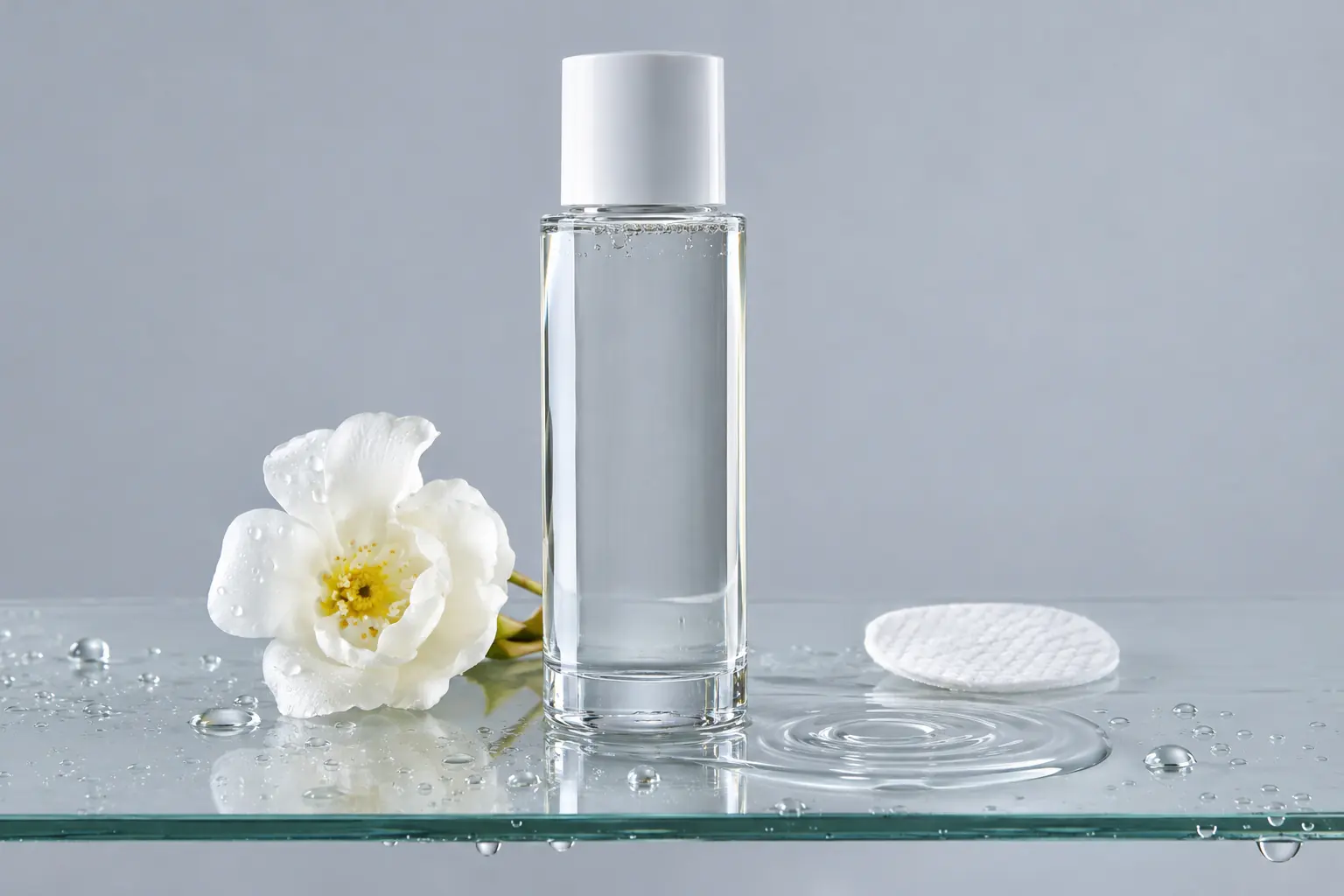
Face toner: a leave-on step after cleansing
Toner is applied to the skin after cleansing and is not rinsed off with water - unlike a foam or gel, it stays on the face and keeps working through the day or night. That changes the formulation and labelling requirements compared with a face cleanser: instead of the rinse-off threshold, the stricter leave-on threshold applies. The category suits a brand that already runs a face-cleansing line and wants the next step in the routine, built around its own active ingredients. AKTO already manufactures toning liquids for the face and formulates a new one against a brand's brief - actives, pH, claimed effect.
02
Formula: why the allergen threshold is stricter
Because toner stays on the skin rather than being rinsed off, its fragrance-allergen labelling threshold under Regulation (EC) No 1223/2009, Annex III, is 0.001% - stricter than the threshold for a rinse-off product. Article 15 of the same regulation bans the use in cosmetic products of substances classified under CLP as carcinogenic, mutagenic or toxic to reproduction (CMR): categories 1A and 1B save for rare exceptions under the conditions of Article 15(2), category 2 unless the SCCS has found them safe; the specific prohibited substances are listed in Annex II. This limits the active ingredients and preservatives available for a leave-on formula. Phenoxyethanol, an option for the preservative system, is capped at 1.0% in the ready-for-use preparation under Annex V.
03
An 'alcohol-free' claim and shelf-life labelling
Wording such as 'alcohol-free' on a toner label falls under Regulation (EU) No 655/2013 and is checked against the same six criteria as any other cosmetic claim: legal compliance, truthfulness, evidential support, honesty, fairness and allowing informed decisions. Ukraine's Technical Regulation on Cosmetic Products (CMU Resolution No. 65) requires the label to show the date of minimum durability or, for a toner lasting more than 30 months, the period after opening (point 47(3)), and prohibits placing on the market a product whose formulation or ingredients were animal-tested for the Regulation's purposes with a non-alternative method once a validated alternative exists (point 46). The Regulation entered into force on 3 August 2024; under point 3 of Resolution No. 65, as amended by Resolution No. 976 of 29 July 2026, a toner placed on the Ukrainian market before 31 July 2027 cannot be prohibited or restricted for non-compliance with the Regulation.
04
AKTO's service package for a toner
A toner brief follows the same process as other face-care products: the lab develops and tests the formula against the claimed effect, checks stability, and market documentation follows only once the sample is approved. The 'Standard' service package includes a technical file signed by an expert under Resolution No. 65, toxicological indicators, and preservative-challenge and microbiology testing at an accredited laboratory - exactly the evidence needed for a claim such as 'alcohol-free' or 'pH-balancing'. AKTO fills toner into a 200-250 ml PET bottle fitted with a trigger spray, at plants in Kyiv (Ukraine) and Warsaw (Poland) certified to ISO 22716 (GMP) and the combined ISO 9001:2015/ISO 22000:2018 (HACCP) standard (certificate No. 44600111204). The minimum order for cosmetics is from 50 kg.
05
Getting started
- The brand sets out a brief: active ingredients, claimed pH and effect.
- AKTO develops the formula and checks it against Annexes II, III and V.
- Label claims are substantiated through the 'Standard' package: technical file, toxicology, stability and microbiology testing.
- Once the sample is approved, filling into a 200-250 ml trigger-spray bottle moves to production.
06
See also
See also: Toners / Mists / Essences and Face Cleansers.
Frequently Asked Questions
Why is the allergen threshold for toner stricter than for a face cleanser?
Can a toner label say 'alcohol-free' without proof?
What does AKTO's 'Standard' service package include for a toner?
What bottle does AKTO use for face toner?
Expert review
Reviewed by
 Illia Mariutsa
Researcher, organic chemistry
Google Scholar Anastasiia Bespalova
Paediatric orthopaedic and trauma surgeon
ORCID
Standards we work to
 ISO 22716 (GMP)
 ISO 22000 (HACCP)
 Regulation (EC) No 1223/2009
 Directive 2002/46/EC
 Halal
Why AKTO
- Track record manufacturing toning liquids for the face
- Formula checked against Annexes II, III and V of Regulation 1223/2009
- 'Standard' package: technical file, toxicology, microbiology testing
- 200-250 ml trigger-spray bottle, plants in Kyiv (Ukraine) and Warsaw (Poland)