
Private Label
Gum Gel
AKTO develops and manufactures a cosmetic gum gel to order on its own lines in Kyiv (Ukraine) and Warsaw (Poland).
- ISO 22716 GMP
In brief
AKTO develops and manufactures a cosmetic gum gel to order on its own lines in Kyiv (Ukraine) and Warsaw (Poland). A formula with claims confined to cleaning, protecting or keeping the gums 'in good condition' meets the cosmetic-product definition under Article 2(1)(a) of Regulation (EC) No 1223/2009; the preservative is chlorhexidine up to 0.3%. The minimum batch is 50 kg.
01
What a gum gel is
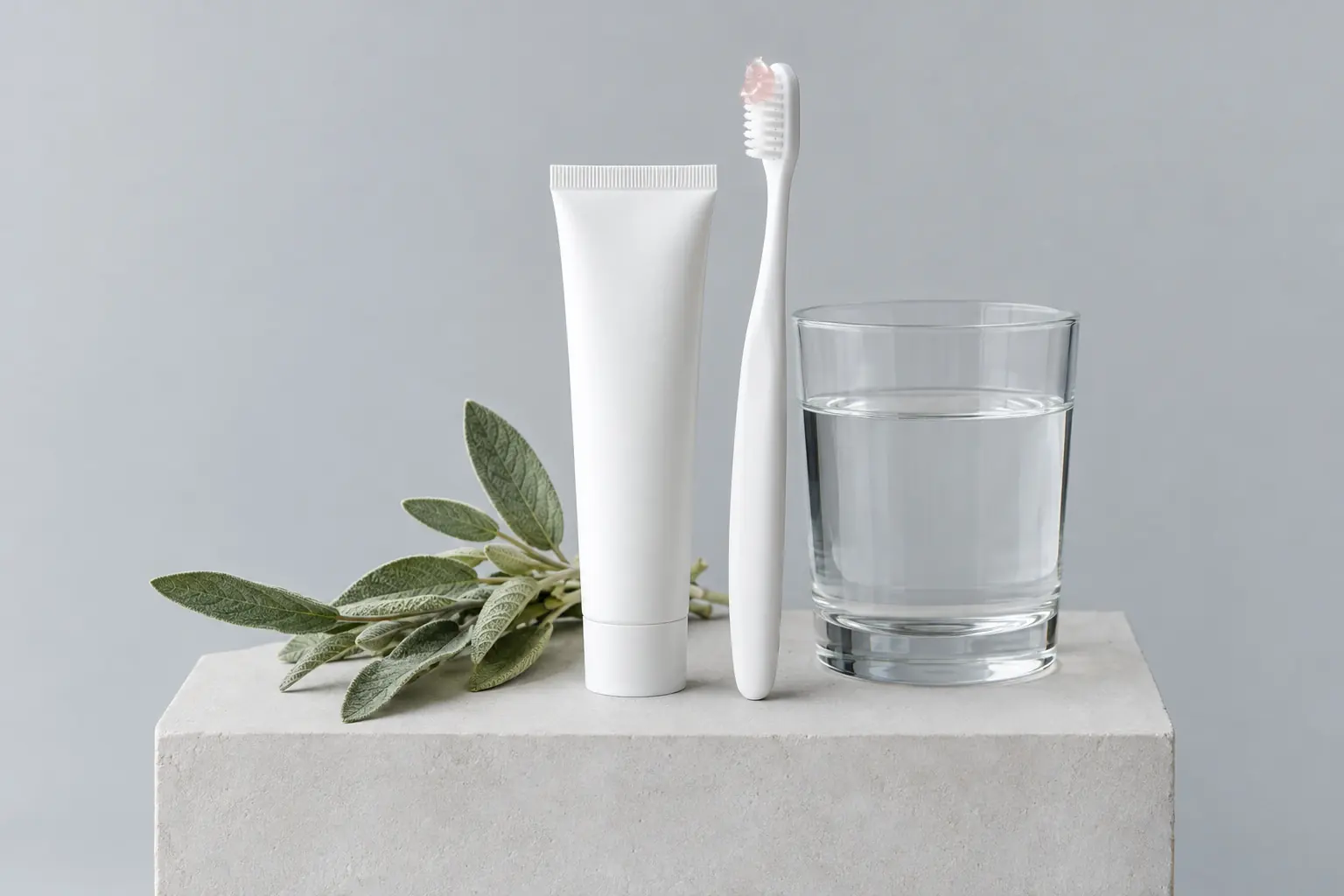
A gum gel is a topical product applied directly to the gums with a finger or applicator for daily care, unlike a paste or rinse aimed at the teeth as a whole. It targets an audience already engaged with gum health, so a brand typically positions it as part of a sensitive-gums line rather than a stand-alone mass-market product.
02
The line between a cosmetic and a medicinal product
Article 1(2) of Directive 2001/83/EC defines a 'medicinal product' by two criteria: by presentation, if a product is presented as having properties for treating or preventing disease, and by function, if it actually exerts a pharmacological, immunological or metabolic action. A gum gel that claims to treat or reduce gum inflammation (gingivitis) is caught by the presentation criterion on the strength of the claim's wording alone. A gel whose claims are confined to cleaning, protecting or keeping the gums and oral mucosa 'in good condition', without a disease-treatment or physiological-function claim, instead meets the cosmetic-product definition under Article 2(1)(a) of Regulation (EC) No 1223/2009 and is regulated as a cosmetic, not as a medicinal product or medical device.
03
Preservative choice and the evidence behind claims
Annex V entry 42 to Regulation (EC) No 1223/2009 permits chlorhexidine and its digluconate, diacetate and dihydrochloride salts as a preservative up to 0.3% calculated as chlorhexidine. Annex V regulates the use of chlorhexidine as a preservative; claims of antibacterial action for the finished product require separate substantiation. Regulation (EU) No 655/2013 requires evidence for a cosmetic claim such as 'soothes gums', but the line between a cosmetic and a medicinal claim (for instance, 'reduces bleeding' as a disease-related claim) follows from the cosmetic-product definition in Article 2(1)(a) of Regulation (EC) No 1223/2009 and Directive 2001/83/EC, not from Regulation 655/2013 itself.
04
What AKTO offers
AKTO's standard tube range for gel products runs from Ø25 mm (15-30 ml) to Ø50 mm (200 ml), the same range used for other gels in the line. AKTO offers two raw-material sourcing modes - client-supplied (tolling) or AKTO-supplied. Sachet/stick-format filling capacity reaches up to 100,000 units a month in Kyiv (Ukraine) and up to 50,000 in Warsaw (Poland), alongside the tube format. The minimum batch is 50 kg of finished formulation. Production is certified to ISO 9001:2015, ISO 22000:2018 (HACCP; combined certificate No. 44600111204) and ISO 22716 (GMP).
05
Getting started
A brand sets the claim wording - strictly cosmetic, with no mention of treating gingivitis - and the tube or stick format; AKTO prepares the formula with a preservative within the 0.3% limit and labelling that stays within the cosmetic definition. See also: Gums / Dentures / Irrigator, Household, Hygiene & Specialty Care, Denture Care Cleaner and Irrigator Cleaner Concentrate.
Frequently Asked Questions
Can a gum gel's label say it treats gingivitis?
What preservative is permitted in a gum gel?
Why does a gum gel stay a cosmetic product?
What packaging does AKTO use for gum gel?
 Kateryna Khromykh
 Oleksandra Vovk
Standards we work to
 ISO 22716 (GMP)
 ISO 22000 (HACCP)
 Regulation (EC) No 1223/2009
 Directive 2002/46/EC
 Halal
Why AKTO
- Cosmetic gum gel developed to order on AKTO's own lines
- Claims confined to cleaning and keeping gums in good condition
- Preservative capped at 0.3% chlorhexidine (Annex V entry 42)
- Tubes Ø25-Ø50 mm and sachets/sticks, up to 100,000 sticks/month in Kyiv (Ukraine)
- MOQ from 50 kg, facilities in Kyiv (Ukraine) and Warsaw (Poland)