
Private Label
Iron
An iron mineral supplement in capsule or sachet form: a long list of permitted chemical forms and seven EU health claims AKTO checks before formulation.
- ISO 22000 (HACCP)
In brief
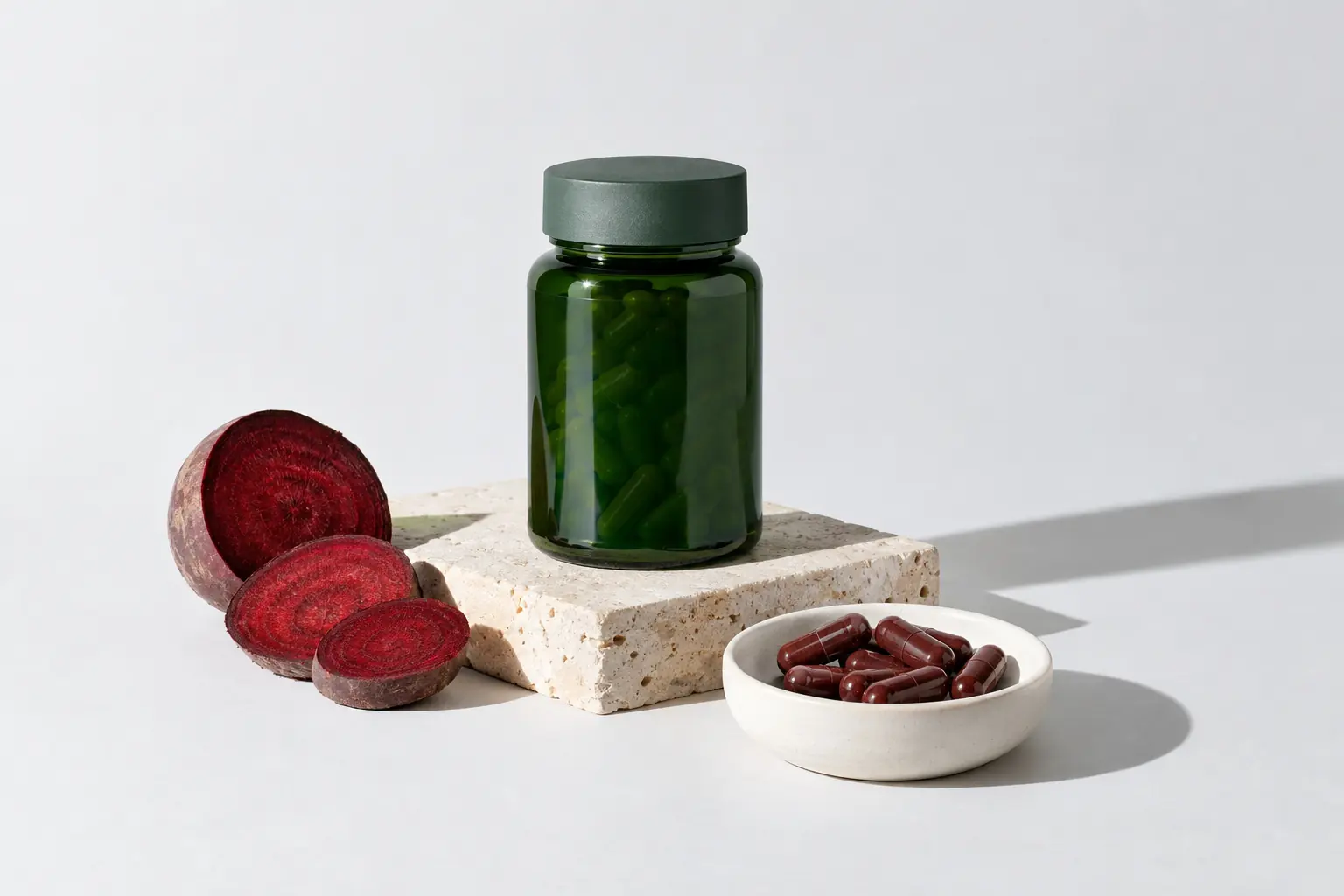
An iron supplement is a capsule, tablet or sachet built around the mineral iron in a permitted chemical form. Company AKTO LLC (AKTO) already produces zinc capsules and develops and manufactures iron supplements to order, using the same regulatory process for checking form, dose and claim.
01
What an iron supplement is
An iron supplement is a capsule, tablet or sachet built around the mineral iron in a permitted chemical form; unlike selenium or calcium, iron has an especially wide list of permitted chemical forms, so the chosen form has a real effect on taste, solubility and the finished capsule's colour. This page is for a brand that has already picked iron as its active mineral and wants to know which forms and claims are actually permitted in the EU before agreeing a formulation.
02
Permitted chemical forms of iron in the EU
Directive 2002/46/EC Annex I lists iron among the minerals permitted for EU food supplements. Annex II lists the permitted forms, including ferrous carbonate, ferrous citrate, ferric ammonium citrate, ferrous gluconate, ferrous fumarate, ferrous sulphate, ferric diphosphate, ferrous bisglycinate and ferric sodium EDTA. That wide list gives a brand more room to match a form to taste and capsule format than with some other minerals.
03
Health claims and the safe intake level
Regulation (EU) No 432/2012 authorises seven claims for iron: contribution to normal cognitive function, normal energy-yielding metabolism, normal formation of red blood cells and haemoglobin, normal oxygen transport in the body, normal function of the immune system, reduction of tiredness and fatigue, and a role in the process of cell division. These wordings are used verbatim and only under the conditions of use the regulation sets for each claim. Maximum amounts of iron in a supplement are set under Article 5 of Directive 2002/46/EC; Regulation (EC) No 1925/2006 does not apply to food supplements (Article 1(2)). In 2024, EFSA concluded that no tolerable upper intake level could be established for iron for any age group, and instead set a safe level of total iron intake of 40 mg per day for adults, including pregnant and lactating women. Post-Brexit UK legislation separately retains the same EU rules, whereas Ukraine (Law No. 2639-VIII, MOZ Order No. 1114) and the Gulf states run their own national labelling requirements, with no single EU-wide list.
04
What AKTO offers
AKTO develops and manufactures iron mineral supplements to order on its capsule, liquid-formulation and sachet lines, applying the same process for checking chemical form and permitted claims as for its existing mineral formulas. The minimum order for dietary supplements is 10 kg of raw material or 20,000 capsules, packed 10-20 capsules per carton, at facilities in Kyiv (Ukraine) and Warsaw (Poland) under ISO 9001:2015, ISO 22000:2018 (HACCP; combined certificate No. 44600111204).
05
Starting a project with AKTO
A brand names its preferred chemical form of iron from the Annex II list and the target claim among the seven Regulation 432/2012 allows; AKTO checks the form, applies the maximum-amount rule of Article 5 of Directive 2002/46/EC, and factors in the EFSA 40 mg/day safe level when setting the per-capsule dose. This kind of project starts as a new formulation, following the same checklist as AKTO's existing mineral formulas. See also: Minerals, Magnesium, Calcium and Capsules.
Frequently Asked Questions
Does AKTO manufacture iron supplements?
Which chemical forms of iron does the EU permit?
What health claims are authorised for iron?
What safe intake level did EFSA set for iron?
 Svitlana Mysiura
 Anastasiia Bespalova
Standards we work to
 ISO 22716 (GMP)
 ISO 22000 (HACCP)
 Regulation (EC) No 1223/2009
 Directive 2002/46/EC
 Halal
Why AKTO
- Form check against the wide Directive 2002/46/EC Annex II list for iron
- Claims limited to the Regulation 432/2012 register
- Capsule, liquid-formulation and sachet lines for mineral supplements
- Minimum order from 10 kg or 20,000 capsules