
Private Label
Laundry Powder
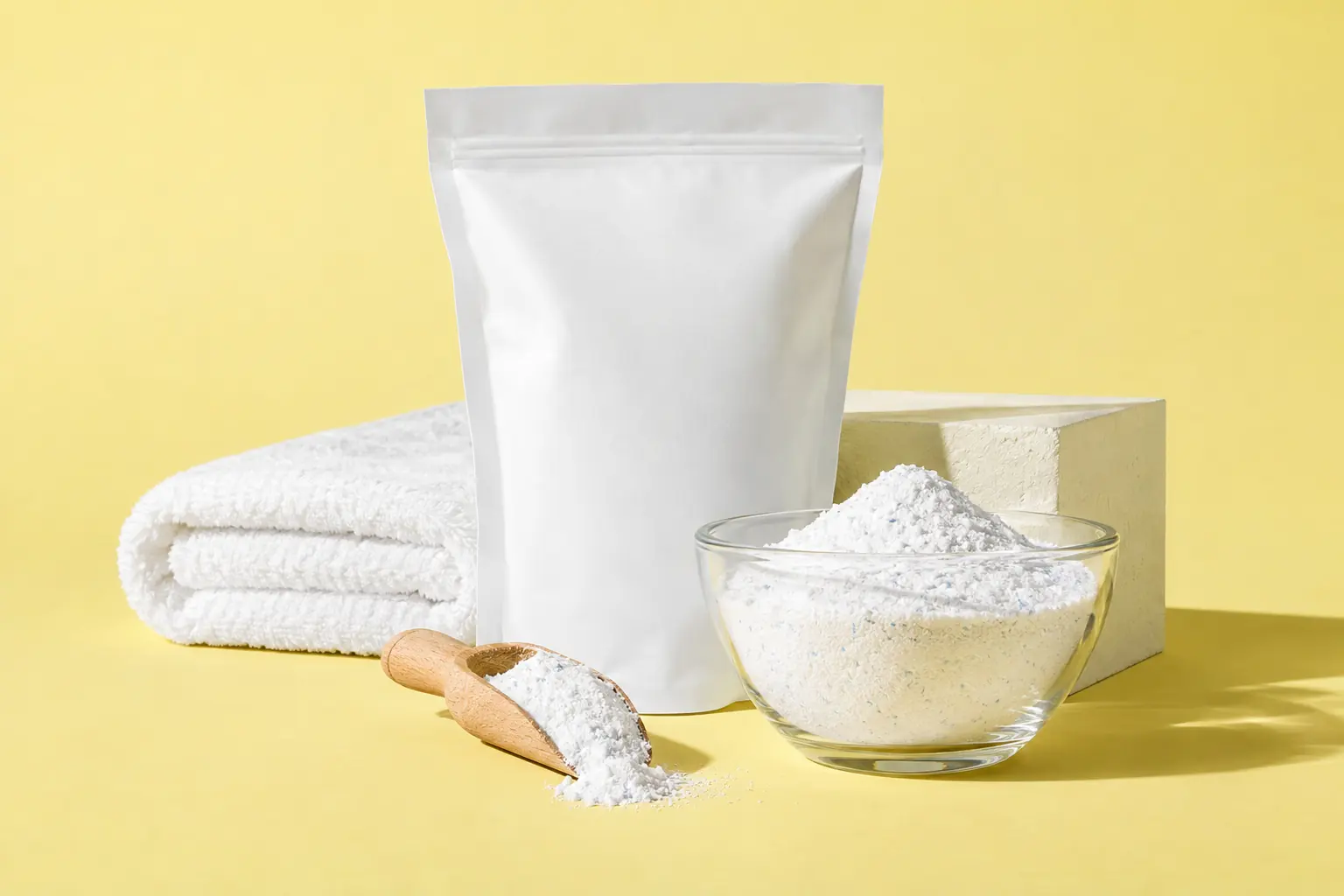
AKTO develops and manufactures laundry powder in a cardboard carton with a dosing scoop, to a brand's brief.
- 259/2012
In brief
AKTO develops and manufactures a classic laundry powder, packaged in a cardboard carton with an insert leaflet and a dosing scoop. The phosphorus limit of Regulation (EU) No 259/2012 (0.5 g in the recommended dose) is defined by the dose per load, not by the product's physical form, so it applies to powder in the same way as to a liquid or gel. The minimum batch is 50 kg at AKTO's facilities in Kyiv (Ukraine) and Warsaw (Poland).
01
What laundry powder is and who it's for
Laundry powder is the classic, dry-dissolving form of laundry detergent, needing no liquid filling, so it's logistically simpler and keeps longer on a shelf than a gel. The dosing scoop included with the pack lets a customer measure the dose by soil level and water hardness in a way a pump-bottle liquid doesn't offer as visibly. For a brand, this is a product for customers used to the traditional laundry format, or who value a longer shelf life.
02
The phosphorus limit regardless of physical form
The phosphorus limit of Regulation (EU) No 259/2012 (0.5 grams or more of total phosphorus in the recommended dose for a standard washing-machine load, in force since 30 June 2013) is defined through Annex VIa by the dose per wash cycle, not by the product's physical form, so it applies to laundry powder in the same way as to a liquid or gel detergent. Annex VII Section A of Regulation (EC) No 648/2004 requires enzymes in a powder sold to the general public to be listed irrespective of their concentration - separately from the threshold for allergenic fragrance substances. Article 9(3) of the same Regulation requires an ingredient datasheet to be supplied to medical personnel free of charge on request.
03
Upcoming regulation and product safety
A new Regulation (EU) 2026/405 on detergents and surfactants was published in the Official Journal on 2 March 2026 and entered into force on 22 March 2026; it will eventually repeal Regulation (EC) No 648/2004 after a transitional period. Regulation (EU) 2023/988 on general product safety additionally requires an internal risk analysis and technical documentation under Article 9(2) for laundry powder in the same way as for any other form of the product.
04
What AKTO offers
AKTO documents a powder format for this category, packaged in a cardboard carton with an insert leaflet and a dosing scoop. The minimum batch is 50 kg of finished formulation at AKTO's facilities in Kyiv (Ukraine) and Warsaw (Poland). AKTO offers two raw-material sourcing modes - AKTO-supplied or client-supplied (tolling). The 'Big Game' development tier supports up to 10 formulation attempts across up to 25 samples, including recipe and packaging audits. Production runs under the combined ISO 9001:2015 and ISO 22000:2018 (HACCP) certificate (No. 44600111204), ISO 22716 (GMP).
05
Getting started
The brand defines the phosphorus-bearing share and the enzyme content of the formula; AKTO checks the dose against Annex VIa of Regulation (EU) No 259/2012, lists enzymes under Annex VII, and starts the run at the chosen facility. Powder's longer shelf life suits markets with longer supply-chain cycles better than a liquid product. See also: Textile / Laundry, Laundry Gel and Laundry Pods.
Frequently Asked Questions
Does AKTO manufacture laundry powder?
Does the phosphorus limit depend on the detergent's physical form?
How must enzymes in laundry powder be labelled?
What packaging does AKTO use for laundry powder?
 Kateryna Khromykh
 Oleksandra Vovk
Standards we work to
 ISO 22716 (GMP)
 ISO 22000 (HACCP)
 Regulation (EC) No 1223/2009
 Directive 2002/46/EC
 Halal
Why AKTO
- Laundry powder developed to a brand's brief
- The 0.5 g phosphorus limit of Regulation 259/2012 checked regardless of form
- Two sourcing modes: AKTO-supplied raw materials or client tolling
- Up to 10 formulation attempts across up to 25 samples in the 'Big Game' tier
- MOQ from 50 kg, facilities in Kyiv (Ukraine) and Warsaw (Poland)