
Private Label
Leave-in Conditioning Spray
AKTO already manufactures an amino-acid leave-in conditioning spray built mainly for the professional, salon sales channel.
- ISO 22716 GMP
In brief
Company AKTO LLC (AKTO) already manufactures a leave-in conditioning spray built on an amino-acid complex: hydrolyzed keratin, panthenol, arginine, silk amino acids and niacinamide. AKTO fills the spray into 100-200 ml bottles on its own liquid-formulation line at its plants in Kyiv (Ukraine) and Warsaw (Poland), from a minimum batch of 50 kg, under ISO 22716 (GMP).
01
What a leave-in conditioning spray is and who it serves
A conditioning spray is a light liquid product misted onto damp or dry hair and left in, rather than rinsed out; unlike a cream or balm, it does not weigh the hair down and dries fast, which is why AKTO builds this format mainly for the professional, salon channel, where a stylist needs a fast, visible result between styling steps. For a brand, that gives a high-frequency in-salon product with a natural extension into a retail take-home bottle.
02
Formula and packaging
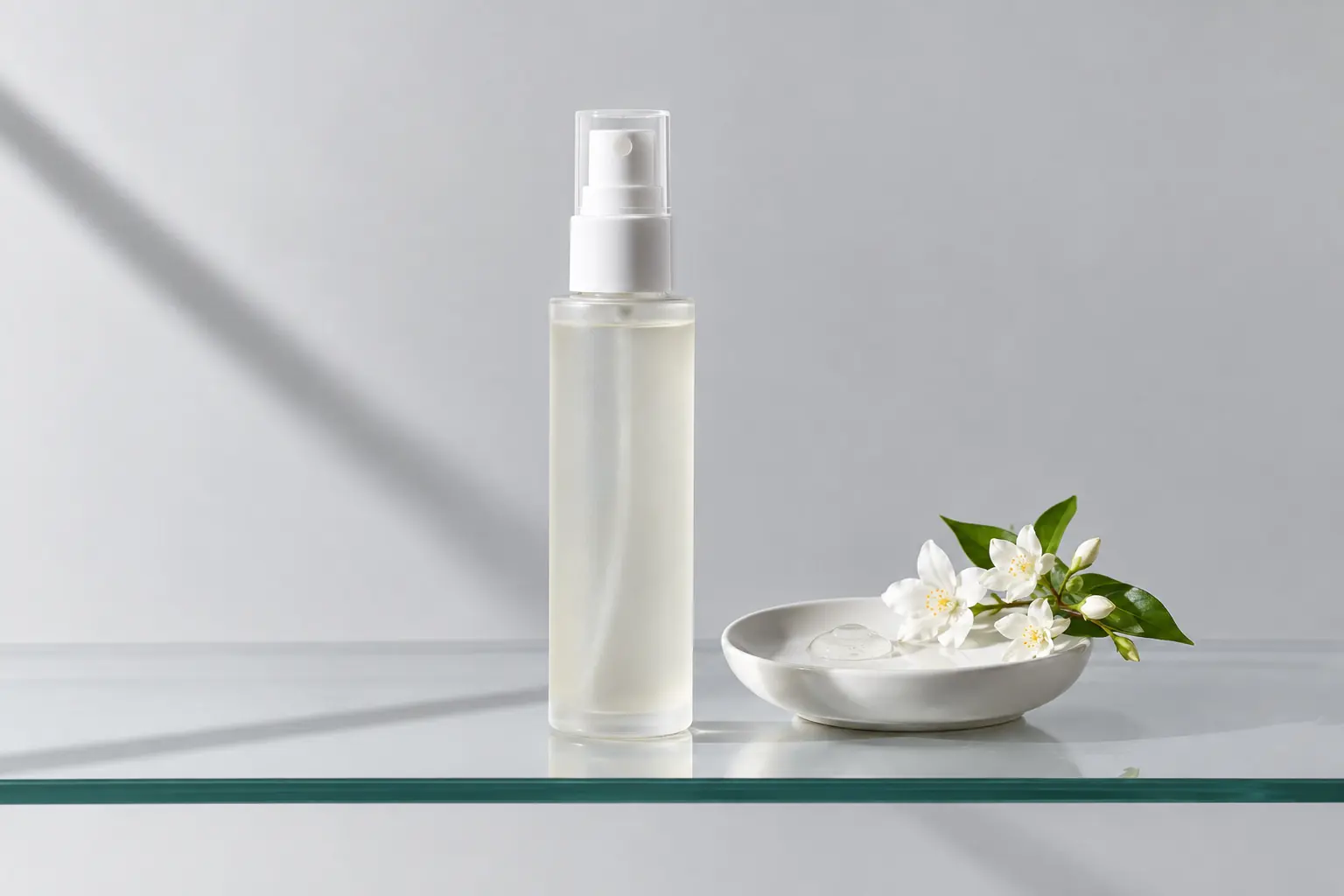
AKTO already manufactures an amino-acid spray containing hydrolyzed keratin, panthenol, arginine, silk amino acids and niacinamide. The spray is filled into bottles of 100-200 ml. For round spray bottles, AKTO's labelling specification calls for a roll label with a 7.5 cm roll diameter, with the label height set at least 2 mm less than the bottle's own height, so the label sits flush on a curved surface without wrinkling.
03
EU and Ukraine regulatory requirements
Because the finished bottle is a mechanically-triggered pump or trigger spray, not a pressurised can, it sits outside Directive 75/324/EEC's definition of an 'aerosol dispenser', which covers only non-reusable containers holding gas compressed, liquefied or dissolved under pressure. At the same time, as a leave-on product, the spray falls under the stricter Annex III rule: a fragrance allergen has to be named on the label once it reaches 0.001% by weight. Where a brand claims a conditioning effect or easier combing, Regulation (EU) No 655/2013 requires evidence proportionate to that claim, such as instrumental combability testing. In Ukraine, the transitional window under Resolution No. 976 of 29.07.2026 protects a spray placed on the market before 31.07.2027 from a labelling-only withdrawal.
04
What AKTO offers
AKTO's liquid-formulation line runs up to 150 t/month at the Kyiv (Ukraine) plant and up to 50 t/month at the Warsaw (Poland) plant. The cosmetics are registered in Ukraine under AKTO's own specification TU U 20.4-43961492-001:2020 'Cosmetic Products' (code 20.42.15), backed by sanitary-epidemiological expert opinion No. 12.2-18-2/2361 dated 15.02.2021. The minimum batch is 50 kg. Manufacturing is certified to ISO 9001:2015 and ISO 22000:2018 (combined certificate No. 44600111204), plus ISO 22716 (GMP).
05
Getting started
A brand sets the sales channel — professional or retail — and the target concentration of the amino-acid complex; AKTO adapts its existing spray formula or develops a new one to the target effect. Label production to AKTO's specification and the technical dossier for the chosen market follow from there. See also: Leave-in / Detangling / Protection, Detangling Spray and Conditioners.
Frequently Asked Questions
What actives are in AKTO's leave-in conditioning spray?
What packaging does AKTO use for the conditioning spray?
Is a leave-in conditioning spray an aerosol under EU rules?
What is AKTO's production capacity for its liquid-formulation line?
Expert review
Reviewed by
 Illia Mariutsa
Researcher, organic chemistry
Google Scholar Anastasiia Bespalova
Paediatric orthopaedic and trauma surgeon
ORCID
Standards we work to
 ISO 22716 (GMP)
 ISO 22000 (HACCP)
 Regulation (EC) No 1223/2009
 Directive 2002/46/EC
 Halal
Why AKTO
- AKTO already manufactures an amino-acid spray with keratin, panthenol and arginine
- 100-200 ml bottles with a 7.5 cm roll-label diameter
- Up to 150 t/month in Kyiv (Ukraine) and up to 50 t/month in Warsaw (Poland)
- Own specification TU U 20.4-43961492-001:2020 and a 2021 sanitary opinion
- Minimum batch from 50 kg