
Private Label
Liquid Mineral Complex
AKTO develops and manufactures liquid mineral complexes to order on its liquid-formulation lines in Kyiv (Ukraine) and Warsaw (Poland).
- ISO 22000 (HACCP)
In brief
Company AKTO LLC (AKTO) develops and manufactures liquid mineral complexes to order on its liquid-formulation lines - up to 150 t a month in Kyiv (Ukraine) and up to 50 t a month in Warsaw (Poland). Actives are selected from the permitted mineral forms in Directive 2002/46/EC Annex II, and the maximum amount per portion is set under that Directive's Article 5, not Regulation (EC) No 1925/2006.
01
What a liquid mineral complex is
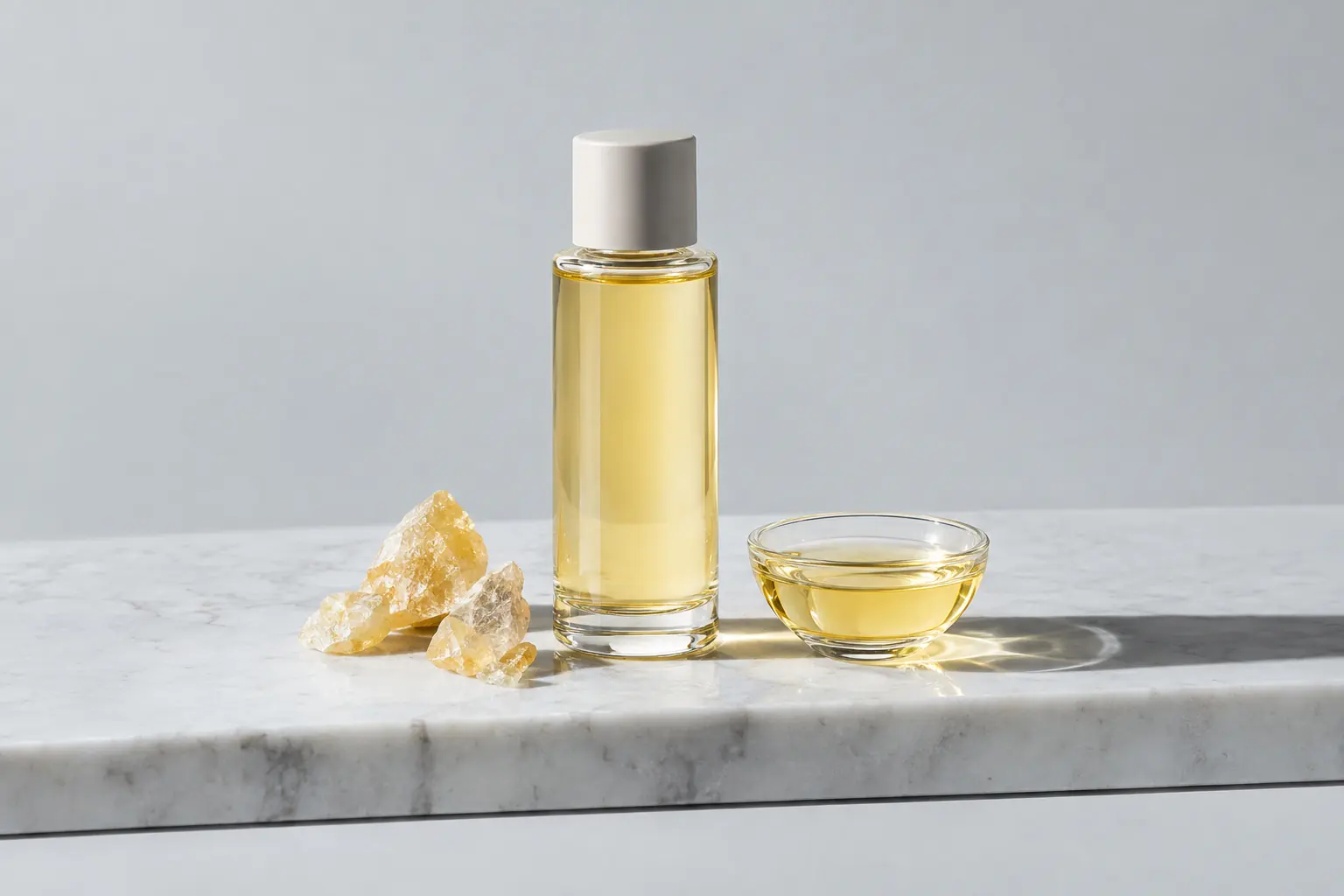
A liquid mineral complex is a dietary supplement in a dosed bottle or dropper that combines several minerals, without vitamins, in one liquid base. Brands choose this format to offer minerals already in dissolved form, or where the target consumer is children or anyone who finds capsules hard to swallow. AKTO develops and manufactures liquid mineral complexes to order on its liquid-formulation lines: a brand sets the mineral line-up and the dose per portion, and AKTO checks each mineral's form and builds the formula.
02
Permitted minerals and their chemical forms
Directive 2002/46/EC Annex II, section B, lists the chemical forms authorised for minerals in a food supplement: for zinc, zinc citrate, zinc gluconate, zinc oxide and zinc sulphate; for calcium, calcium carbonate, calcium gluconate and calcium salts of citric acid. Regulation (EC) No 1925/2006 Article 1(2) excludes food supplements from its own scope, so it is this list in Directive 2002/46/EC, not that Regulation, that sets the permitted mineral forms for a liquid complex.
03
Maximum amounts and reference values
Directive 2002/46/EC Article 5 requires the maximum amount of each mineral per daily portion to be set from the mineral's upper safe level and from intake via other dietary sources, taking due account of reference intakes for the population. For %NRV labelling, Regulation (EU) No 1169/2011 Annex XIII Part A sets the reference values commonly used in a liquid complex - for example 10 mg for zinc, 800 mg for calcium and 375 mg for magnesium.
04
What AKTO already brings to this
AKTO already doses zinc citrate at 25 mg of the salt per capsule (not 25 mg of elemental zinc) in a separate capsule formula - the same chemical form from the Annex II list that can carry over into a liquid mineral complex. AKTO's published multivitamin-syrup overview names sorbitol as the carrier for its sugar-reduced variant, an option equally available for a liquid mineral complex. AKTO's technical-brief (TZ) intake form records the target actives and packaging volume before a development operating sheet is opened. Liquid-format capacity runs up to 150 t a month at the Kyiv (Ukraine) plant and up to 50 t a month at the Warsaw (Poland) plant.
05
Getting started
A brand sets the mineral line-up, the dose per portion and the packaging format; AKTO checks each mineral's form against Annex II, calculates %NRV and prepares the formula and technical documentation. AKTO's minimum order for dietary supplements is from 10 kg of raw material or 20,000 capsules; production is certified to ISO 9001:2015 and ISO 22000:2018 (HACCP, combined certificate No. 44600111204). See also: Multivitamin Syrup and Liquid Vitamin Complex.
Frequently Asked Questions
Does AKTO develop liquid mineral complexes without vitamins?
Which mineral forms are permitted in the EU for this product?
Which reference values (NRV) apply to minerals in a liquid complex?
Does AKTO have experience dosing minerals in finished formulas?
 Svitlana Mysiura
 Anastasiia Bespalova
Standards we work to
 ISO 22716 (GMP)
 ISO 22000 (HACCP)
 Regulation (EC) No 1223/2009
 Directive 2002/46/EC
 Halal
Why AKTO
- Liquid mineral complexes developed to order on lines up to 150 t/month in Kyiv (Ukraine) and 50 t/month in Warsaw (Poland)
- Mineral forms selected from Directive 2002/46/EC Annex II, section B
- Existing experience dosing zinc citrate (25 mg of the salt per capsule)
- Sugar-reduced carrier option based on sorbitol
- MOQ from 10 kg of raw material, certified to ISO 9001:2015 and ISO 22000:2018 (HACCP)