
Private Label
Non-Aerosol Self-tanner Spray
A non-aerosol self-tanning spray built on AKTO's hair-care spray-bottle lines, with DHA capped at 10% and no propellant gas involved.
- ISO 22716 GMP
In brief
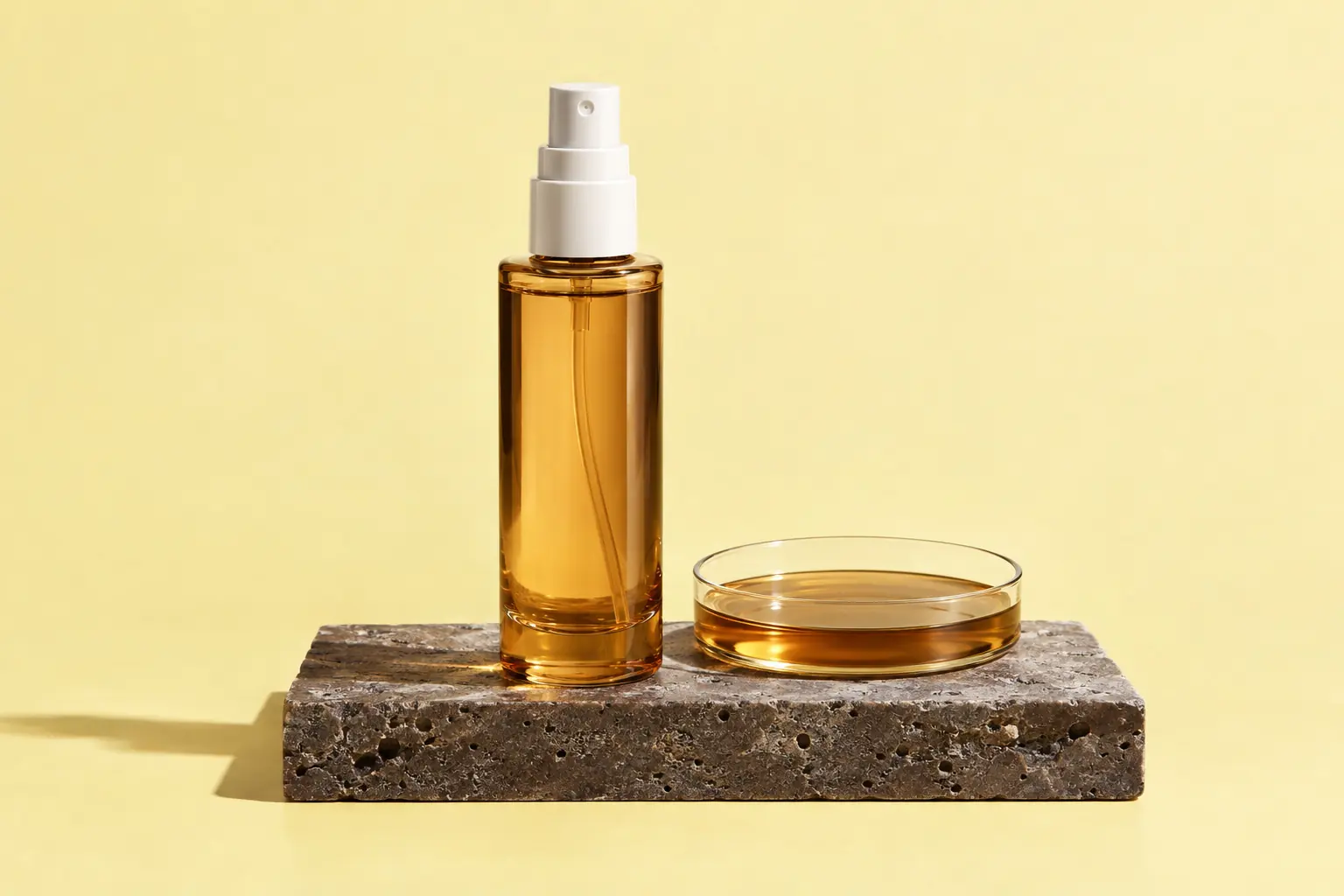
A non-aerosol self-tanner spray colours the skin with dihydroxyacetone (DHA), applied through a mechanical pump or trigger bottle, without propellant gas. Company AKTO LLC (AKTO) develops and manufactures this spray to order, on its non-aerosol spray-bottle lines for hair care, in 100-500 ml bottles. Regulation (EU) 2021/1099 caps DHA at 10% in the finished product, whether the format is a cream or a spray.
01
What a non-aerosol self-tanner spray is
A non-aerosol self-tanner spray colours the skin through the same DHA reaction as a self-tanning cream, but it's applied by spraying from a mechanical pump or trigger bottle, without propellant gas. A brand chooses this format for faster, more even coverage over large body areas than applying a cream by hand. AKTO develops and manufactures a self-tanner spray to order, on lines that already produce non-aerosol hair-care sprays in 100-500 ml bottles.
02
Formulation requirements do not depend on the dispenser
Regulation (EU) 2021/1099 added dihydroxyacetone to Annex III of Regulation (EC) No 1223/2009 as a restricted substance for self-tanning products generally - the 10% concentration cap applies to this product type regardless of whether it is dispensed as a cream or a spray. Annex III also sets a fragrance-allergen labelling threshold of 0.001% by weight for a leave-on self-tanning spray that is not rinsed off. An even-coverage, streak-free or fast-drying claim must meet the common criteria of Regulation (EU) No 655/2013 - evidential support and truthfulness - before it can be used in labelling or advertising.
03
The aerosol/non-aerosol regulatory line
Directive 75/324/EEC on aerosol dispensers defines an 'aerosol dispenser' as a non-reusable container holding a gas compressed, liquefied or dissolved under pressure with a release device; a mechanically-actuated pump or trigger bottle without propellant gas falls outside this definition and its scope. Production follows ISO 22716:2007 guidelines for production, control, storage and shipment. In Ukraine, a self-tanner spray is classified as a cosmetic product under Cabinet of Ministers Resolution No. 65 and AKTO's own technical specification TU U 20.4-43961492-001:2020.
04
What AKTO offers
AKTO already manufactures non-aerosol liquid hair-care sprays in mechanically-actuated pump or trigger bottles of 100-500 ml - the same dispenser format carries over to a self-tanner spray development. The minimum order for cosmetics starts from a 50 kg formulation batch. Production is certified to ISO 9001:2015 and ISO 22000:2018 (combined certificate No. 44600111204), ISO 22716 (GMP) in Kyiv (Ukraine) and Warsaw (Poland).
05
Getting started
A brand sets the target DHA concentration (up to 10%), dispenser type (pump or trigger) and bottle size; AKTO checks the fragrance against the 0.001% Annex III threshold, adapts the self-tanner formula to a lighter, sprayable texture built on its existing spray-bottle lines, and prepares the documentation for the chosen market before production starts. See also: Self-tanning Cream, Non-Aerosol Sun Cream Spray SPF and Sun & After Sun (Body / General).
Frequently Asked Questions
Does AKTO manufacture a non-aerosol self-tanner spray?
Is the DHA limit different for a spray versus a cream self-tanner?
Does a non-aerosol self-tanner spray fall under the Aerosol Dispensers Directive?
What packaging does AKTO use for a self-tanner spray?
Expert review
Reviewed by
 Illia Mariutsa
Researcher, organic chemistry
Google Scholar Anastasiia Bespalova
Paediatric orthopaedic and trauma surgeon
ORCID
Standards we work to
 ISO 22716 (GMP)
 ISO 22000 (HACCP)
 Regulation (EC) No 1223/2009
 Directive 2002/46/EC
 Halal
Why AKTO
- Non-aerosol spray-bottle experience from 100-500 ml hair-care lines
- DHA capped at 10% regardless of dispenser format
- Outside Directive 75/324/EEC on aerosol dispensers
- Production under ISO 22716 (GMP) in Kyiv (Ukraine) and Warsaw (Poland)