
Private Label
Repairing Hand Cream
AKTO already manufactures an intensive moisturizing hand cream in a carton-boxed tube with a leaflet insert — a formula for dry, overworked skin on the hands.
- ISO 22716 GMP
In brief
AKTO already manufactures an intensive moisturizing hand cream in a 100 ml tube with a carton box — the base for a repairing positioning. The formula sits within the Annex II prohibited-substance list of Regulation (EC) No 1223/2009, and Phenoxyethanol, a common preservative choice for this type of emulsion, is capped at 1.0% under Annex V. MOQ is from 50 kg, made in Kyiv (Ukraine) and Warsaw (Poland).
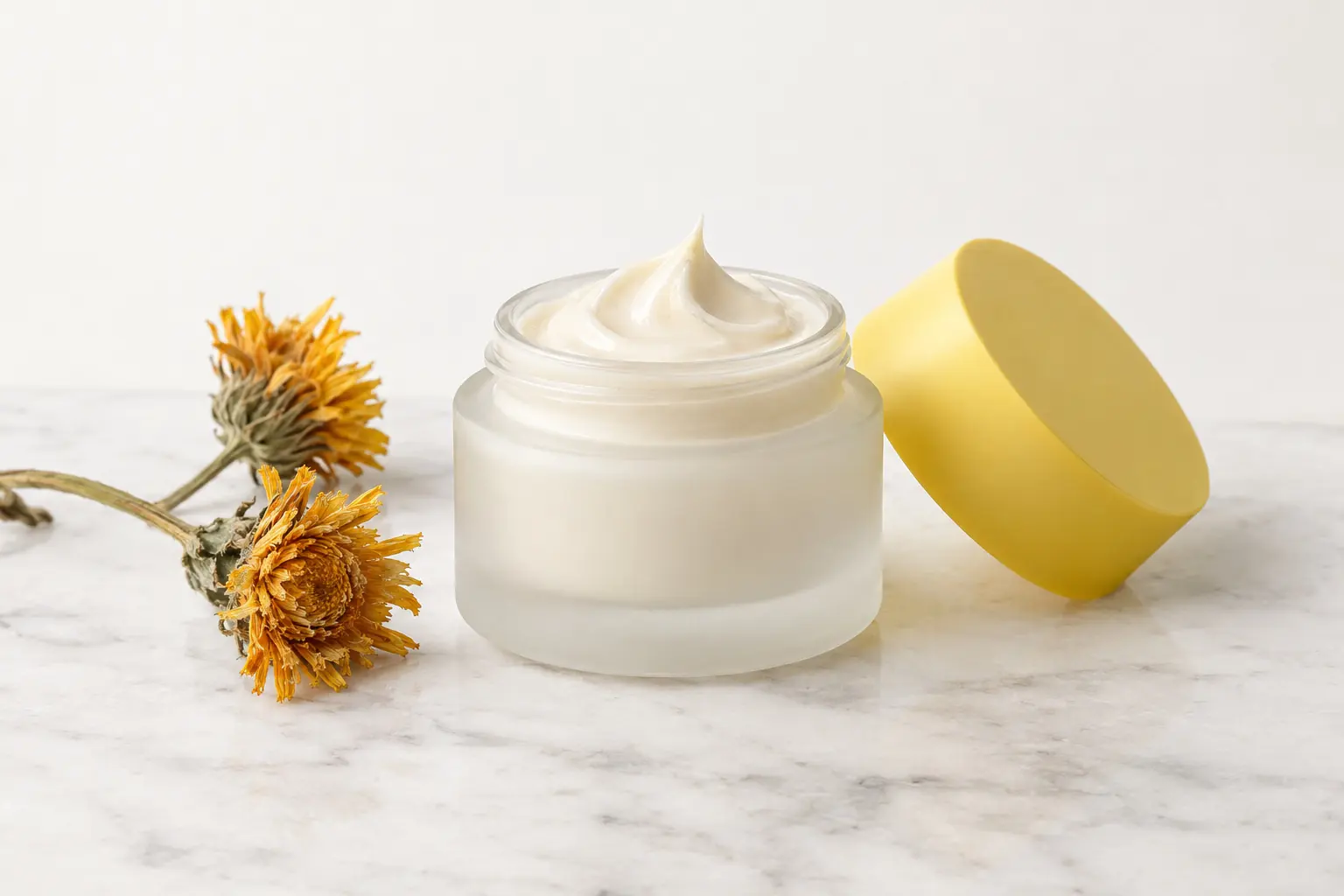
01
What a repairing hand cream is and who needs it
A repairing hand cream targets dry, cracked or mechanically stressed skin: it is positioned not as a light everyday moisturiser but as an intensive-care product for skin recovering from cold, water or cleaning agents. Brands list it separately for an audience with above-average hand-skin exposure, from medical and hospitality staff to people who wash their hands frequently, and use it as a visibly effective item for marketing content.
02
Formulation, form and packaging requirements
Annex II to Regulation (EC) No 1223/2009 limits the active and emollient ingredients a repairing formula can draw on. Phenoxyethanol, a common preservative option for an emulsion-based hand cream, cannot exceed 1.0% in the ready-for-use preparation under Annex V. AKTO packages a repairing hand cream in a 50-100 ml tube with a carton box and a leaflet insert — secondary packaging that AKTO already applies to several of its tube-based creams.
03
EU and Ukraine regulatory requirements for a repair claim
Regulation (EC) No 1272/2008 (CLP) does not apply to a finished cosmetic product under Article 1(5)(c) — labelling is instead governed by Article 19 of Regulation (EC) No 1223/2009. A "repairing" or "intensive repair" claim on a hand cream falls under the six common criteria of Commission Regulation (EU) No 655/2013, including truthfulness, evidential support and honesty — performance cannot be presented beyond the available evidence. Whether a product presented as restoring damaged tissue remains a cosmetic product is decided case by case against the Article 2(1)(a) definition in Regulation (EC) No 1223/2009 (recital 4 of Regulation No 655/2013), rather than by an express rule in 655/2013 itself. In Ukraine, Cabinet of Ministers Resolution No. 65 of 20 January 2021 requires a responsible person established in Ukraine and a full ingredient list before a hand cream reaches the market.
04
What AKTO offers
AKTO already manufactures an intensive moisturizing hand cream in a 100 ml tube with a carton box — the base for a repairing formula in its hand and foot care line. MOQ is from 50 kg of finished formulation, made at AKTO's facilities in Kyiv (Ukraine) and Warsaw (Poland). Production is certified to ISO 9001:2015 and ISO 22000:2018 (combined certificate No. 44600111204), ISO 22716 (GMP).
05
Getting started
A brand sets the target audience (everyday or occupational hand-skin exposure), the active-ingredient concentration and the secondary packaging — with or without a leaflet insert; AKTO adapts an existing moisturizing formula toward a repairing positioning or develops a new one, assembles the evidence against the Regulation (EU) No 655/2013 criteria, and prepares registration per Resolution No. 65 for the Ukrainian market.
06
See also
See also: Hands & Feet, Barrier Hand Cream, Foot Cream and Heel Cream.
Frequently Asked Questions
Does AKTO manufacture a repairing hand cream?
Can the cream claim to "heal" damaged skin?
What is the limit on the Phenoxyethanol preservative in a hand cream?
What packaging does AKTO use for a repairing hand cream?
Expert review
Reviewed by
 Illia Mariutsa
Researcher, organic chemistry
Google Scholar Anastasiia Bespalova
Paediatric orthopaedic and trauma surgeon
ORCID
Standards we work to
 ISO 22716 (GMP)
 ISO 22000 (HACCP)
 Regulation (EC) No 1223/2009
 Directive 2002/46/EC
 Halal
Why AKTO
- Already manufactures an intensive moisturizing hand cream in a 100 ml tube
- Carton box plus leaflet-insert packaging
- Claim-evidence file for a repairing claim under Regulation (EU) No 655/2013
- MOQ from 50 kg, facilities in Kyiv (Ukraine) and Warsaw (Poland)
- ISO 22716 (GMP), ISO 9001+22000