
Private Label
Scalp Peel
An AHA and salicylic-acid peel for scalp renewal before shampooing, in a serum or emulsion texture.
- Regulation 1223/2009
In brief
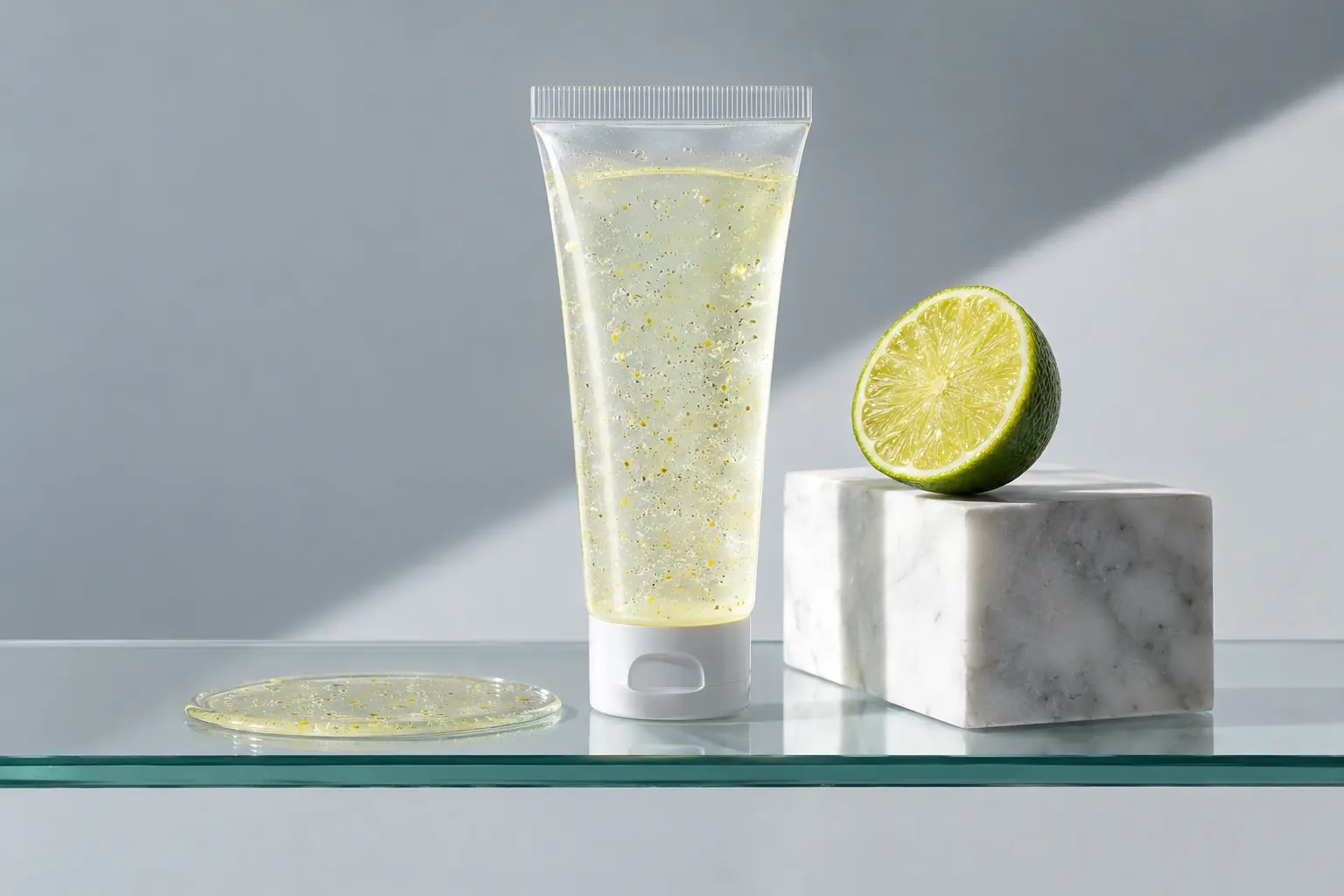
Scalp peel is an acid-based product using AHA acids or salicylic acid to renew the scalp's surface before shampooing. AKTO already manufactures glycolic, mandelic and salicylic acid peels for the body and skin, and develops a peel for the scalp specifically on the same acid chemistry to order.
01
What a scalp peel is
A scalp peel is an acid-based product applied before shampooing to renew the scalp's surface layer and ease removal of excess sebum. Brands order a peel as a stronger alternative to a mechanical scrub, when chemical exfoliation is what the range needs. AKTO already manufactures glycolic, mandelic and salicylic acid peels in a serum and an emulsion texture for the body and skin, and develops a peel for the scalp specifically on the same acid chemistry to order.
02
Salicylic acid and AHA acid limits
Entry 98 of Annex III to Regulation (EC) No 1223/2009, as amended by Regulation (EU) 2021/850, caps salicylic acid at 3.0% in rinse-off hair products, 2.0% in other products except a specific list, body lotion, eye shadow, mascara, eyeliner, lipstick and roll-on deodorant, where the limit is 0.5%; the acid must not be used in preparations for children under 3, in applications risking inhalation exposure, or in oral products. Unlike salicylic acid, glycolic and mandelic acids carry no separate entry in Annex II, III or V of Regulation 1223/2009; they fall under the general safety obligation of Article 3 and the safety report required by Article 10.
03
Regulation: EU, UK, Ukraine, GCC
Great Britain mirrors the salicylic-acid update through its own instrument, SI 2022/659, whose regulation 3(6) added a new 0.5% tier for that same product list to entry 98 of the British regulation, effective 15 December 2022, a Great Britain rule, not an EU one. The safety report under Annex I Part A Section 5 has to cover contact time, application frequency and a patch-test recommendation for an acid peel. In Ukraine, AKTO registers the product under its own technical specification, with labelling under Cabinet of Ministers Resolution No. 65.
04
What AKTO does
The minimum order for a scalp peel is 50 kg of finished product, packed in a dropper bottle or a tube, manufactured in Kyiv, Ukraine and Warsaw, Poland, under ISO 22716 (GMP), ISO 9001, ISO 22000 (HACCP).
05
Getting started
AKTO's team agrees the acid combination and concentration within the Annex III limits with the brand, chooses a serum or emulsion texture and packaging, then prepares contact-time and patch-test guidance for the label.
Before shipment, the quality control team checks the finished peel's pH and confirms the salicylic acid concentration stays within the Annex III limit for the chosen product category, logging the results in a batch record for every repeat order.
See also: Scalp Care, Scalp Scrub and Scalp Tonic.
Frequently Asked Questions
What is the maximum salicylic acid concentration allowed in a scalp peel in the EU?
Are salicylic-acid rules the same in the EU and the UK?
Are glycolic and mandelic acids capped by a specific EU limit?
Does AKTO manufacture acid peels for the body and skin?
Expert review
Reviewed by
 Illia Mariutsa
Researcher, organic chemistry
Google Scholar Anastasiia Bespalova
Paediatric orthopaedic and trauma surgeon
ORCID
Standards we work to
 ISO 22716 (GMP)
 ISO 22000 (HACCP)
 Regulation (EC) No 1223/2009
 Directive 2002/46/EC
 Halal
Why AKTO
- Experience with glycolic, mandelic and salicylic acids
- Concentrations kept within Annex III limits
- Dropper bottle or tube packaging by choice
- ISO 22716 (GMP), ISO 9001, ISO 22000