
Private Label
Solid Conditioner Bar
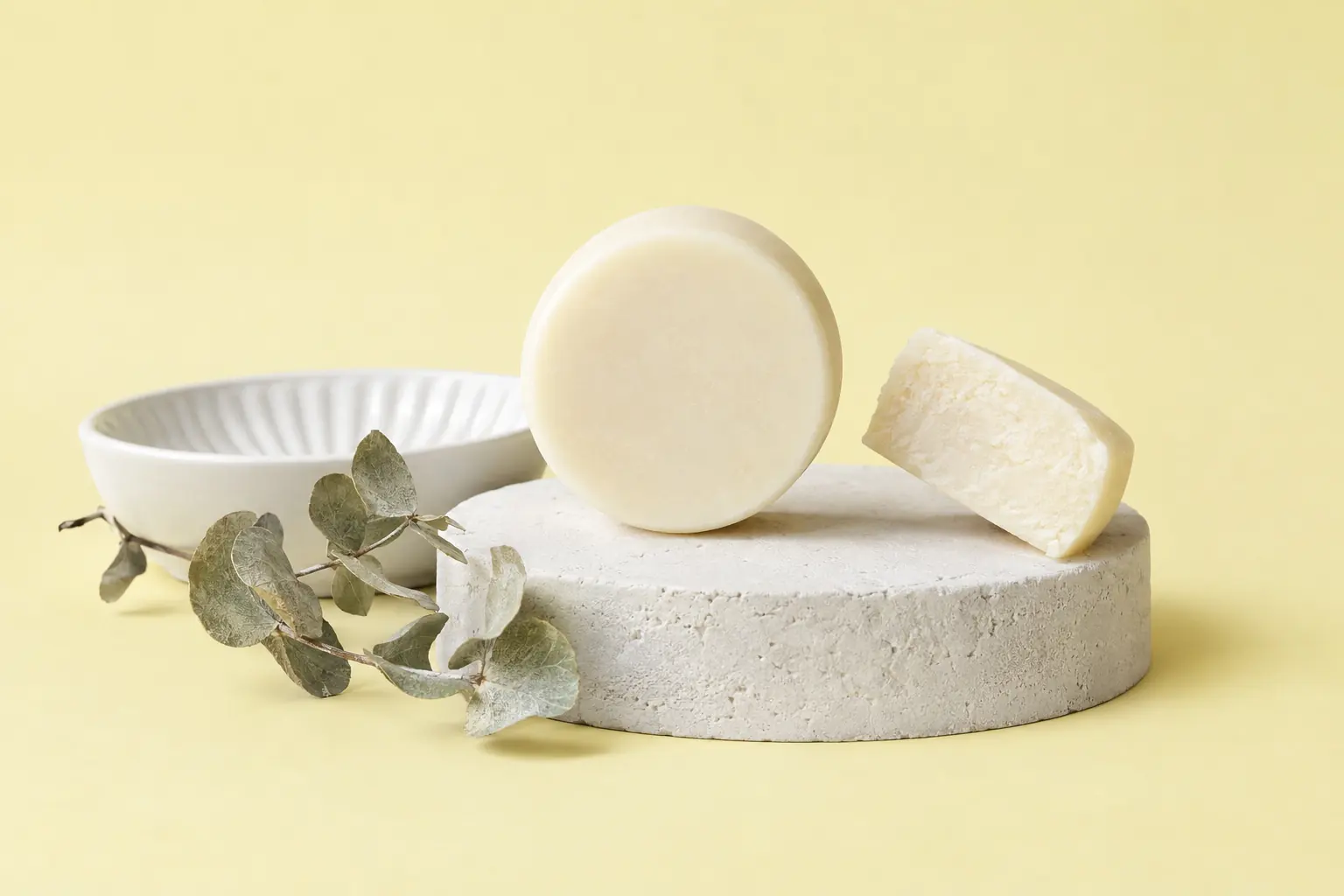
A wax-based bar that keeps hair in good condition the same way a liquid conditioner does, without the tube.
- ISO 22716 (GMP)
In brief
A solid conditioner bar is a wax-based bar performing the same cosmetic function - 'keeping hair in good condition' - as a liquid conditioner in a tube. AKTO already runs reactor-homogenisers with heated aqueous- and oil-phase vessels and vacuum processing, equipment suited to melting and pouring a wax base into moulds; AKTO develops and manufactures a solid conditioner bar to order from a reference sample of at least 50 g.
01
What a solid conditioner bar is
Article 2(1)(a) of Regulation (EC) No 1223/2009 names 'keeping [hair] in good condition' as one of the functions that defines a cosmetic product - a wax-based conditioner bar performs that function the same way a liquid conditioner does, regardless of its anhydrous solid form. The format interests a brand that wants to remove the tube from a solid hair-care line and pair a conditioner bar with a shampoo bar in one travel-friendly set.
02
Labelling, durability and environmental claims
Article 19(1)(c) of Regulation 1223/2009 exempts a cosmetic product from carrying a PAO symbol where durability after opening is not a relevant concept - an exemption a low-water-activity bar may rely on if substantiated in its safety report, unlike a liquid conditioner in a tube. A 'plastic-free' or 'zero-waste packaging' claim on a solid conditioner bar is governed mainly by the Unfair Commercial Practices Directive 2005/29/EC as amended by Directive (EU) 2024/825, while a conditioning-performance claim needs its own evidence under the Evidential Support criterion of Regulation (EU) No 655/2013. The two claims - environmental and functional - are assessed against different evidence, and a brand prepares support for each before either reaches the packaging.
03
Regulatory position in the EU, UK and Ukraine
In the EU and the UK, the same split applies: the product's safety and function sit under Regulation 1223/2009 (Annex III, a 0.01% by-weight allergen threshold for a rinse-off product), while environmental packaging claims sit under unfair-commercial-practices rules. In Ukraine, AKTO manufactures cosmetics under its own technical specification, TU U 20.4-43961492-001:2020, which applies equally to the liquid and the solid conditioner format.
04
What AKTO offers
AKTO already runs reactor-homogenisers with separate heated vessels for the aqueous and oil phases and vacuum processing - exactly the equipment used to melt and pour a wax base into conditioner-bar moulds. AKTO develops and manufactures this bar to order, asking for a reference sample of at least 50 g with the desired formula. Minimum order for the cosmetics line starts from 50 kg, manufactured at plants in Kyiv (Ukraine) and Warsaw (Poland), certified to ISO 22716 (GMP), ISO 9001, ISO 22000 (HACCP) - the same certificate list that covers AKTO's liquid conditioner in a tube.
05
Getting started
- The brand supplies a reference sample of at least 50 g or describes the desired wax base and conditioning effect.
- AKTO checks whether a PAO exemption can be substantiated in the safety report.
- The conditioning claim is backed under Regulation (EU) No 655/2013; an environmental claim under Directive 2005/29/EC.
- The brand approves a sample, and series production starts from 50 kg.
06
See also
See also: Alternative Formats, Solid Shampoo Bar and Conditioners.
Frequently Asked Questions
What cosmetic function does a solid conditioner bar perform?
Does a solid conditioner bar need a PAO symbol?
Who regulates a 'plastic-free' claim on a conditioner bar's packaging?
What equipment does AKTO use for a solid conditioner bar?
Expert review
Reviewed by
 Illia Mariutsa
Researcher, organic chemistry
Google Scholar Anastasiia Bespalova
Paediatric orthopaedic and trauma surgeon
ORCID
Standards we work to
 ISO 22716 (GMP)
 ISO 22000 (HACCP)
 Regulation (EC) No 1223/2009
 Directive 2002/46/EC
 Halal
Why AKTO
- AKTO already runs reactor-homogenisers suited to melting a wax base into moulds
- The bar is developed from a reference sample of at least 50 g
- The conditioning claim is backed under Reg. 655/2013
- Production from 50 kg, plants in Kyiv (Ukraine) and Warsaw (Poland), ISO 22716 (GMP)