
Blog
How Much Does It Cost to Launch a Cosmetics Brand in Ukraine: What the Budget Consists Of
What a cosmetics brand launch budget in Ukraine consists of, how the minimum batch affects unit cost and where saving money does not pay off.
- Launch budget
- Unit cost
In brief
The exact amount can only be given after a brief: it depends on the product category, the complexity of the formula, the packaging and the size of the first batch. The cost structure is similar across projects, so the article goes through the budget items, the effect of the minimum batch on unit cost and an example calculation for three SKUs. It also shows where saving is justified and where it turns into losses.
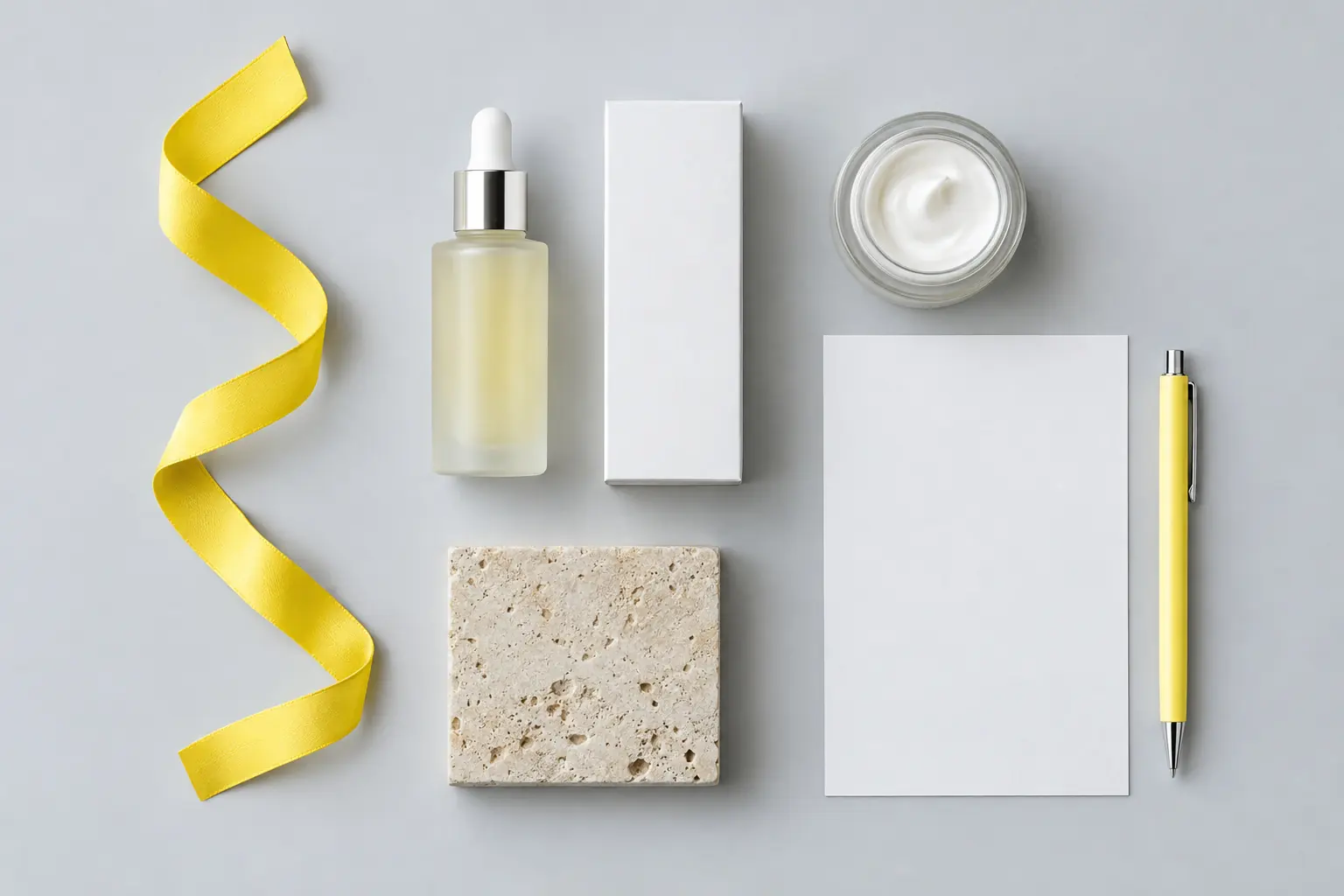
How much it costs to create your own cosmetics brand is something we can only say after a brief: the amount is determined by the product category, the complexity of the formula, the packaging and the volume of the first batch. Still, the cost structure is similar for all projects. We go through the budget items, the effect of the minimum batch on unit cost, and the places where saving is justified and where it will turn into losses.
01
What the cost depends on
Product category. A shower gel or shampoo is technologically simpler than an emulsion cream with sensitive actives. Sun care products need additional studies to confirm SPF.
Formula complexity. The number and cost of active ingredients, selection of the preservative system, stabilization, fragrance.
Batch volume. The larger the volume, the smaller the share of fixed costs that falls on each unit.
Packaging. Standard catalog packaging or custom, type of dispenser, whether there is a box.
Scope of services. Development from scratch or adaptation, design, preparation of documents, logistics.
Sales channel requirements. Pharmacies and chains may ask for additional studies to support claims, and marketplaces may require specific shipping packaging. It is better to plan for these costs before launch than after the buyer's first refusal.
02
Launch budget items
| Item | What it includes | What it depends on |
|---|---|---|
| Formulation development | Laboratory samples, refinement, stability and compatibility tests | Novelty of the formula, number of iterations |
| Raw materials and manufacturing | Raw materials, manufacture, filling, quality control | Composition, batch volume, number of SKUs |
| Packaging | Bottles, tubes, jars, dispensers, boxes | Standard or custom, print run |
| Design and printing | Identity, artwork, printing of labels and boxes | Number of SKUs, printing technology |
| Notification and documents | Product information file, CPSR safety report, laboratory tests, filing of the notification | Number of SKUs, need for additional studies |
| Trademark registration | Name check, state fees, patent attorney services | Number of classes, color or black-and-white image |
| Photo content | Product photography, photos for marketplaces and social media | Volume and format |
| Marketing | Advertising, work with bloggers, sampling | Sales channels, first-year goals |
When putting together the budget for launching a cosmetics brand, set aside separate money for sales. The most common mistake at the start is to spend everything on manufacturing and leave no funds for customers to find out about the product.
For reference on state trademark fees: according to UANIPIO (Ukrainian National Office for Intellectual Property and Innovations), filing an application for a black-and-white mark in one class electronically by one applicant costs a few thousand hryvnias (the office's website gives roughly UAH 3,000; the fee payment procedure changed from 16 May 2026, so check the exact amount on the filing date). The fee for publishing the notice of certificate issuance is UAH 600 per class, and the state duty for issuing the certificate for residents of Ukraine is UAH 85.
Costs that are often forgotten
- delivery and storage of finished products, especially if part of the batch sits in the warehouse for several months;
- repeat compatibility tests if the packaging was changed after the formula was approved;
- testers and samples for salons, pharmacies and bloggers;
- marketplace commissions and the cost of fulfillment;
- working capital for the second batch: it is ordered before the first one is fully sold.
The cost of packaging depends significantly on the format. The options available at our production site are on the page about packaging options.
03
Minimum batch and unit cost
Production costs fall into two types. Fixed costs do not depend on volume: development, preparation and sanitation of the line, filling setup, artwork, documents. Variable costs grow with volume: raw materials, packaging, labels.
When fixed costs are divided across 300 units, each unit costs considerably more than when they are spread across 3,000. That is why the minimum batch of cosmetics is always a compromise between the unit price and the risk of being left with stock that sells slowly. Take separate account of the minimum runs of packaging suppliers and printers: they may be larger than the quantity you need.
At AKTO the minimum batch is from 50 kg of one type of product. If the first batch sells well, the second can be ordered larger: as a rule, the unit price goes down, and the formula and documents are already ready. So it is worth asking for a calculation for several volumes at once, for example for the minimum batch and for a double one. How we launch the first small volumes and scale them up after test sales is described on the page about pilot batches.
When comparing cosmetics contract manufacturing prices from different manufacturers, look at the unit cost at the same volume and at what exactly is included in the price. One offer may include packaging and labeling, another only bulk product. What is included in the service at our cosmetics contract manufacturing, the manager lays out in the commercial offer.
04
Example: how many units the first batch of three SKUs yields
Take a typical launch of three products at the minimum batch of 50 kg. The number of units is approximate, assuming a conventional density of 1 g/ml and ignoring filling losses.
| SKU | Packaging volume | Batch | Approx. units |
|---|---|---|---|
| Face cream | 50 ml | 50 kg | ≈ 1,000 |
| Cleansing gel | 150 ml | 50 kg | ≈ 330 |
| Serum | 30 ml | 50 kg | ≈ 1,670 |
The table shows an important detail: the same batch in kilograms gives a different number of items depending on the packaging volume. This is worth taking into account when choosing the format for a sales channel.
One-off costs at launch are added to the cost of manufacturing: formulation development, design, documents, the trademark, photo content. The manager lays them out as separate lines in the commercial offer.
05
Where you can save and where you cannot
Saving is justified if you:
- start with two or three SKUs instead of a full range;
- take standard catalog packaging and stand out with the label;
- combine the shoot for the website, marketplaces and social media into one day;
- order the printing of labels for several SKUs in one run.
Do not save on:
- the safety assessment report and stability tests;
- checking labeling and claims before printing;
- checking the name and filing the trademark application;
- the quality of raw materials and the preservative system.
Mistakes in these items cost more than the savings: reprinting a run, a batch recall or a rebrand.
To get a calculation for your product, describe the format, packaging and approximate volume in the request a quote form. An AKTO manager will prepare a cost calculation and suggest how to optimize the budget of the first batch.
Frequently Asked Questions
What is the minimum amount needed to start?
Does the cost of cosmetics manufacturing fall as the batch grows?
Is packaging included in the manufacturing cost?
How much do product documents cost?
How much does formulation development cost?
Standards we work to
 ISO 22716 (GMP)
 ISO 22000 (HACCP)
 Regulation (EC) No 1223/2009
 Directive 2002/46/EC
 Halal
Why AKTO
- MOQ from 50 kg for a new private-label line
- Four service packages, from sample only to full dossier and registration
- Quality passport included in the production batch price at no extra charge
- Manufacturing to ISO 22716 (GMP) at plants in Kyiv (Ukraine) and Warsaw (Poland)