
Blog
How to Create Your Own Cosmetics Brand: A Step-by-Step Plan from Idea to First Batch
A step-by-step route to launching a cosmetics brand without your own workshop or laboratory, from choosing a product to the first batch.
- Brand launch
- Cosmetics
In brief
Launching a brand takes seven steps: niche and product, in-house or contract manufacturing, formulation, packaging and labeling, documents (PIF, CPSR, notification), a pilot batch and sales channels. We advise starting with two or three SKUs, since every item needs its own formulation, notification, label artwork and minimum batch. The article also covers launch timelines and the mistakes that waste budget.
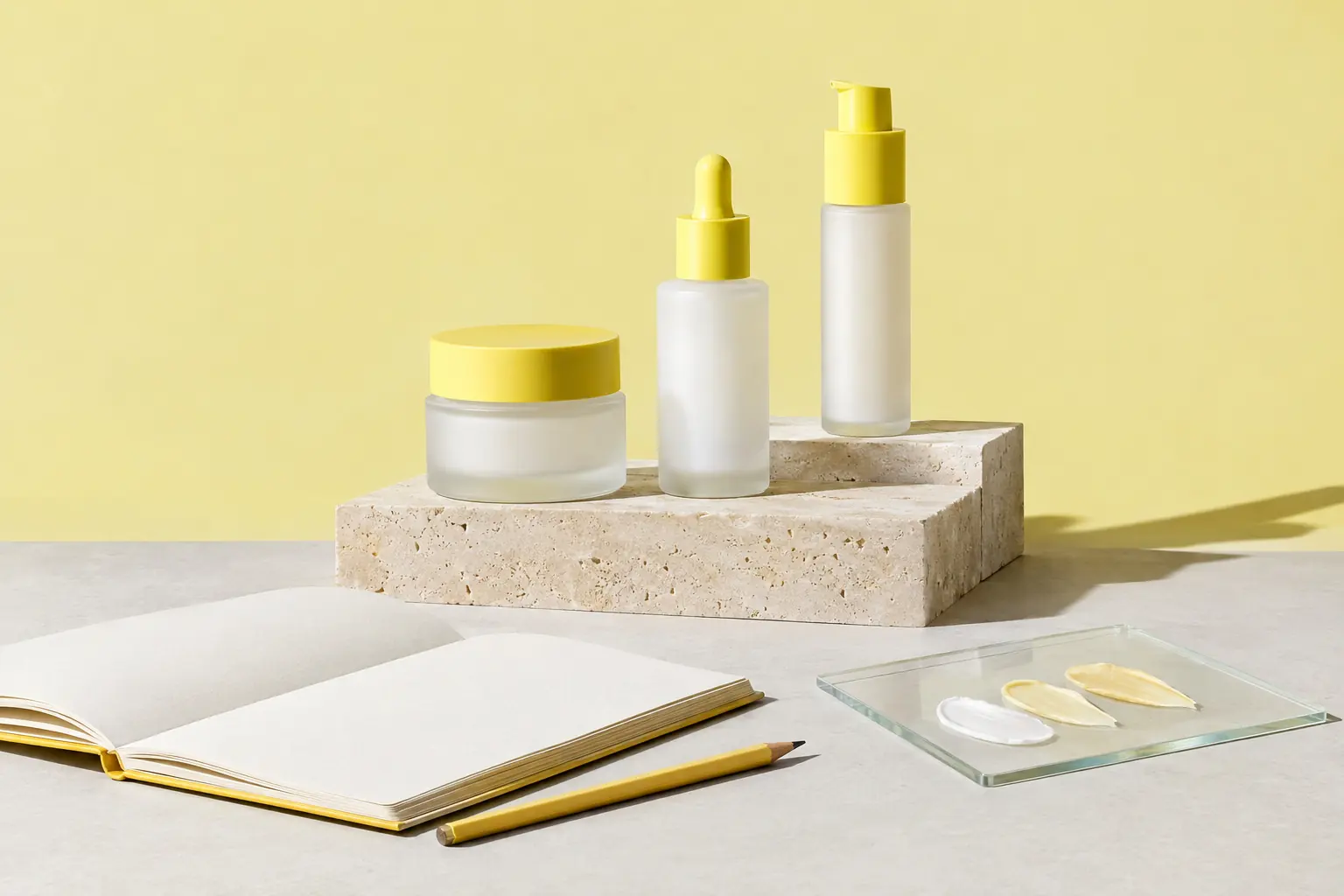
How do you create your own cosmetics brand if you have no workshop or laboratory of your own? Cosmetologists and salons, bloggers with a loyal audience, pharmacies and distributors who want a product under their own name instead of someone else's brand all come to us with this question. The route is similar for everyone: from choosing a product to the first batch in the warehouse. Below we describe it step by step, the way it runs at AKTO's production site.
01
Step 1. Niche and product: where to start the range
Start with the customer and the sales channel, and choose the formula to fit them. For a salon, it makes sense to start with professional care and products for home use after treatments. A blogger needs just one or two products they are ready to talk about regularly. A pharmacy looks for dermocosmetic positioning and will ask about evidence for claims. A distributor usually fills a gap in the portfolio by price or category.
When we are asked how to create your own cosmetics line with ten items at once, we advise starting with two or three SKUs. Each item means a separate formulation, a separate notification, a separate label artwork and a separate minimum batch. At AKTO the minimum batch is from 50 kg of one type of product, so three SKUs at launch give at least 150 kg of finished goods.
For reference: 50 kg of cream is roughly a thousand 50 ml jars. The exact yield depends on the density of the product and filling losses. That volume is enough to test demand and collect the first reviews.
A working launch scheme:
- one main product that carries the brand's positioning;
- one or two companion products that are bought together with it, for example a cleanser and a cream;
- a list of ideas for expansion that you return to after the first sales.
02
Step 2. In-house or contract manufacturing
| Criterion | In-house manufacturing | Contract manufacturing |
|---|---|---|
| Start-up investment | Premises, equipment, laboratory, staff, quality system | Payment for formulation development, packaging and the first batch |
| Time to first batch | Finding premises, installing and commissioning equipment, implementing GMP | Development, preparation of packaging and documents; capacity is already running — batch production from 4 weeks after approval of the formulation, packaging and documents |
| Minimum volume | Limited only by the equipment, but it pays off at large volumes | At AKTO, from 50 kg of one type of product |
| GMP compliance | You need to implement good manufacturing practice under DSTU EN ISO 22716; certification is voluntary, but retail chains and partners often require it | The manufacturer already works under ISO 22716 |
| Main risks | Frozen capital, equipment downtime, hiring staff | Dependence on the contractor, reduced by the contract and by securing the rights to the formulation |
| Process control | Full | Through the specification, the contract, control samples and audit |
After this comparison, most people choose the contract model: the budget goes to the product and marketing, with no investment in premises and equipment. Since 2020, AKTO has produced liquid and thick cosmetic products under the contract manufacturing model. The production site is certified to ISO 22716 (GMP) and ISO 22000 (HACCP), and more than 500 companies have launched their brands with us.
03
Step 3. Developing a formulation or choosing a ready-made formula
The first path is developing a formula to your brief. The product gets its own texture, fragrance and combination of actives, and the rights to the formulation are fixed in the contract. The second path is adapting a ready-made base formula: faster and cheaper, but a similar product may appear under another brand.
At the cosmetics formulation development stage, the AKTO technologist relies on analysis of competitor products, samples you like, the desired sensory effect, as well as safety requirements and regulatory restrictions. Laboratory samples go through physicochemical checks: pH, viscosity, stability. The number of iterations and the timing depend on the complexity of the product.
So that the technologist develops the product precisely for your audience, specify in the brief:
- who the product is for: skin or hair type, age, the problem it solves;
- format and texture: cream, gel, serum, micellar water, etc.;
- key actives and claims you want to put on the label;
- ingredients that must not be in the composition;
- desired fragrance or none;
- type of packaging and target retail price;
- references: products whose texture or effect you like.
04
Step 4. Packaging, design and labeling
Packaging is chosen in parallel with the formulation. The formula must be compatible with the material of the bottle or tube, and the dispenser must work with its viscosity. That is why AKTO separately runs stability and compatibility testing with the packaging. Supply of non-standard packaging can take longer than the development itself, and this is worth factoring into the launch plan.
This step decides how to make the brand recognizable on the shelf. At the same time, the artwork must meet labeling requirements: INCI composition, product function, volume, expiry date or PAO, batch number, details of the Responsible Person, warnings. Check the text before printing the run, because after printing an error can only be fixed by a new run. How this is done in production is described on the page about label and claims review.
AKTO can take on packaging selection, label design, registration of the GTIN-13 barcode and preparation of labeling for the markets where the product will be sold.
05
Step 5. Documents: PIF, CPSR, notification
In Ukraine, the circulation of cosmetics is regulated by the Technical Regulation on Cosmetic Products, approved by Cabinet of Ministers Resolution No. 65 of 20 January 2021. It is modeled on Regulation (EC) No 1223/2009 and provides for the following set of documents before the product goes to market. More about the requirements is on the page Technical Regulation: what it requires.
- PIF (product information file): description, safety report, manufacturing method with GMP confirmation, evidence of claimed effects;
- CPSR: the safety assessment report prepared by a qualified assessor on the basis of the composition, the substance profile and test results (PIF and CPSR);
- notification: a submission to the Ministry of Health of Ukraine's electronic notification system, which the Responsible Person files before placing the product on the market;
- the manufacturer's declaration of compliance with DSTU EN ISO 22716 (GMP);
- labeling in line with the requirements of the Technical Regulation.
The Responsible Person is the manufacturer, the importer or the company that sells the product under its own trademark. How we prepare the package and submit the data is described on the page about cosmetics notification.
06
Step 6. Pilot batch and minimum volume
The first batch on industrial equipment shows how the formula behaves at scale: whether it keeps its texture, how it fills, whether there are problems with the dispenser. At AKTO its volume starts from 50 kg of one type of product, so the pilot doubles as the first commercial batch for test sales.
Every batch goes through incoming raw material inspection, in-process control and inspection of the finished product. How we launch small batches and move to larger volumes is described on the page about pilot batches. Production lead time depends on the availability of raw materials and packaging.
07
Step 7. Sales: marketplaces, pharmacies, salons, your own website
The sales channel affects the product from the very first step: the format, volume, price and set of documents. A cosmetics brand is most often launched in the following channels:
- Marketplaces. You need barcodes, quality photos, documents on the platform's request and well-established logistics. AKTO ships products directly to marketplace fulfillment warehouses and wholesale partners (logistics and fulfillment).
- Pharmacies. They check documents and the justification for label claims, and are interested in dermocosmetic positioning. Entry takes longer, but the pharmacy customer trusts proven brands.
- Salons and cosmetologists. They value professional volumes and products for home care after treatments. Training of specialists and product support matter here.
- Your own website and social media. The margin is not shared with an intermediary and you control the price, but you will have to build traffic and trust yourself.
08
How long a launch takes
The speed of launch depends on how many stages you manage to run in parallel. While formula testing is under way, you can prepare the design and order packaging.
| Stage | What happens |
|---|---|
| Brief and estimate | Agreeing the concept, format and batch volume |
| Formulation development | Laboratory samples, refinement, approval |
| Stability and compatibility tests | Checking the formula in the chosen packaging |
| Packaging and design | Selecting packaging, artwork, labeling check |
| Documents | PIF, CPSR, notification |
| First batch | Purchasing raw materials, production, filling, quality control |
Set aside time for the trademark separately. According to UANIPIO (Ukrainian National Office for Intellectual Property and Innovations), examination of an application takes 18 months on average, so it is worth filing as early as possible.
09
Typical start-up mistakes that waste the budget
- Launching eight to ten SKUs at once. The budget is spread thin, and the minimum batch is multiplied by each item.
- Choosing packaging after the formula is approved. Incompatibility with the material or dispenser sends the project back to the development stage.
- Printing labels before the labeling and claims are checked. An error in the composition or a prohibited claim can only be fixed by reprinting.
- Not securing the rights to the formulation in the contract. Without this it is hard to move production or protect the formula.
- Not checking that the name is available. A similar registered mark may force you to change the name after launch.
- Shipping the product without notification and a designated Responsible Person.
- Planning the first batch on an optimistic forecast, with no link to real sales channels.
If you already have a product idea or a ready brief, send it to our manager. The technologist will assess the format and formulation, and the manager will calculate the minimum batch and suggest where to start the range. The terms of cooperation and the way we work are described on the page about cosmetics under your own brand.
Frequently Asked Questions
How do you create a cosmetics brand without your own production?
How do you launch your own cosmetics brand with a minimum volume?
Who owns the formulation?
Can you start production before the trademark is registered?
What documents are needed to sell cosmetics in Ukraine?
Standards we work to
 ISO 22716 (GMP)
 ISO 22000 (HACCP)
 Regulation (EC) No 1223/2009
 Directive 2002/46/EC
 Halal
Why AKTO
- In-house R&D lab behind every new product
- 8-block product information file (PIF) matched to Ukraine and EU market requirements
- MOQ from 50 kg for a new private-label line
- Manufacturing to ISO 22716 (GMP) at plants in Kyiv (Ukraine) and Warsaw (Poland)