
Private Label
Breath Freshening Spray
AKTO develops and manufactures breath-freshening spray to order on its own lines in Kyiv (Ukraine) and Warsaw (Poland).
- ISO 22716 GMP
In brief
AKTO develops and manufactures breath-freshening spray to order on its own lines in Kyiv (Ukraine) and Warsaw (Poland). A pump or trigger-spray bottle without a propellant gas falls outside Directive 75/324/EEC on aerosol dispensers, and chlorhexidine is permitted as a preservative up to 0.3% calculated as chlorhexidine. The minimum batch is 50 kg.
01
What a breath-freshening spray is
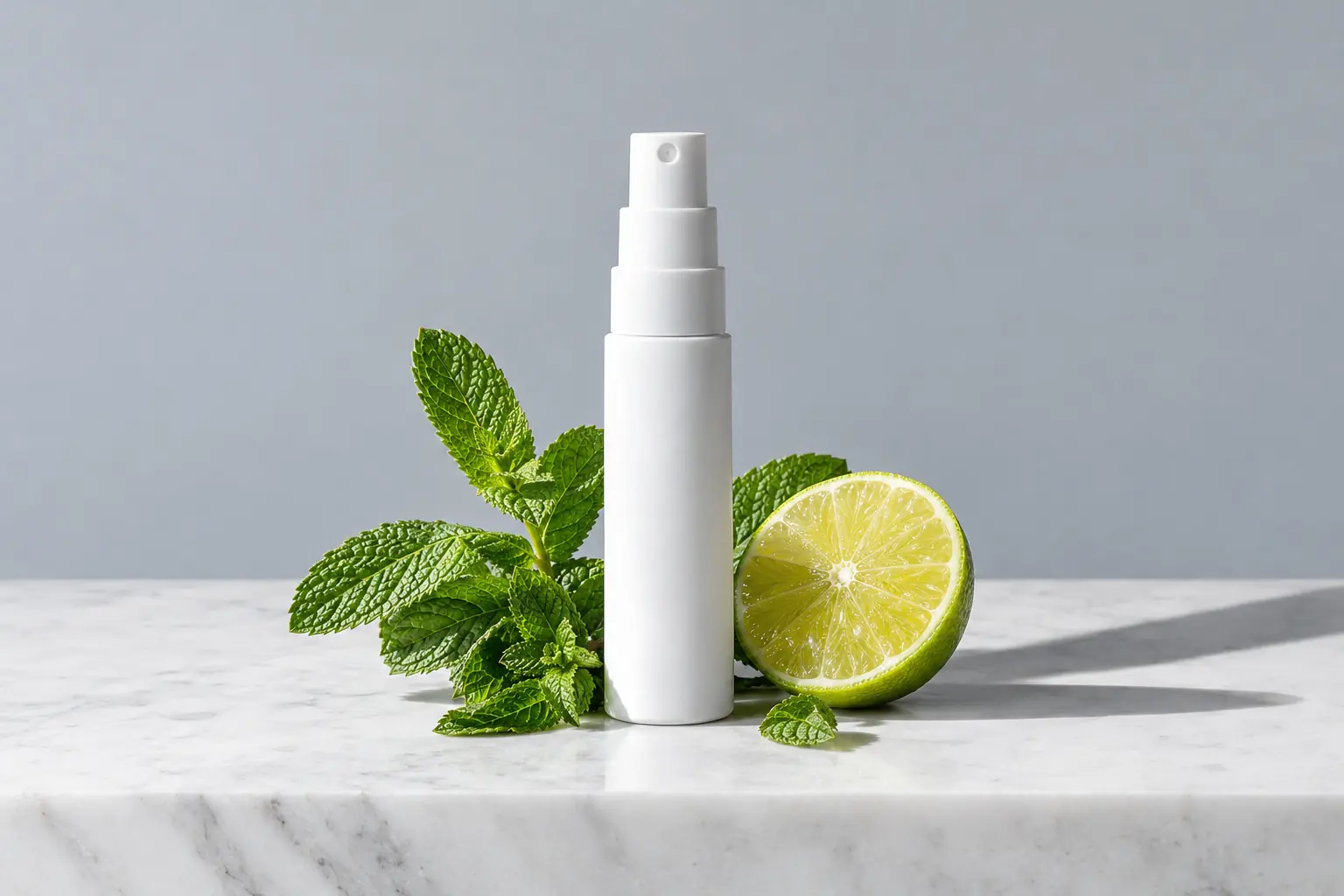
A breath-freshening spray is a compact format for instant use during the day, without water or a brush, unlike a mouthwash or oral foam. For a brand, it is an impulse item - a small bottle bought separately from the main oral-care line, often as an add-on at checkout or in a travel kit.
02
Why a pump bottle is not an 'aerosol' under EU law
Article 2 of Council Directive 75/324/EEC defines an 'aerosol dispenser' as a non-reusable metal, glass or plastic container holding a gas compressed, liquefied or dissolved under pressure with a release device; a manually operated pump or trigger-spray bottle without a pressurised propellant gas - the packaging AKTO declares for this category - does not meet this definition and so falls outside the Directive's scope, unlike a genuine propellant aerosol can.
03
Preservative choice and label-claim limits
Annex V entry 42 to Regulation (EC) No 1223/2009 permits chlorhexidine and its digluconate, diacetate and dihydrochloride salts as a preservative up to 0.3% calculated as chlorhexidine. Annex V regulates the use of chlorhexidine as a preservative; claims of antibacterial action for the finished product require separate substantiation. Article 20(1) prohibits wording that implies characteristics a product does not have - a boundary for a 'kills bacteria' or 'cures bad breath' claim, as distinct from a permissible 'freshens breath' claim. As a finished cosmetic product, the spray falls outside CLP (Regulation (EC) No 1272/2008) under Article 1(5)(c).
04
What AKTO offers
AKTO offers two production modes for the spray: on the client's own raw materials (tolling) or on its own. Pump/spray-bottle filling runs on the same liquid lines used for mouthwash, reaching up to 500,000 units a month in Kyiv (Ukraine) and up to 200,000 in Warsaw (Poland). The minimum batch is 50 kg of finished formulation. Production is certified to ISO 9001:2015, ISO 22000:2018 (HACCP; combined certificate No. 44600111204) and ISO 22716 (GMP).
05
Getting started
A brand chooses the dispenser type, whether to include chlorhexidine or another antiseptic ingredient, and the label wording; AKTO prepares the formula and labelling within Article 20(1)'s limits. This format works well as a compact companion to a mouthwash or oral foam in the same line, and a pump or trigger dispenser lets the brand reuse the same closure options as other liquid products in the category, without moving to aerosol packaging.
- The brand chooses the dispenser type - a pump or trigger, with no propellant gas
- AKTO prepares the formula with chlorhexidine or another antiseptic ingredient
- The preservative is set within the 0.3% limit under Annex V entry 42
- The label wording is checked against Article 20(1)
See also: Rinses / Breath, Household, Hygiene & Specialty Care, Alcohol-Free Mouthwash and Oral Foam.
Frequently Asked Questions
Why doesn't a spray bottle count as an aerosol under EU law?
What preservative is used in breath sprays?
Can a spray label say 'kills bacteria'?
What is AKTO's minimum batch for a breath spray?
 Kateryna Khromykh
 Oleksandra Vovk
Standards we work to
 ISO 22716 (GMP)
 ISO 22000 (HACCP)
 Regulation (EC) No 1223/2009
 Directive 2002/46/EC
 Halal
Why AKTO
- Breath-freshening spray developed to order on AKTO's own lines
- Pump/trigger bottle outside Directive 75/324/EEC's aerosol scope
- Preservative capped at 0.3% chlorhexidine (Annex V entry 42)
- Up to 500,000 bottles a month filled in Kyiv (Ukraine) on liquid lines
- MOQ from 50 kg, facilities in Kyiv (Ukraine) and Warsaw (Poland)