
Private Label
Co-Wash
A cleansing conditioner used instead of shampoo - AKTO develops and manufactures it on the same line as its shampoos and conditioning balms.
- ISO 22716 (GMP)
In brief
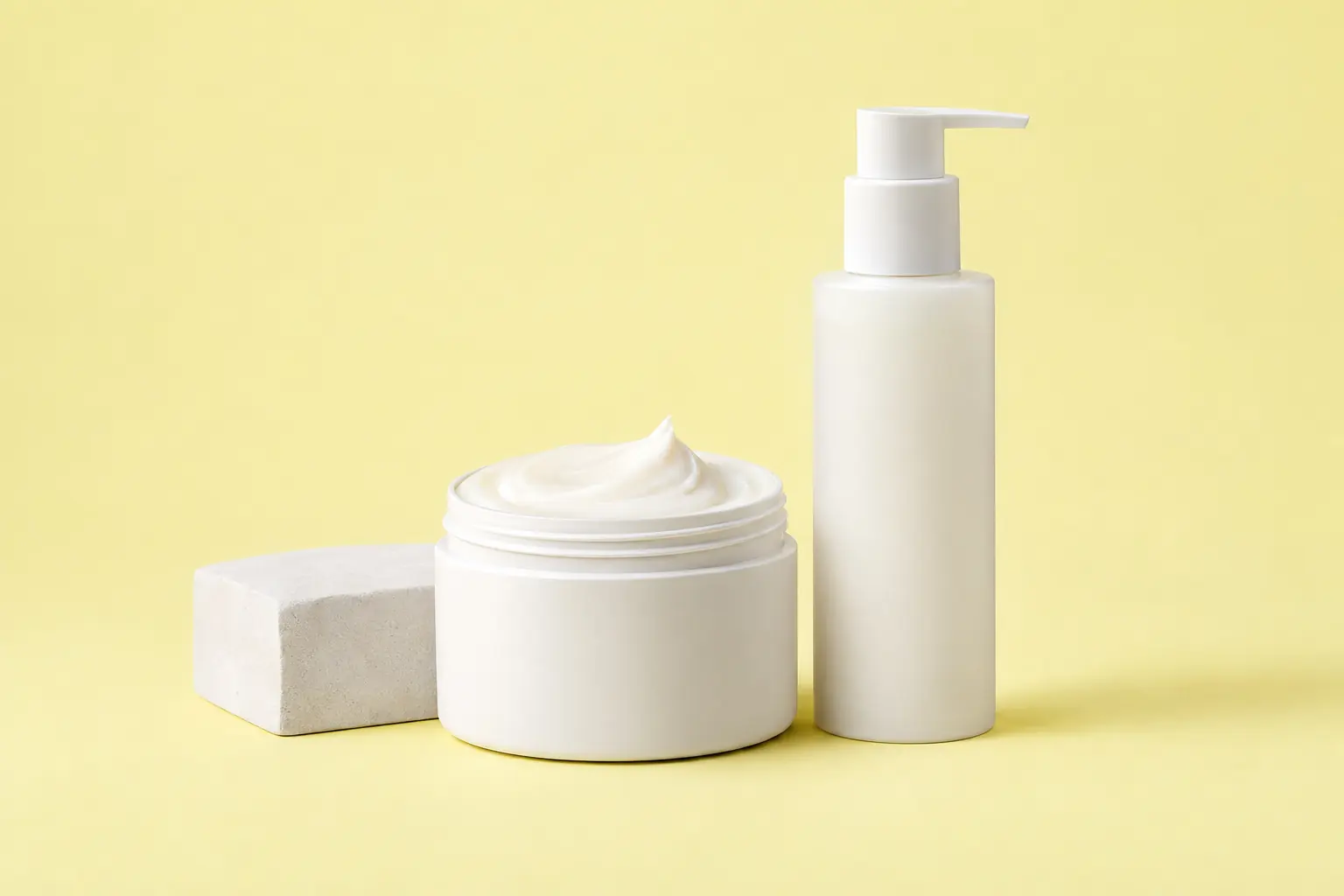
A co-wash is a cleansing conditioner used in place of shampoo. Regulation (EC) No 648/2004 on detergents does not apply to it - it is a cosmetic product under Regulation 1223/2009. AKTO already manufactures shampoo and a rinse-off conditioning balm on the same liquid-formulation line, and develops a co-wash format combining both functions to order, on the same equipment in Kyiv (Ukraine) and Warsaw (Poland).
01
What a co-wash is and who it suits
A co-wash is a cleansing conditioner: it cleans hair and scalp without the lather typical of a conventional shampoo, while still leaving a conditioning effect. The format suits a brand that wants a gentler cleansing option for dry or curly hair within an existing shampoo-and-conditioner range, sourced from the same supplier and the same document-preparation cycle. A brand that already sells shampoo and conditioner under its own label gains a third line item built on the same surfactant and conditioning bases, without sourcing from a new manufacturer.
02
Why this is not a detergent but a cosmetic
Regulation (EC) No 648/2004 on detergents does not apply to a co-wash: Article 2(2) of that Regulation defines 'washing' as the cleaning of laundry, fabrics, dishes and other hard surfaces, and does not name cosmetics expressly, so the line is drawn by the cosmetic-product definition in Article 2(1)(a) of Regulation 1223/2009 instead. Regulation 648/2004 also sets no minimum surfactant-concentration threshold for its own scope - it simply does not reach a co-wash. For a brand, that means a single cosmetics documentation package instead of two different regulatory regimes for one bottle.
03
Label claims and allergen labelling
A 'sulfate-free' or 'no-lather cleansing' claim on a co-wash label must accurately reflect the surfactant system actually used in the formula, under the Truthfulness criterion of Regulation (EU) No 655/2013. As a rinse-off product, a co-wash falls under the 0.01% by-weight fragrance-allergen labelling threshold of Annex III - the same rate that applies to a conventional shampoo or conditioner. Methylisothiazolinone (MIT) is permitted up to 0.0015% in a rinse-off product like this under Regulation (EU) 2017/1224, unlike the outright ban that applies to a leave-on formula.
04
What AKTO offers
AKTO already manufactures shampoo formulas and a rinse-off conditioning balm on the same liquid-formulation line, with capacity of up to 150 tonnes per month in Kyiv (Ukraine) and up to 50 tonnes per month in Warsaw (Poland). AKTO develops and manufactures a co-wash that combines both functions in one formula to order, on that same equipment. Minimum order for the cosmetics line starts from 50 kg, and production is certified to ISO 22716 (GMP), ISO 9001, ISO 22000 (HACCP) - the same certificate list AKTO already holds for the rest of its liquid cosmetics range, so a brand does not assemble a separate document package for the new format.
05
Getting started
- The brand defines the intended claim (for example, 'sulfate-free') and the target hair type.
- AKTO checks the surfactant system against the claim under Regulation (EU) No 655/2013.
- AKTO prepares allergen labelling at the 0.01% threshold and keeps MIT within the 0.0015% cap.
- The brand approves a sample, and series production starts from 50 kg.
06
See also
See also: Alternative Formats, Solid Shampoo Bar, Solid Conditioner Bar and Conditioners.
Frequently Asked Questions
Is a co-wash regulated as a detergent for fabrics or dishes?
Can a co-wash label say 'sulfate-free'?
What format does AKTO already manufacture alongside a co-wash?
What allergen threshold applies to a co-wash?
Expert review
Reviewed by
 Illia Mariutsa
Researcher, organic chemistry
Google Scholar Anastasiia Bespalova
Paediatric orthopaedic and trauma surgeon
ORCID
Standards we work to
 ISO 22716 (GMP)
 ISO 22000 (HACCP)
 Regulation (EC) No 1223/2009
 Directive 2002/46/EC
 Halal
Why AKTO
- AKTO already manufactures shampoo and a conditioning balm on one liquid-formulation line
- A co-wash is developed on that same equipment, with capacity up to 150 t/month in Kyiv (Ukraine)
- A 'sulfate-free' claim is checked against the formula's actual surfactant system
- Production from 50 kg, certified to ISO 22716 (GMP), ISO 9001, ISO 22000