
Private Label
Face Cream Oil Free
AKTO develops an oil-free face cream to a brand's order, excluding lipid actives from the formula at the technical-brief stage.
- ISO 22716 GMP
In brief
AKTO develops and manufactures an oil-free face cream to a brand's order: the formula is built without lipid emollients from scratch rather than by relabeling a standard cream. The minimum batch is 50 kg, packed into tubes and jars of 50-250 g. Production follows Regulation (EC) No 1223/2009, ISO 22716 and Ukraine's Resolution No. 65.
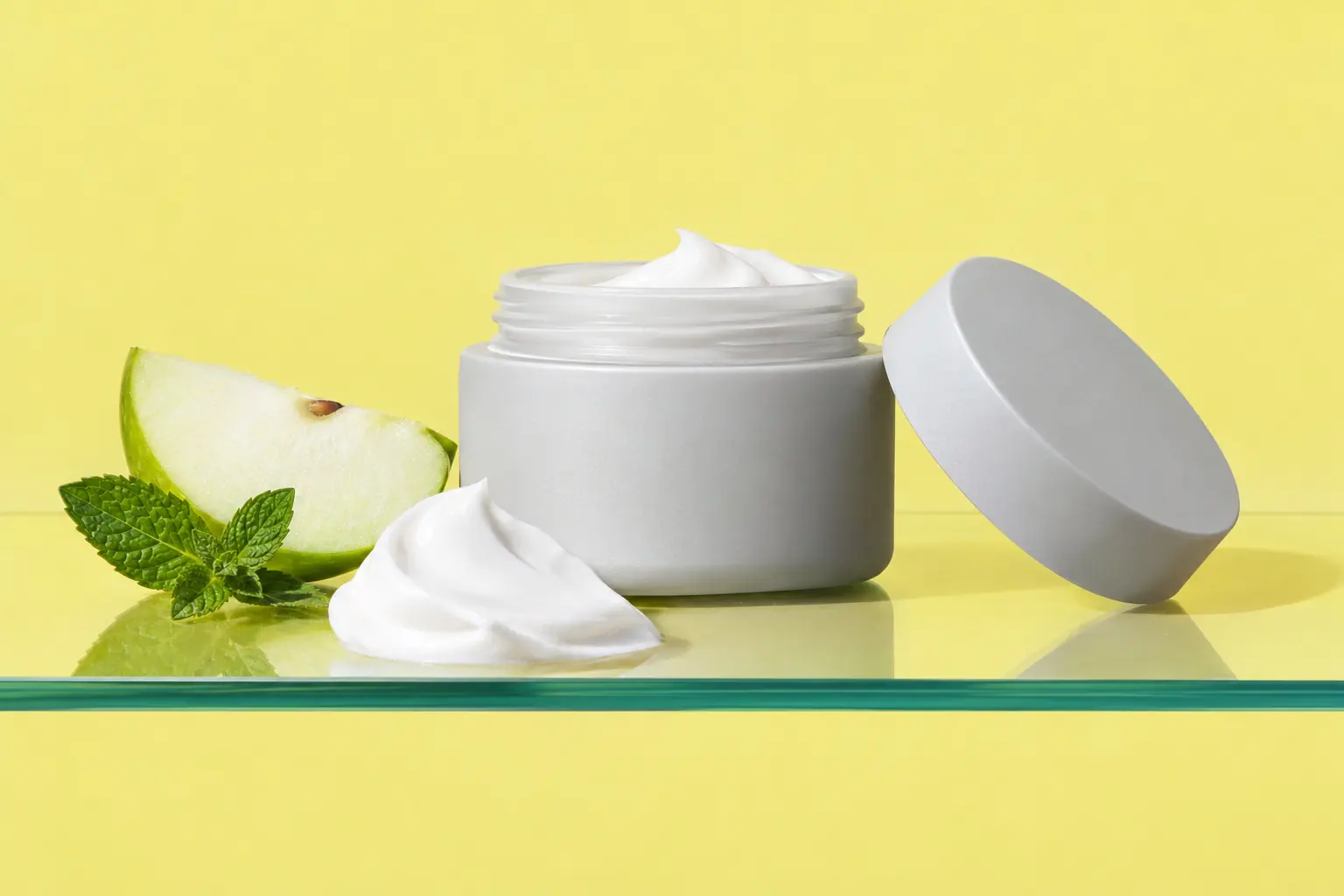
01
What an oil-free face cream is and who orders it
An oil-free cream is a formula from which the oil phase and similar lipid ingredients have been deliberately left out, giving a lighter feel and lowering the risk of clogged pores. Brands order this format for oily, combination or breakout-prone skin, and as a makeup base that won't add shine. An 'oil-free' position gives a brand a distinct SKU for the shopper who is specifically looking for a formula without oils, sitting alongside a general moisturizer in the same range rather than replacing it.
02
Formulation, format and packaging requirements
AKTO's own standard face-cream formula uses squalane as an emollient active, so an 'oil-free' claim cannot simply be carried over to that base: an oil-free version is engineered separately, swapping the lipid phase for other emollient types from the design stage onward. When a brand submits a technical brief for a new product, the desired free-from claims — oil-free among them — are recorded as required fields before formulation work begins. Cosmetic formulas, oil-free creams included, are filled into tubes and jars of 50 to 250 g, from a minimum batch of 50 kg of finished formulation.
03
EU and Ukraine regulatory requirements
'Oil-free' is an ingredient-absence claim. Regulation (EU) No 655/2013 does not name absence claims specifically, but its common criteria — truthfulness, evidential support, honesty and fairness — apply to it in full, and the Commission's explanatory Technical Document on cosmetic claims (Annex III on 'free from' claims, 2017) requires such a claim to be accurate, not to denigrate ingredients other manufacturers use legally, and not to imply a benefit the product does not have. Like any leave-on product, an oil-free cream falls under the 0.001% fragrance-allergen labelling threshold in Annex III of Regulation (EC) No 1223/2009, Article 8 (GMP presumption via ISO 22716) and Article 10 (a Cosmetic Product Safety Report). In Ukraine, the product falls under Resolution No. 65 and AKTO's own technical specification, TU U 20.4-43961492-001:2020.
04
What AKTO offers
AKTO develops an oil-free face cream to a brand's order on its cream-emulsion and cream-souffle lines, building the formula without the lipid actives used in its standard face-cream base. The minimum batch is 50 kg, and production runs in Kyiv (Ukraine) and Warsaw (Poland), giving a brand a choice of plant by market and delivery logistics. Both sites are certified to ISO 9001:2015, ISO 22000:2018 (HACCP; certificate No. 44600111204) and ISO 22716 (GMP). Packaging is tubes and jars of 50-250 g.
05
Getting started
A brand states the desired 'oil-free' free-from claim, active ingredients and packaging type in a technical brief; AKTO engineers a formula without the lipid phase, tests stability and prepares documentation for the target market. See also: Face Creams / Moisturizers, Fluid Face Cream and Rich Cream.
Frequently Asked Questions
Does AKTO have a ready-made oil-free face cream?
Why can't AKTO's standard cream simply be labelled 'oil-free'?
What does the technical brief capture for an oil-free product?
What does the EU require for an 'oil-free' claim?
Expert review
Reviewed by
 Illia Mariutsa
Researcher, organic chemistry
Google Scholar Anastasiia Bespalova
Paediatric orthopaedic and trauma surgeon
ORCID
Standards we work to
 ISO 22716 (GMP)
 ISO 22000 (HACCP)
 Regulation (EC) No 1223/2009
 Directive 2002/46/EC
 Halal
Why AKTO
- Oil-free formula engineered without lipid actives from the start
- MOQ from 50 kg, plants in Kyiv (Ukraine) and Warsaw (Poland)
- Tubes and jars of 50-250 g
- ISO 9001:2015, ISO 22000:2018 (HACCP) and ISO 22716 (GMP)