
Private Label
Rich Cream
AKTO develops a rich, higher-lipid face cream by increasing the oil-phase share in its squalane and ceramide complex, to a brand's order.
- ISO 22716 GMP
In brief
AKTO develops a rich face cream by raising the oil-phase share within its own squalane and ceramide NP, AP and EOP complex, to a brand's order. The typical format for this texture is a jar of 50-250 g, from a minimum batch of 50 kg. Production follows Regulation (EC) No 1223/2009, ISO 22716 and Ukraine's Resolution No. 65.
01
What a rich face cream is and who orders it
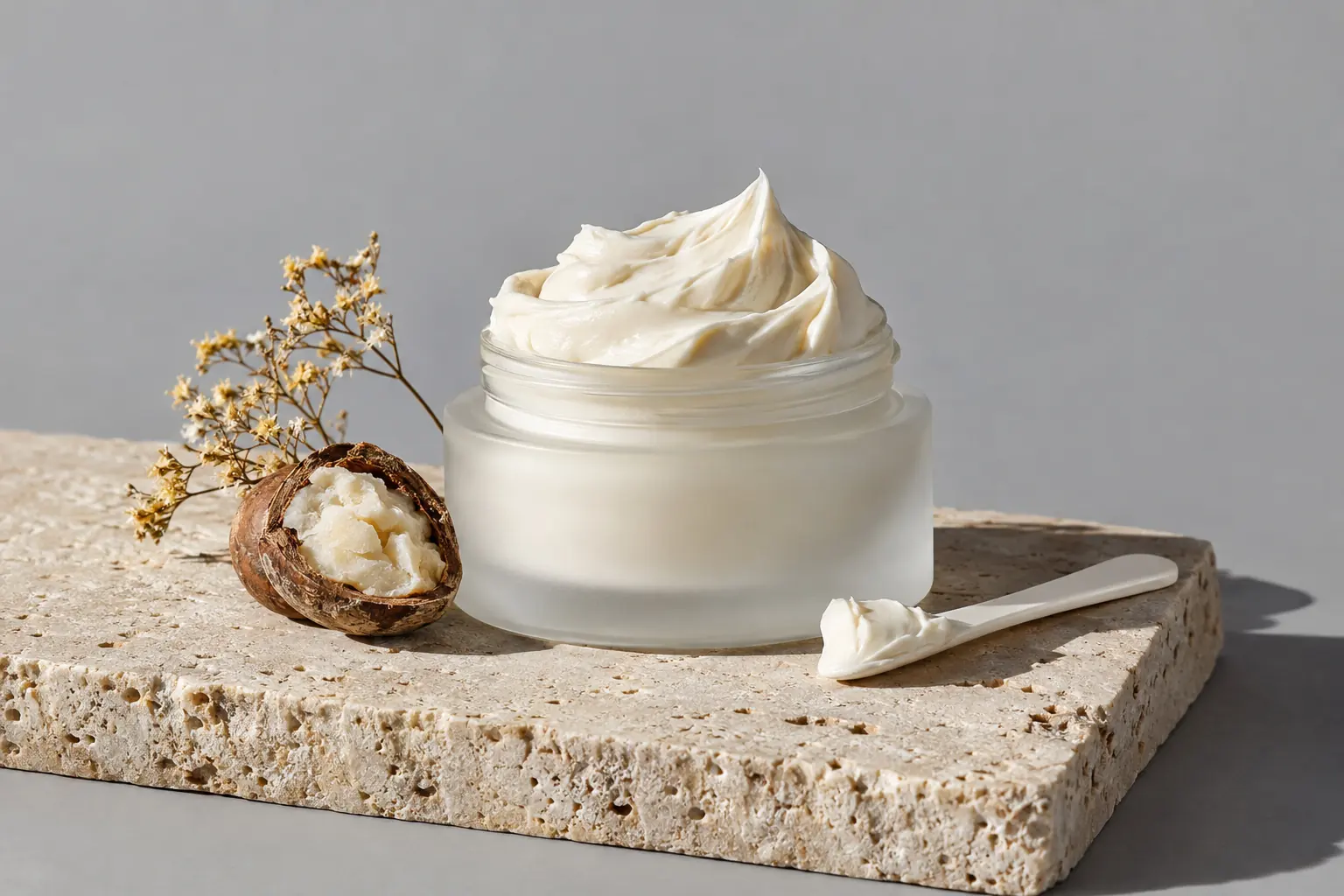
A rich cream is a dense, lipid-heavy texture built for dry, dehydrated or mature skin that needs a noticeable occlusive, comforting effect, especially at night or during colder months. Unlike a light daytime fluid or gel-cream, a rich texture is designed to leave a felt barrier layer on the skin after application. Brands add this SKU as a 'night' or 'winter' companion to a daytime cream, widening the range without changing the line's core positioning.
02
Formulation, texture and packaging requirements
The oil-phase and barrier actives in AKTO's own formula — squalane together with ceramide NP, AP and EOP — illustrate the type of lipid complex used for a rich texture; for a rich cream, AKTO raises the oil-phase share within that same complex to build a denser feel. A jar is the typical format for a denser, higher-viscosity cream, while lighter textures more often go into tubes; AKTO's range covers tubes and jars from 50 to 250 g depending on the product format. The minimum batch is 50 kg of finished formulation.
03
EU and Ukraine regulatory requirements
Article 15 of Regulation (EC) No 1223/2009 bans the use in cosmetic products of substances classified under CLP as CMR: categories 1A and 1B save for rare exceptions under the conditions of Article 15(2), category 2 unless the SCCS has found them safe; the specific prohibited substances are listed in Annex II. This narrows the choice of waxes, oil-phase components and preservatives specifically for a higher-lipid formulation. Annex V (entry 29) caps phenoxyethanol — a preservative option for a cream-emulsion base — at 1.0% in the finished product. The general requirements still apply: Article 8 (GMP presumption via ISO 22716) and Article 10 (a Cosmetic Product Safety Report). Any 'rich' or nourishing-texture claim must meet the common criteria of Regulation (EU) No 655/2013. In Ukraine, the product falls under Resolution No. 65 and AKTO's own technical specification, TU U 20.4-43961492-001:2020.
04
What AKTO offers
AKTO's higher-tier service package for a face-care formula includes a technical file with an expert's sign-off under Resolution No. 65, toxicological indicators, preservative-challenge testing and container-compatibility testing — a testing set particularly relevant to a dense, lipid-rich formula packed in a jar. The minimum batch is 50 kg, with production in Kyiv (Ukraine) and Warsaw (Poland), giving a brand a choice of plant by market and logistics. Both sites are certified to ISO 9001:2015, ISO 22000:2018 (HACCP; certificate No. 44600111204) and ISO 22716 (GMP).
05
Getting started
A brand specifies the desired texture density, active ingredients and packaging format in a technical brief; AKTO raises the oil-phase share in its lipid complex, checks jar compatibility and preservative stability, then prepares documentation for the target market. See also: Face Creams / Moisturizers, Face Cream Oil Free and Sensitive Skin Cream.
Frequently Asked Questions
Does AKTO manufacture a rich face cream?
Why are rich creams more often packed in jars?
What limits a rich cream's formulation in the EU?
What extended testing package does AKTO offer for a rich cream?
Expert review
Reviewed by
 Illia Mariutsa
Researcher, organic chemistry
Google Scholar Anastasiia Bespalova
Paediatric orthopaedic and trauma surgeon
ORCID
Standards we work to
 ISO 22716 (GMP)
 ISO 22000 (HACCP)
 Regulation (EC) No 1223/2009
 Directive 2002/46/EC
 Halal
Why AKTO
- Rich texture built on the squalane and ceramide lipid complex
- Extended testing: preservative challenge, jar compatibility, toxicology
- MOQ from 50 kg, plants in Kyiv (Ukraine) and Warsaw (Poland)
- ISO 9001:2015, ISO 22000:2018 (HACCP) and ISO 22716 (GMP)