
Private Label
Face Mask Creamy
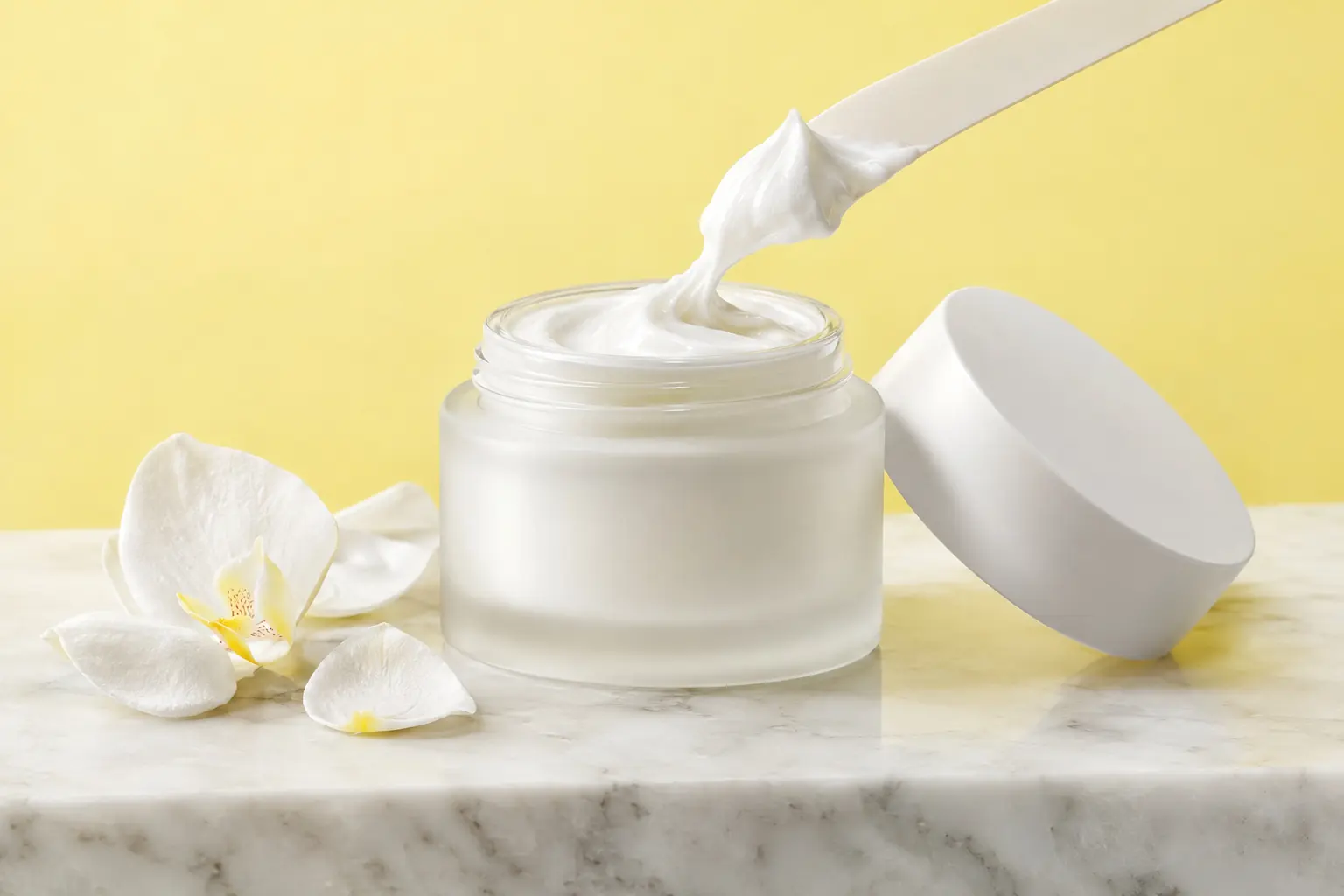
AKTO already manufactures a creamy face mask with D-panthenol, calendula, black cumin oil, niacinamide and arginine, in a 100 ml airless-pump bottle.
- ISO 22716 GMP
In brief
Company AKTO LLC (AKTO) already manufactures a creamy face mask with D-panthenol (6%), calendula extract, black cumin oil, niacinamide and arginine, filled into a 100 ml airless-pump bottle. The formula is positioned as an anti-inflammatory, expert-care-at-home product, and the Kyiv (Ukraine) line runs emulsion formats such as this mask at up to 30 t per month.
01
The creamy mask format and its purpose
A creamy mask is a nourishing, short-duration product for calming the skin and delivering intensive hydration, used on a course or as-needed basis rather than as a daily cream. For a brand, it typically reads as an expert-level at-home ritual and gives a customer an extra reason to reorder within the range. The cream texture is the most common mask format in contract manufacturing, thanks to its straightforward emulsion base and wide choice of active ingredients. A customer typically uses it on a course rather than daily, so a brand can position it as a stand-alone item or as a companion to its everyday cream.
02
The formula and packaging AKTO manufactures
AKTO manufactures a cream mask positioned as an anti-inflammatory, expert-care-at-home product, filled into a 100 ml airless-pump bottle. The formula contains D-panthenol (6%), calendula extract, black cumin oil, niacinamide and arginine; AKTO adapts the recipe and packaging details individually for each brand. Alongside this cream texture, AKTO's production portfolio also lists a declared dry/powder mask format.
03
EU compositional requirements
Annex I Part A Section 1 of Regulation (EC) No 1223/2009 requires the safety report to state the product's qualitative and quantitative composition, including the chemical identity of substances - name, INCI, CAS - the level at which this mask's actives are documented. Annex V entry 29 authorises Phenoxyethanol as a preservative at up to 1.0%, one option for the aqueous phase of an emulsion mask. Article 8 of the regulation presumes compliance with good manufacturing practice where production follows ISO 22716.
04
AKTO's production capability
The Kyiv (Ukraine) line for emulsion formats such as this cream mask runs at up to 30 t per month, against up to 10 t per month at the Warsaw (Poland) facility. The minimum batch is 50 kg of finished formulation. Both facilities let a brand pick a production site to match its target supply market. Microbiology results are issued by AKTO as a separate protocol that a brand adds to its own registration file. Production is certified to ISO 9001:2015, ISO 22000:2018 (HACCP; combined certificate No. 44600111204) and ISO 22716 (GMP).
05
Getting started
A brand chooses the actives, fragrance and fill size; AKTO keeps this panthenol-and-calendula recipe as a reference point or adapts the composition around new actives, runs microbiology testing and prepares the technical documentation for the chosen market. This cream-mask example shows the level of active-ingredient detail AKTO records for every recipe. See also: Masks (Face), Face Clay Mask and Face Night Mask.
Frequently Asked Questions
What active ingredients does AKTO's cream mask contain?
What packaging does AKTO use for the cream mask?
What is AKTO's production capacity for cream masks?
What preservative is allowed for the cream mask under Annex V?
Expert review
Reviewed by
 Illia Mariutsa
Researcher, organic chemistry
Google Scholar Anastasiia Bespalova
Paediatric orthopaedic and trauma surgeon
ORCID
Standards we work to
 ISO 22716 (GMP)
 ISO 22000 (HACCP)
 Regulation (EC) No 1223/2009
 Directive 2002/46/EC
 Halal
Why AKTO
- Cream mask with D-panthenol (6%) and calendula
- 100 ml airless-pump packaging
- Kyiv (Ukraine) line capacity up to 30 t per month
- Separate microbiology protocol for the brand's registration file
- MOQ from 50 kg, facilities in Kyiv (Ukraine) and Warsaw (Poland)