
Private Label
Hair Heat Protection Cream
AKTO develops and manufactures a heat-protection cream to order on its emulsion line — a denser, richer alternative to a heat-protection spray.
- ISO 22716 GMP
In brief
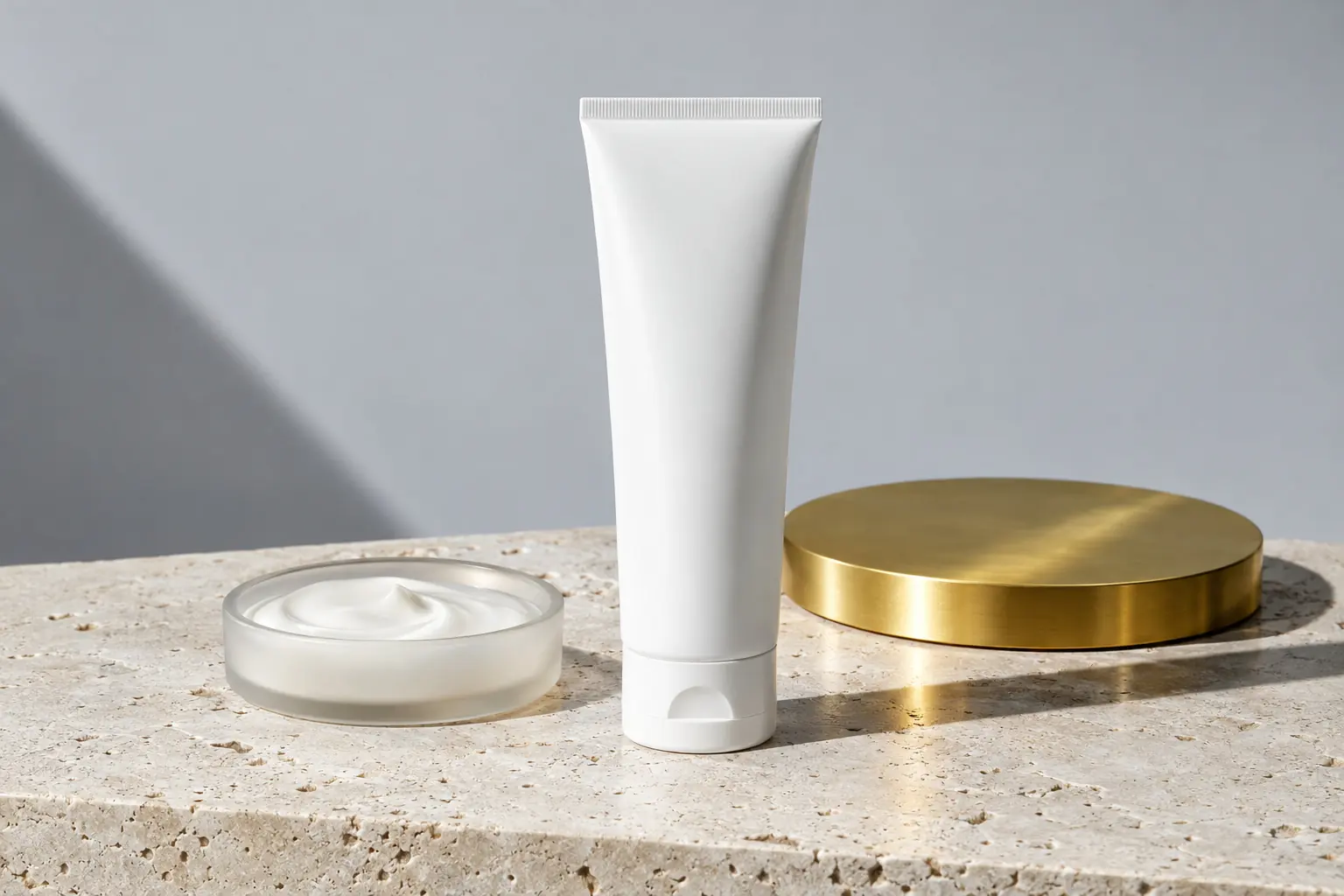
Company AKTO LLC (AKTO) develops and manufactures a heat-protection cream to order on its emulsion line, using vacuum reactor-homogenizers. The cream is filled into 200 ml tubes or 50-250 g jars, from a minimum batch of 50 kg at its plants in Kyiv (Ukraine) and Warsaw (Poland), under ISO 22716 (GMP).
01
What a heat-protection cream is and who needs one
A heat-protection cream is the denser, richer alternative to a spray: applied before blow-drying or straightening, when a brand wants a heavier texture with a noticeable feel on the hand, rather than a light spray mist. The format works well for dry, damaged hair, where the cream also delivers a care benefit on top of the heat barrier. AKTO develops and manufactures a heat-protection cream to order on its own emulsion line, adapting the texture and the concentration of actives to the brand's target effect.
02
Production and packaging
AKTO manufactures its cream emulsions using vacuum reactor-homogenizers, part of the production line that keeps the texture uniform and the emulsion stable. For each product type, AKTO maintains a technical file with a risk-management file under its quality-management system, built on ISO 9001, ISO 22000 and ISO 22716. The finished cream is filled into 200 ml tubes or 50-250 g jars, depending on how the brand plans to shelf the product. Both formats run off the same emulsion line, so switching between a tube and a jar does not require a separate recipe rework.
03
EU and Ukraine regulatory requirements
Article 10(1) of Regulation (EC) No 1223/2009 requires a safety report under Annex I before the cream reaches the market, including an assessment of the emulsion's physical and chemical stability. Where a brand states a specific heat-protection temperature — such as a maximum flat-iron or blow-dryer temperature — Regulation (EU) No 655/2013 requires evidence proportionate to that quantitative claim. In Ukraine, the transitional rule under Resolution No. 976 of 29.07.2026 protects a cream placed on the market before 31.07.2027 from being withdrawn or restricted for a labelling mismatch alone.
04
What AKTO offers
A brand shares its target claim, packaging and sales channel, and AKTO checks the durability labelling and claim evidence that apply before formulation even starts. AKTO includes a batch quality passport in the production cost at no extra charge. The standard lead time for a new order is from four weeks, with 100% prepayment. The minimum batch is 50 kg, and manufacturing is certified to ISO 9001:2015 and ISO 22000:2018 (combined certificate No. 44600111204), plus ISO 22716 (GMP).
05
Getting started
A brand sets the target protection temperature, texture and packaging format; AKTO checks the applicable labelling and evidence requirements, formulates on a vacuum reactor-homogenizer, and prepares the technical file with a quality passport for every batch. See also: Leave-in / Detangling / Protection, Hair Heat Protection Spray and Cream Hair Mask.
Frequently Asked Questions
What packaging does AKTO use for a heat-protection cream?
What equipment does AKTO use to manufacture the heat-protection cream?
Does a specific heat-protection temperature claim need evidence?
What is AKTO's standard lead time for a new heat-protection cream order?
Expert review
Reviewed by
 Illia Mariutsa
Researcher, organic chemistry
Google Scholar Anastasiia Bespalova
Paediatric orthopaedic and trauma surgeon
ORCID
Standards we work to
 ISO 22716 (GMP)
 ISO 22000 (HACCP)
 Regulation (EC) No 1223/2009
 Directive 2002/46/EC
 Halal
Why AKTO
- AKTO develops and manufactures a heat-protection cream on its emulsion line
- Production on vacuum reactor-homogenizers
- Batch quality passport included at no extra charge
- Lead time from four weeks with 100% prepayment
- Certified to ISO 9001, ISO 22000 (HACCP) and ISO 22716 (GMP)