
Private Label
Hair Heat Protection Spray
AKTO develops and manufactures a heat-protection spray to order on the liquid-formulation line it already uses across markets in Europe, Canada and the Gulf.
- ISO 22716 GMP
In brief
Company AKTO LLC (AKTO) develops and manufactures a heat-protection spray to order on its own liquid-formulation line, filled into 100-200 ml bottles. AKTO's products already sell in markets including Ukraine, Poland, Germany, Italy, England, Canada, Turkey, the UAE and Saudi Arabia; the minimum batch is 50 kg at its plants in Kyiv (Ukraine) and Warsaw (Poland), under ISO 22716 (GMP).
01
What a heat-protection spray is and who needs one
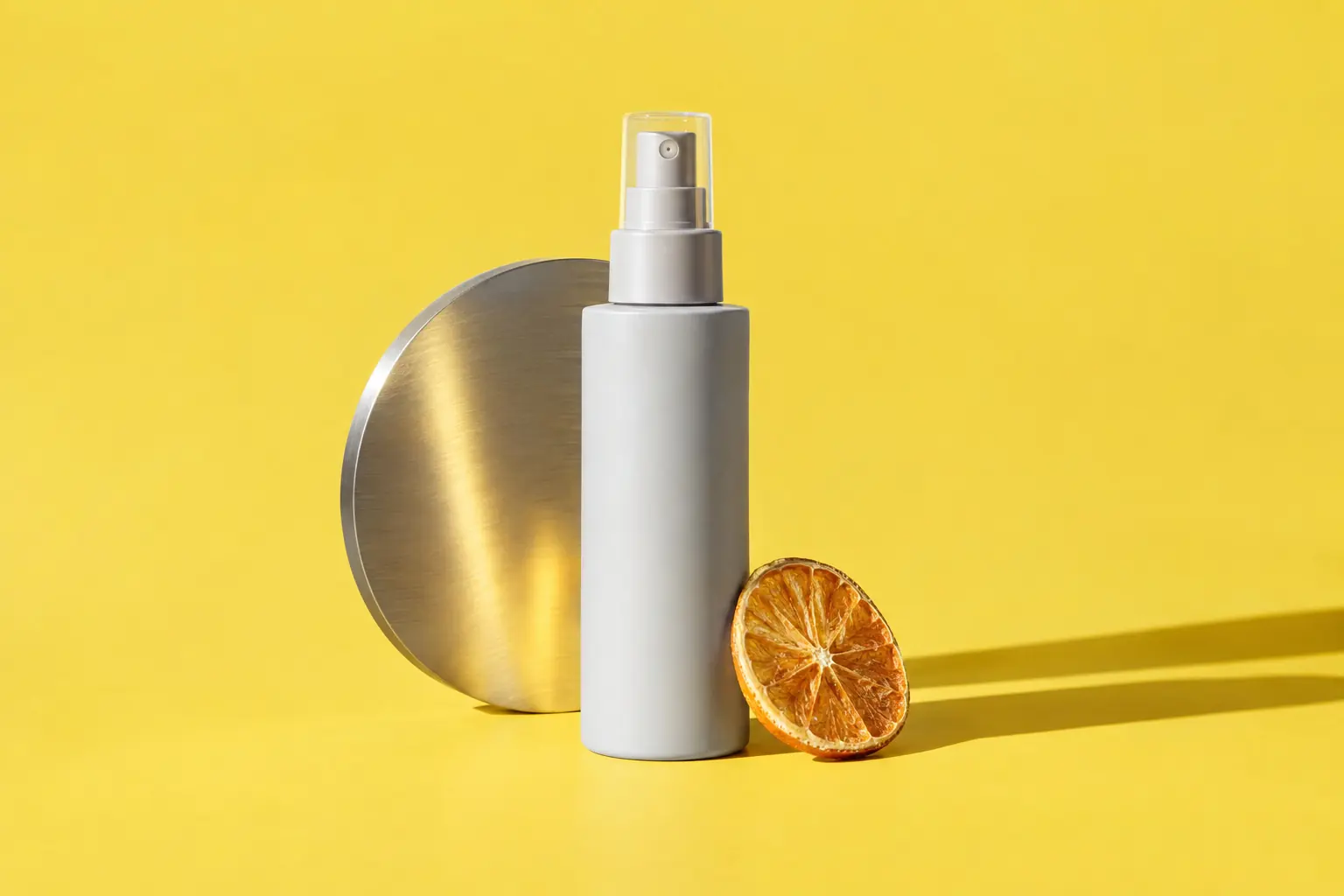
A heat-protection spray is misted on before a flat iron, blow-dryer or curling iron, to reduce the effect of high heat on the hair's structure during styling. For a brand, this gives a clear, simple reason to buy — 'before you style' — and a natural place in the range next to a shine spray or an anti-frizz spray. AKTO develops and manufactures a heat-protection spray to order on the same liquid-formulation line it already runs for its documented leave-in chelating sprays.
02
Formula, packaging and export markets
The finished spray is filled into bottles of 100-200 ml on AKTO's liquid-formulation line. For export orders, AKTO prepares multilingual labels — for example Ukrainian with English, Ukrainian with Polish and English, or English with Polish — naming AKTO as the manufacturer, 'Made in Ukraine' or 'Wyprodukowano na Ukrainie'. AKTO's products already sell in markets including Ukraine, Poland, Germany, Italy, England, Canada, Turkey, the UAE and Saudi Arabia. Beyond the mandatory microbiology, preservative-challenge and stability testing, AKTO recommends heavy-metals testing and patch testing for a heat-protection formula, supporting a 'dermatologically tested' claim.
03
EU and Gulf regulatory requirements
Directive 75/324/EEC only classifies a dispenser as an 'aerosol' when it is a non-reusable container releasing gas compressed, liquefied or dissolved under pressure; the trigger or pump bottle this spray ships in does not meet that definition. Annex III of Regulation (EC) No 1223/2009 requires a fragrance allergen to be named on a leave-on product's label once it reaches 0.001% by weight. Where a brand states a specific heat-protection temperature — such as a maximum flat-iron temperature — Regulation (EU) No 655/2013 requires evidence proportionate to that quantitative claim.
04
What AKTO offers
The minimum batch is 50 kg of finished formula at AKTO's plants in Kyiv (Ukraine) and Warsaw (Poland). Manufacturing is certified to ISO 9001:2015 and ISO 22000:2018 (combined certificate No. 44600111204), plus ISO 22716 (GMP).
AKTO's production certificates and market requirements are described in the Quality & Compliance section.
05
Getting started
A brand sets the target styling temperature and the label format for its chosen market; AKTO prepares the formula, heavy-metals and patch testing, and a multilingual label for the export country. Having a confirmed sales record across nine countries gives a brand a ready documentation template instead of building one from scratch per market. See also: Leave-in / Detangling / Protection, Hair Heat Protection Cream and Detangling Spray.
Frequently Asked Questions
Which markets does AKTO already sell heat-protection products into?
Does a specific heat-protection temperature claim need evidence?
What extra tests does AKTO recommend for a heat-protection formula?
Is a heat-protection spray classed as an aerosol under EU rules?
Expert review
Reviewed by
 Illia Mariutsa
Researcher, organic chemistry
Google Scholar Anastasiia Bespalova
Paediatric orthopaedic and trauma surgeon
ORCID
Standards we work to
 ISO 22716 (GMP)
 ISO 22000 (HACCP)
 Regulation (EC) No 1223/2009
 Directive 2002/46/EC
 Halal
Why AKTO
- AKTO develops and manufactures a heat-protection spray on its liquid line
- Products already sold in nine countries, including the UAE and Saudi Arabia
- Multilingual labels prepared per export market
- Heavy-metals and patch testing available to support label claims
- ISO 22716 (GMP) certification