
Private Label
Lip Cream
AKTO develops and manufactures a leave-on lip cream for daily lip care, to order on its emulsion lines.
- ISO 22716 GMP
In brief
A lip cream is a soft, leave-on emulsion for daily lip care rather than colour or shine. AKTO develops and manufactures a lip cream to order on its emulsion lines, up to 30 tonnes a month at Kyiv (Ukraine), from a 50 kg minimum batch, packaged in jars or PBL tubes under EU leave-on labelling rules.
01
A daily leave-on treatment for the lips
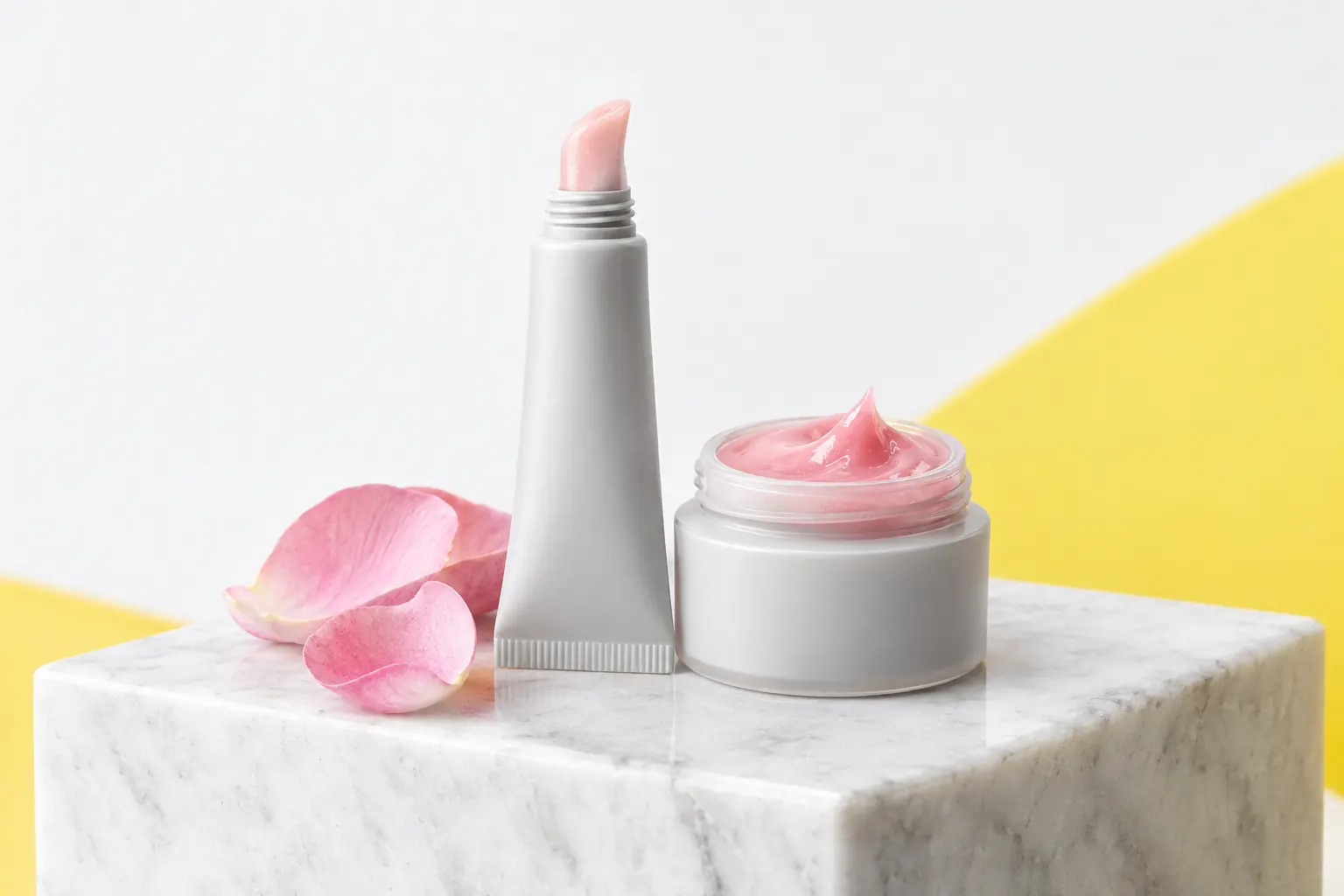
A lip cream is a soft, spreadable emulsion designed to stay on the lips through the day rather than to add colour or shine: it treats dryness and supports the lip barrier as part of a customer's regular routine, usually packaged in a small jar or a short tube rather than a bullet-style stick. For a brand, a lip cream reads as the "skincare" end of a lip-care range, sitting alongside a balm, a mask and a scrub as the everyday-use product in the set rather than the occasional-treatment or decorative one.
02
Why "leave-on" changes the allergen rule
Regulation (EC) No 1223/2009 defines a "lip product" as one intended for application on the lips, and a "leave-on product" as one intended to stay in prolonged contact with the skin, hair or mucous membranes; a lip cream is both. That combination matters for labelling: under Annex III, a fragrance allergen such as Benzyl Alcohol has to be named in the ingredient list once its concentration exceeds 0.001%, the leave-on threshold - ten times stricter than the 0.01% threshold that would apply to a rinse-off product removed shortly after application.
03
The salicylic-acid ceiling, if used as an active
If a lip cream uses salicylic acid as an active ingredient, Annex III entry 98 caps it at 2.0%, the general ceiling for "other products." That's the rate that applies here because a lip cream isn't among the six product types the entry names for the lower 0.5% ceiling - body lotion, eye shadow, mascara, eyeliner, lipstick and roll-on deodorant. A brand weighing an exfoliating or clarifying claim on a lip cream should check which ceiling its own product actually falls under before finalising the concentration.
04
Shelf-life labelling for a jarred cream
Article 19(1) of Regulation 1223/2009 requires a cosmetic label to show either a fixed date of minimum durability or, once that durability exceeds 30 months, the Annex VII period-after-opening symbol together with the number of months the product stays safe to use once opened - the labelling route a long-shelf-life lip cream sold in a jar typically takes, since a jar is opened and reopened many times rather than used down in one go like a tube.
05
What AKTO offers for a lip cream
AKTO develops and manufactures a lip cream to order on its emulsion lines, with capacity up to 30 tonnes a month at the Kyiv (Ukraine) plant and up to 10 tonnes a month at the Warsaw (Poland) plant. The minimum order is a 50 kg batch, packaged in jars of 50-250 g or PBL tubes of 15-50 ml. AKTO's production premises are checked for humidity (20-60%) and temperature (16-25 degrees C) twice per shift, a control relevant to a water-containing emulsion's stability. Manufacturing is certified to ISO 22716 (GMP) and to ISO 9001:2015 combined with ISO 22000:2018 (certificate No. 44600111204).
06
Starting a lip cream project
A brand sets the texture, any active ingredient and the packaging format - jar or tube; AKTO formulates or adapts a cream to match, checks it against the correct restriction ceiling for the active chosen, and prepares the technical file and the shelf-life labelling for the target market. A brand building a full lip-care range can move between this cream, the balm, the mask and the scrub below on the same production relationship.
Frequently Asked Questions
What is a lip cream, and how does it differ from a balm?
Why does a lip cream face a stricter allergen-labelling threshold?
What is the salicylic-acid ceiling if used in a lip cream?
What is AKTO's minimum order for a lip cream?
Expert review
Reviewed by
 Illia Mariutsa
Researcher, organic chemistry
Google Scholar Anastasiia Bespalova
Paediatric orthopaedic and trauma surgeon
ORCID
Standards we work to
 ISO 22716 (GMP)
 ISO 22000 (HACCP)
 Regulation (EC) No 1223/2009
 Directive 2002/46/EC
 Halal
Why AKTO
- Develops and manufactures a lip cream to order on emulsion lines up to 30 t/month (Kyiv, Ukraine) / 10 t/month (Warsaw, Poland)
- Packaging in jars 50-250 g or PBL tubes 15-50 ml
- Humidity and temperature monitored twice per shift for emulsion stability
- ISO 22716 (GMP), ISO 9001:2015 + ISO 22000:2018