
Private Label
Lip Gloss
AKTO develops and manufactures a liquid lip gloss with a wand or doe-foot applicator, to order on its liquid-formulation lines.
- ISO 22716 GMP
In brief
A lip gloss is a liquid or viscous formulation applied with a wand or doe-foot applicator rather than a solid bullet. AKTO develops and manufactures a lip gloss to order on its liquid-formulation lines, up to 150 tonnes a month at Kyiv (Ukraine), from a 50 kg minimum batch, with the preservative system checked against EU lip-product exclusions.
01
A liquid or viscous finish, not a solid bullet
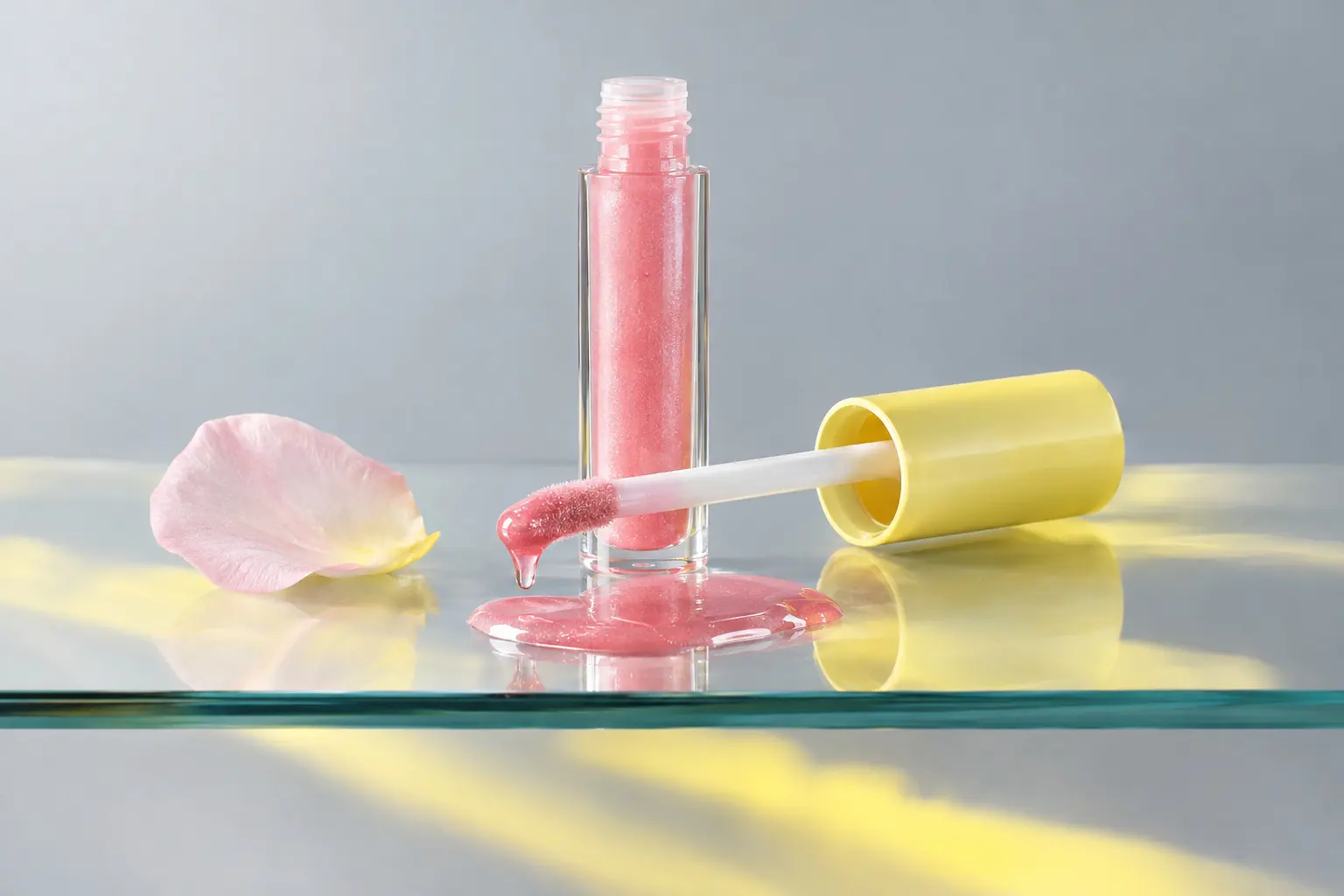
A lip gloss is a liquid or viscous formulation, applied with a wand or a doe-foot applicator rather than twisted up from a bullet - a different production category from a lipstick's anhydrous stick, closer in technology to AKTO's liquid-formulation lines than to its stick line. For a brand, a gloss usually sits alongside a lipstick as the shine-forward, lighter-coverage option in a colour-cosmetics range, often the easier of the two to try first because it commits the customer to less colour payoff.
02
Two common preservatives a gloss has to do without
Annex V of Regulation (EC) No 1223/2009 permits Iodopropynyl Butylcarbamate generally at up to 0.02% in rinse-off products and 0.01% in leave-on products, but excludes it from oral and lip products regardless of that general permission. The same Annex excludes Ethyl Lauroyl Arginate HCl - otherwise permitted at 0.4% in leave-on products - from lip products as well, alongside oral products other than mouthwash and spray products. Both exclusions key off the same defined term: a "lip product" is one intended for application on the lips, whatever its tint or finish.
03
Labelling a shimmer pigment
Article 19(1)(g) of Regulation 1223/2009 requires a nanomaterial ingredient to be marked "(nano)" in the ingredient list. A shimmering lip gloss commonly uses a nano-grade mica or titanium-dioxide pearlescent pigment for its finish, which triggers this labelling requirement wherever the pigment used meets the nanomaterial definition - a detail worth flagging to AKTO's formulation team as early as the shade-and-finish brief, not after the ingredient list is drafted.
04
What AKTO offers for a lip gloss
AKTO develops and manufactures a lip gloss to order on its liquid-formulation lines, with capacity up to 150 tonnes a month at the Kyiv (Ukraine) plant and up to 50 tonnes a month at the Warsaw (Poland) plant. The minimum order is a 50 kg batch, packaged in a tube with a wand or doe-foot applicator, sized 10-15 ml. AKTO's production premises are checked for humidity (20-60%) and temperature (16-25 degrees C) twice per shift, a control relevant to a liquid gloss formulation's viscosity and colour stability. Manufacturing is certified to ISO 22716 (GMP) and to ISO 9001:2015 combined with ISO 22000:2018 (certificate No. 44600111204).
05
Starting a lip gloss project
A brand sets the finish (sheer, shimmer or opaque), the applicator type and the target shade range; AKTO formulates or adapts the liquid base, checks the preservative system against the lip-product exclusions above, and prepares the technical file for the target market. A brand that also wants a solid bullet option can pair a gloss with the lipstick above.
See also: Lip Makeup, Lipstick, Lip Care and Lip Cream.
Frequently Asked Questions
How is a lip gloss different from a lipstick in production terms?
Which common preservatives can't be used in a lip gloss?
Does a shimmer pigment in a lip gloss need special labelling?
What packaging does AKTO use for a lip gloss?
Expert review
Reviewed by
 Illia Mariutsa
Researcher, organic chemistry
Google Scholar Anastasiia Bespalova
Paediatric orthopaedic and trauma surgeon
ORCID
Standards we work to
 ISO 22716 (GMP)
 ISO 22000 (HACCP)
 Regulation (EC) No 1223/2009
 Directive 2002/46/EC
 Halal
Why AKTO
- Develops and manufactures a lip gloss to order on liquid-formulation lines up to 150 t/month (Kyiv, Ukraine) / 50 t/month (Warsaw, Poland)
- Tube packaging with wand or doe-foot applicator, 10-15 ml
- Preservative system checked against EU Annex V lip-product exclusions
- ISO 22716 (GMP), ISO 9001:2015 + ISO 22000:2018