
Private Label
Pigment Control Cream
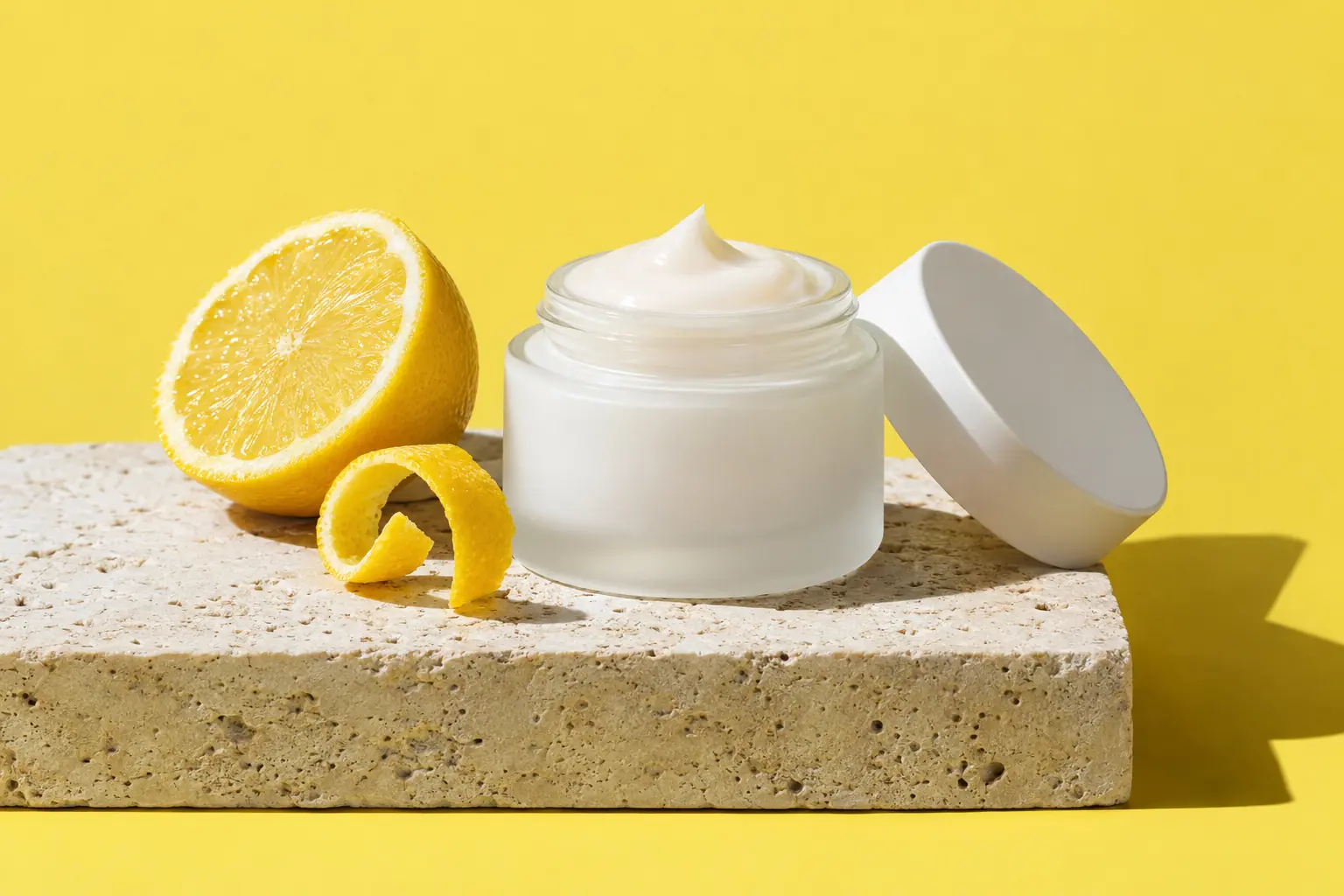
AKTO develops and manufactures a pigment-control cream to a brand's order, on its cream-emulsion line.
- ISO 22716 GMP
In brief
Company AKTO LLC (AKTO) develops and manufactures a pigment-control cream to a brand's order, on its cream-emulsion line, building on an already-produced formula with niacinamide, sodium hyaluronate, ceramides and two peptides as the active base for pigmentation claims. Hydroquinone is not used in this cream - Regulation (EC) No 1223/2009 permits it only in nail systems.
01
What a pigment-control cream is
A pigment-control cream is a narrow-purpose product aimed at evening out skin tone and addressing signs of hyperpigmentation, as opposed to a general daily moisturizer. A brand closes this specific customer need with its own SKU and marketing message, without reworking its core daily formula. A product like this usually pairs with a morning sunscreen, since UV protection helps support the tone-evening result over time.
02
Formulation, format and packaging requirements
AKTO develops and manufactures a pigment-control cream on its cream-emulsion line, building on an already-produced day-cream formula that uses niacinamide - among the actives most commonly used for tone-evening claims - together with sodium hyaluronate, ceramides and the peptides Palmitoyl Tripeptide-1 and Palmitoyl Tetrapeptide-7. It is filled into a PBL tube of 25-50 mm diameter or a jar of 50-250 g.
03
EU and Ukraine regulatory requirements
Regulation (EC) No 1223/2009 Annex III entry 14 restricts Hydroquinone to artificial nail systems only, at a maximum of 0.02% after mixing for use, for professional use only with the warning 'For professional use only/Avoid skin contact'; it is not used as a general skin-lightening ingredient in a face cream. Article 2(1)(a) defines a cosmetic product by its purpose of changing appearance, so a pigment-control cream's claims must stay within that cosmetic purpose rather than a therapeutic lightening effect. Article 15 of Regulation (EC) No 1223/2009 prohibits the use in cosmetic products of substances classified as CMR under CLP: categories 1A and 1B save for rare exceptions under the conditions of Article 15(2), category 2 unless the SCCS has found them safe; the specific prohibited substances are listed in Annex II. This is a further constraint on the brightening actives and preservatives available.
04
What AKTO offers
AKTO's own R&D laboratory develops a formula from a reference composition, submitted samples, the desired effect, and the applicable safety, quality and regulatory requirements - the process a pigment-control cream goes through. To support a brightening-efficacy or 'dermatologically tested' claim, AKTO recommends heavy-metal analysis and patch testing as add-ons. The minimum batch is 50 kg of finished formulation, produced at AKTO's plants in Kyiv (Ukraine) and Warsaw (Poland), certified to ISO 9001:2015, ISO 22000:2018 (HACCP; combined certificate No. 44600111204) and ISO 22716 (GMP). Both plants let a brand choose the production site that best fits the target market for the finished cream.
05
Getting started
The brand defines the desired tone-evening effect and target actives; AKTO adapts the niacinamide day-cream formula or develops a new one, runs the recommended tests, and prepares technical documentation for the chosen market. A cream like this works well as a pigmentation-focused line alongside a brand's blemish-control or redness-relief products. See also: Targeted Face Care, Pigment Control Serum, Blemish Control Serum and Redness Relief Cream.
Frequently Asked Questions
Does AKTO use hydroquinone in a pigment-control cream?
What formula is the starting base for a pigment-control cream?
What packaging is used for a pigment-control cream?
What testing does AKTO recommend for a brightening-effect claim?
Expert review
Reviewed by
 Illia Mariutsa
Researcher, organic chemistry
Google Scholar Anastasiia Bespalova
Paediatric orthopaedic and trauma surgeon
ORCID
Standards we work to
 ISO 22716 (GMP)
 ISO 22000 (HACCP)
 Regulation (EC) No 1223/2009
 Directive 2002/46/EC
 Halal
Why AKTO
- Base formula with niacinamide, hyaluronate and ceramides already produced
- Formula development through AKTO's own R&D laboratory
- Heavy-metal analysis and patch testing to support claims
- PBL tube 25-50 mm or jar 50-250 g
- MOQ from 50 kg, plants in Kyiv (Ukraine) and Warsaw (Poland)