
Blog
Private Label vs White Label: What Is the Difference and Which to Choose for Your Brand
How private label differs from white label, when to choose a ready formula and when a custom development, and what to check before you start.
- Private label
- White label
In brief
Private label is a product a manufacturer makes exclusively for one brand, while white label is a ready formula offered to several clients. There is no single legal definition of the terms, so the main feature is exclusivity. The article compares the two models by product uniqueness, timelines, cost of entry and rights to the formula, and lists what to check in each.
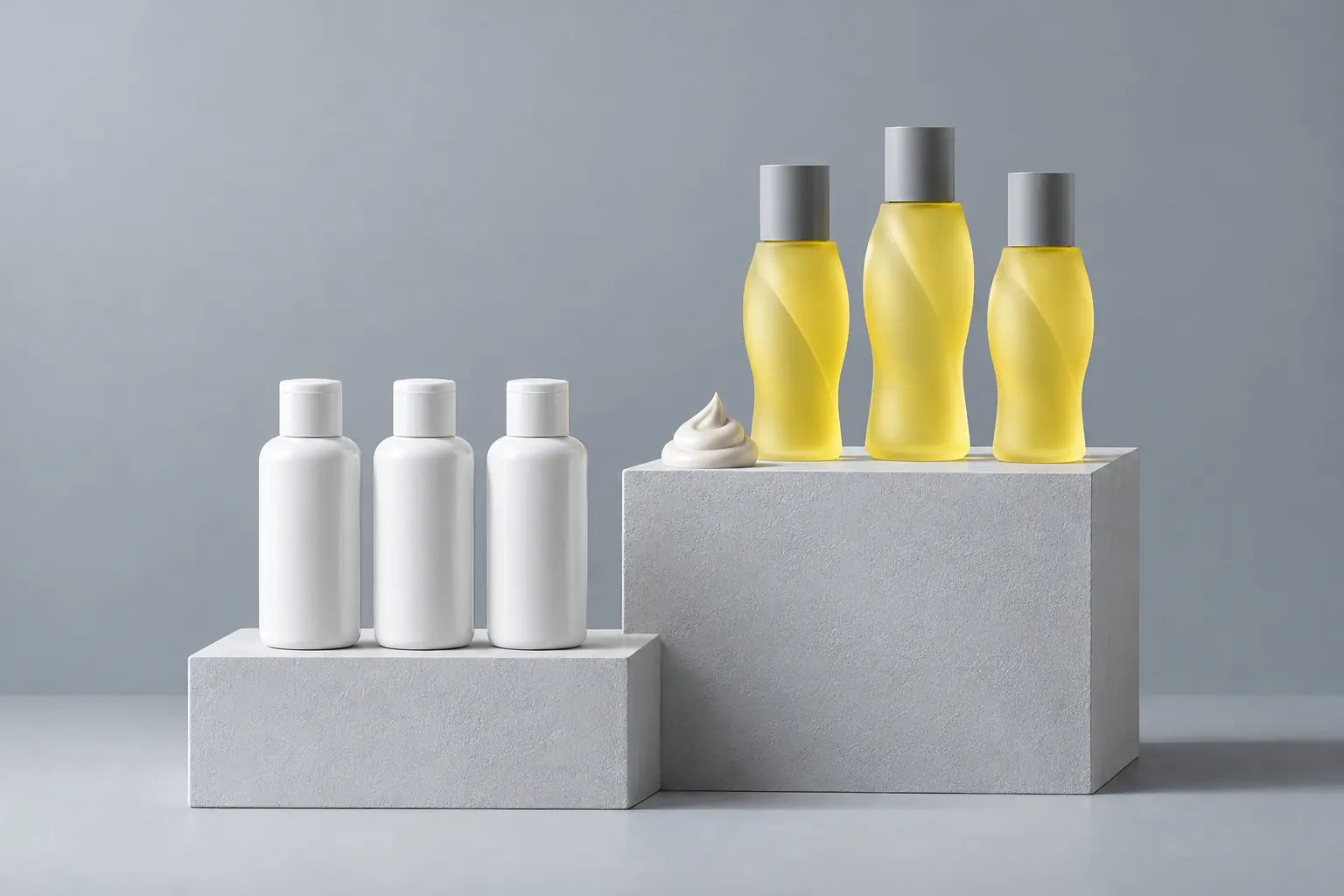
Private label is a product that a manufacturer makes exclusively for a specific brand, whereas white label is a ready-made formula that the manufacturer offers to several clients. There is no single legal definition of these terms, and manufacturers use them differently. The main feature of private label is exclusivity: the product is sold only under one brand, and the formulation for it is most often developed or substantially adapted for the customer. Both models let you sell cosmetics or supplements under your own name without your own workshop. They differ in the uniqueness of the product, timelines, start-up cost and rights to the formula. The big picture of contract manufacturing is described in the article on what contract manufacturing is.
01
Private label is a product developed for your brand
In the private label model, the manufacturer creates or substantially adapts the formulation to the customer's brief, and the product is sold only under that customer's brand. In retail this model is called a store brand (in Ukrainian retail, vlasna torhovelna marka, or STM): the product is sold under the brand of a chain or a brand, and another company makes it. The main terms are collected in the glossary.
Example. A salon chain wants an after-peel care cream with a certain pH and soothing ingredients. The technologist develops a formula to this brief, the chain approves a sample, and this cream exists only under its name. In parallel, the laboratory checks the stability of the formula in the chosen packaging, so more time passes from brief to first batch than in the ready-made formula model.
02
White label: a ready-made formula under your label
In white label, the manufacturer has a set of proven formulas. The brand chooses a product from the catalog and changes the label, sometimes the fragrance or color. No deep changes to the composition are involved, so the start is faster and cheaper.
Example. A shower gel from the manufacturer's catalog is sold by three different brands under three names. The composition is the same; the difference is only in packaging, price and marketing.
In dietary supplements the logic is the same. Capsules with a single vitamin in a standard dosage are often taken as a ready-made product, while a complex of several plant extracts for a specific positioning is developed individually.
03
Comparing the two models
If you boil the difference down to one sentence: private label is an exclusive product under your brand, usually with its own formulation; white label is the manufacturer's ready-made product that other brands may also sell. In more detail, by criteria:
| Criterion | Private label | White label |
|---|---|---|
| Formulation | Developed or adapted to the brief | The manufacturer's ready-made formula |
| Uniqueness | The product exists only for your brand | An identical product may be sold under other brands |
| Minimum batch | Set by the manufacturer: at AKTO from 50 kg for cosmetics, from 10 kg or 20,000 capsules for supplements | Depends on the manufacturer |
| Timelines | Longer: development, samples, stability tests | Shorter: the formula is already proven |
| Start-up cost | Higher because of development | Lower |
| Rights to the formula | May pass to the brand under the contract | Remain with the manufacturer |
04
When to choose white label and when private label
White label suits you if:
- you need to quickly test a niche or a sales channel;
- the brand sells mainly thanks to its audience, as with bloggers;
- you need a seasonal or gift product on a short timeline;
- the start-up budget is limited;
- you need to complement the range with a companion product that is not key for the brand.
Choose private label if:
- the product is the basis of the brand's positioning;
- you are going into pharmacies or dermocosmetics, where evidence-based claims matter;
- you plan to scale and want to protect the formula;
- the chain needs an exclusive assortment;
- you need a product with an unusual texture or format that is not in manufacturers' catalogs.
A mixed path is also possible: start with a ready-made formula, and later move the products that sell well to your own formulation.
05
What to check before starting in each model
For white label:
- who else sells this formula and whether you can get exclusivity for a channel or region;
- what exactly can be changed: fragrance, color, volume, packaging;
- whether the manufacturer provides data for the product file and safety report for your Responsible Person;
- what happens if the manufacturer withdraws the formula from the catalog or changes the composition.
For private label:
- who will own the rights to the formulation and from what moment;
- how many sample iterations are included in the development cost;
- who pays for stability and packaging compatibility tests;
- whether a specification will be approved against which each batch will be accepted.
It is worth recording the answers to these questions in writing before paying for development or the first batch. We go through which points to include in the article on the contract manufacturing agreement.
06
How AKTO works
AKTO develops a formulation to the client's brief or produces a product using your formula or our ready-made one. The in-house R&D laboratory creates new formulas based on analysis of competitor products, target samples and the desired sensory effect, taking safety requirements into account. The development stages are described on the page about formulation and R&D.
AKTO works only in B2B and has no retail brands of its own. A formula created for your product will not appear on the shelf under another brand. Under this scheme we produce both cosmetics and dietary supplements under your own trademark.
If you have not yet decided which model suits your brand, tell us about the product, budget and sales channel. An AKTO technologist and manager will propose a launch option and calculate the minimum batch. You can start from the page about cosmetics under your own brand.
Frequently Asked Questions
Can you change a ready-made formula in white label?
Who owns the formulation in private label?
Does a white label product need a separate notification?
Can you move from white label to private label without changing the product name?
Where can I learn terms such as INCI, PIF or CPSR?
Standards we work to
 ISO 22716 (GMP)
 ISO 22000 (HACCP)
 Regulation (EC) No 1223/2009
 Directive 2002/46/EC
 Halal
Why AKTO
- Five cooperation formats, from private label to export projects
- In-house R&D lab behind every new product
- Commissioned formula stays exclusive to the brand
- Production under ISO 22716 (GMP) and ISO 22000 (HACCP)