
Private Label
Face Mask Gel
AKTO develops and manufactures gel face masks to order on its aqueous-gel line, in a dark pump bottle of 300-500 ml.
- ISO 22716 GMP
In brief
Company AKTO LLC (AKTO) develops and manufactures gel face masks to order on its aqueous-gel line - the same line that already produces a hand gel and an intensively moisturising gel on Aloe Vera and calendula extracts, dispensed from a dark pump bottle of 300-500 ml. Ingredient-list ordering follows Article 19(1)(g) of Regulation (EC) No 1223/2009.
01
The gel-mask texture and its purpose
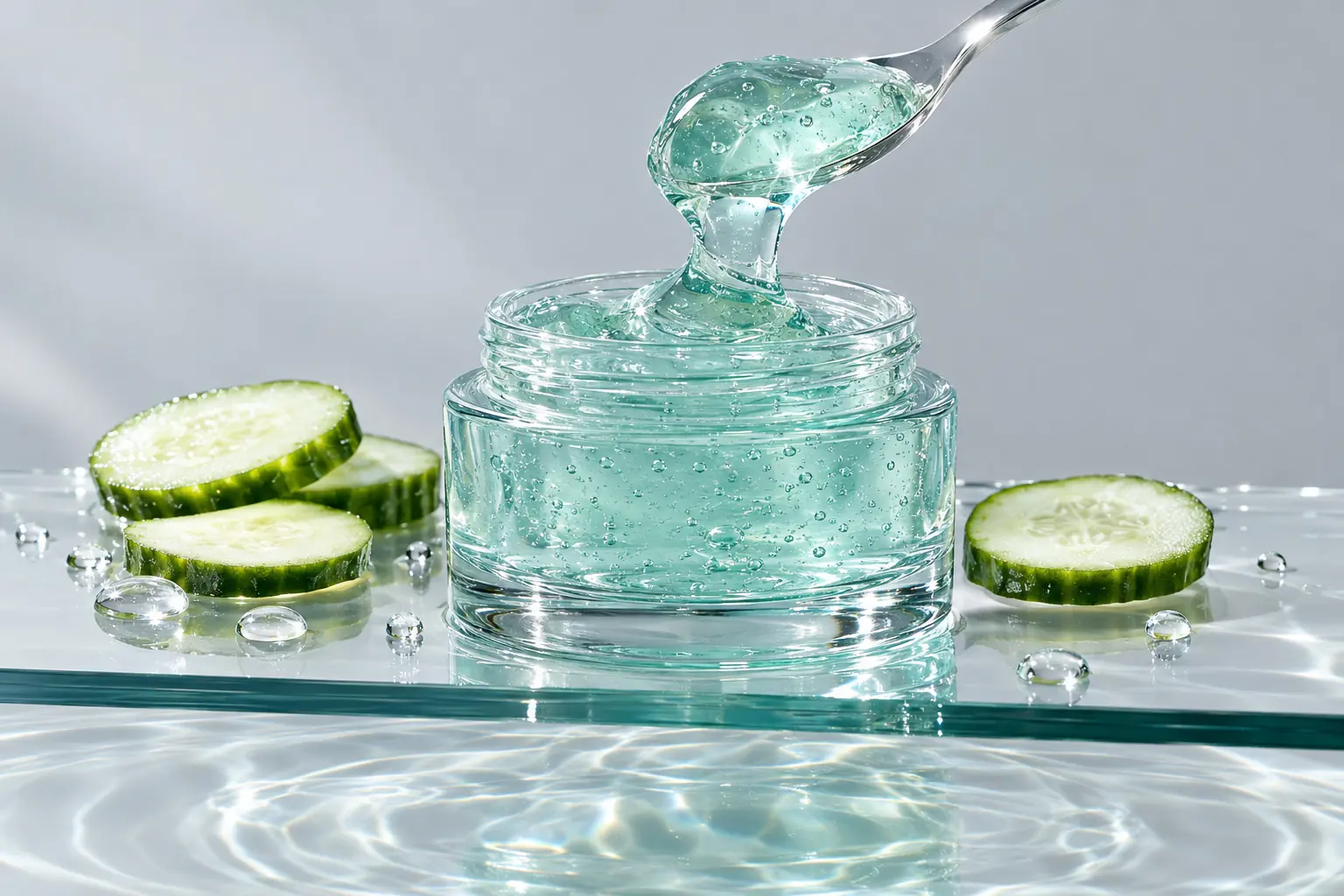
A gel mask has a light, cooling, water-based texture: it absorbs quickly, leaves no film, and suits oily or combination skin that reacts poorly to a rich cream. Brands use the gel format on a course of once or twice a week for hydration and calming after sun exposure or irritation, rather than as a daily product. Within a mask range, a gel texture is the lighter alternative to cream and clay formats, aimed at customers looking for a refreshing effect. It pairs well alongside a cream mask in the same range, giving a customer a seasonal or skin-type choice.
02
The format AKTO develops to order
AKTO develops and manufactures gel face masks to order on its aqueous-gel line - the same line that already produces a hand gel and an intensively moisturising gel on Aloe Vera and calendula extracts, dispensed from a dark pump bottle of 300-500 ml. The actives, consistency and target effect of a gel mask are agreed individually during recipe development for the brand, building on this already-proven aqueous base.
03
Regulatory requirements for gel composition
Annex I Part A Section 6 of Regulation (EC) No 1223/2009 requires the safety report's exposure assessment to take into account the site of application and frequency of use - relevant to a gel mask's typically short, course-based skin contact. Article 15 of Regulation (EC) No 1223/2009 prohibits the use in cosmetic products of substances classified as CMR under CLP: categories 1A and 1B save for rare exceptions under the conditions of Article 15(2), category 2 unless the SCCS has found them safe; the specific prohibited substances are listed in Annex II. This limits the choice of actives and preservatives for the gel's aqueous base. Article 19(1)(g) requires the ingredient list on the packaging to run in descending order of weight of the ingredients at the time they are added to the cosmetic product, with ingredients below 1% listable in any order after the main list.
04
AKTO's production capability
The minimum batch is 50 kg of finished formulation at AKTO's facilities in Kyiv (Ukraine) and Warsaw (Poland). The testing package for masks mandatorily includes microbiology and preservative-challenge testing - critical for a high-water-content formula such as a gel mask. A declared dry/powder mask format rounds out the gel and cream textures in AKTO's production range, and both facilities let a brand pick a production site to match its market. Production is certified to ISO 9001:2015, ISO 22000:2018 (HACCP; combined certificate No. 44600111204) and ISO 22716 (GMP).
05
Getting started
A brand sets the target effect - hydration, cooling or calming after irritation - the gel consistency and the bottle size; AKTO adapts its existing aqueous base around new actives, runs microbiology testing and prepares the technical documentation for the chosen market. See also: Masks (Face), Face Mask Creamy and Face Mask Textured.
Frequently Asked Questions
Does AKTO manufacture gel masks for the face?
What packaging does AKTO use for its gel products?
What governs ingredient-list order on a gel mask's label?
What testing is mandatory for a high-water-content gel mask?
Expert review
Reviewed by
 Illia Mariutsa
Researcher, organic chemistry
Google Scholar Anastasiia Bespalova
Paediatric orthopaedic and trauma surgeon
ORCID
Standards we work to
 ISO 22716 (GMP)
 ISO 22000 (HACCP)
 Regulation (EC) No 1223/2009
 Directive 2002/46/EC
 Halal
Why AKTO
- Gel mask built on the already-proven aqueous-gel line
- Dark pump bottle, 300-500 ml
- Lighter alternative to cream and clay formats
- Mandatory microbiology and preservative-challenge testing
- MOQ from 50 kg, facilities in Kyiv (Ukraine) and Warsaw (Poland)